2026-09-16 · 8
Embark Behavior Insights: What Dog DNA Can Really Tell You About Behavior
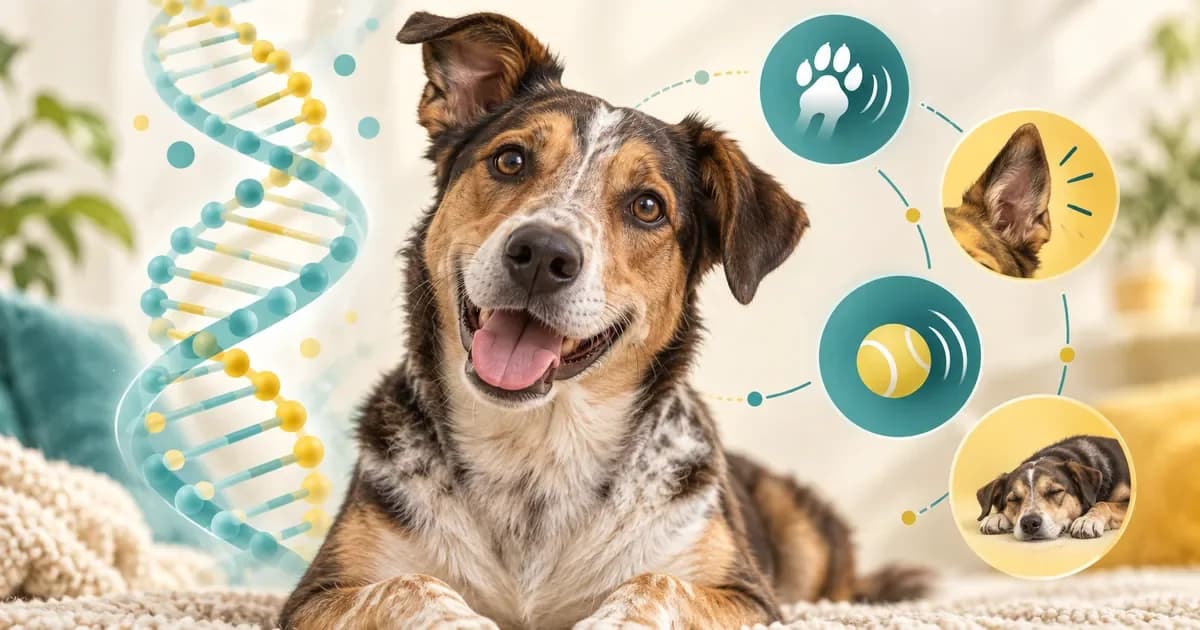
Embark's new Behavior Insights feature uses a dog's DNA to report genetic tendencies across 15 behavior areas and pairs the results with guided training. The report can give owners useful questions to test in daily life, but it cannot predict exactly what a dog will do. Your dog's body language, health, learning history, and current environment still matter more in the moment.
What Embark launched
Embark announced Behavior Insights & Training on September 9, 2026. The product adds 15 genetic behavior insights to its DNA testing service and includes a year of personalized training through Dogo.
The appeal is obvious. A breed result tells you where a dog may come from. A behavior report seems to promise something more immediate: why this dog acts this way and what to do next.
That promise needs careful handling. DNA can inform a tendency. It does not watch your dog meet a stranger, hear the doorbell, guard a chew, or recover after a frightening noise. Those moments still require observation.
Our breed-specific behavior guide makes the same distinction: inherited tendencies can shape the starting point, but they do not write the whole story.
The most useful way to read a DNA behavior result
Treat each result as a hypothesis.
If a report suggests sensitivity around unfamiliar dogs, do not immediately label your dog “dog reactive.” Instead, observe several controlled situations. How far away is the other dog when yours changes posture? Does the response differ on leash and behind a fence? Can your dog take food and turn away? How quickly do they recover?
The result gives you a question. The dog gives you the answer.
That is more useful than treating a percentage or category as a verdict. A good hypothesis makes your observation sharper. A bad label makes every behavior look like confirmation.
For help reading the whole body rather than one dramatic signal, use the complete dog body-language guide.
What people get wrong about “genetic behavior”
The phrase can sound fixed. Eye color is inherited, so people assume a reported behavior must be equally settled.
Behavior is not one switch. Genes may influence arousal, sociability, persistence, sensitivity, or motor patterns. Development, early experience, pain, reinforcement, sleep, and context all shape what the dog actually does.
Two dogs with a similar predisposition can look very different. One may have grown up with careful exposure and predictable choices. Another may have practiced the same unwanted response every day for years. A DNA result cannot erase that history.
The counterintuitive lesson is that a genetic tendency can make training more relevant, not less. “It is in his DNA” should not end the conversation. It should help you choose an environment and teaching plan that fit the dog in front of you.
The emotional journey after opening the report
Owners often move through four reactions.
First comes recognition. A result appears to explain the pacing, chasing, caution, or social intensity you have already seen.
Then comes relief. The behavior feels less like a personal failure.
Next comes overconfidence. Once the label feels right, it is tempting to use it for every incident.
Finally comes the useful stage: testing the insight against real life and adjusting the plan.
Try to reach that last stage quickly. Relief is welcome, but your dog does not need a perfect explanation. They need safer setups, clearer communication, and skills they can use when arousal rises.
Build a behavior log before changing the training plan
Choose one behavior named in the report and record it for a week. Keep the log plain.
Write down:
- What happened immediately before the behavior.
- Where it occurred and who was present.
- What the dog’s body looked like.
- What happened immediately afterward.
- How long recovery took.
Avoid character judgments such as stubborn, jealous, dominant, or guilty. Record visible actions. “Body stiffened, mouth closed, moved over the toy” is usable. “Decided to be possessive” is an interpretation.
If you are unsure what to record, the dog calming-signals guide and facial-expression guide offer a practical vocabulary.
DNA does not replace a pain check
A behavior can fit a genetic story and still have a medical cause.
Imagine a report suggests lower sociability. Months later, the dog begins avoiding touch and snapping when approached on the sofa. It would be easy to fold the change into the label. But sudden avoidance can also accompany pain, sensory changes, or illness.
New behavior, rapid escalation, sensitivity to handling, altered sleep, appetite changes, or difficulty moving deserve veterinary attention. A training app cannot examine a sore back, infected ear, or painful tooth.
This matters for small signals too. Repeated paw licking and chewing may have a medical component. A dog resisting face handling may need the dental health guide, followed by a real veterinary exam.
Predisposition is not permission to flood the dog
Suppose the report suggests caution around unfamiliar people. One response is to expose the dog to a crowded market until they “get used to it.” That can backfire.
Learning works better when the dog is far enough from the trigger to notice it without losing the ability to eat, orient, or move away. Start at that distance. Pair the sight with something the dog values. Leave before the dog becomes overwhelmed.
The goal is not to prove the genetic result wrong. It is to give the dog successful repetitions.
If strangers are the trigger, read the dog barking at strangers guide for setup ideas. If the issue appears around dogs on leash, the leash reactivity guide explains distance and redirection.
Watch recovery, not only reaction
Most owners notice the bark, lunge, freeze, or retreat. Recovery is quieter and often more informative.
After a trigger passes, can the dog sniff the ground, take food gently, shake off, or respond to a familiar cue? Or do they remain vigilant and scan the environment?
A dog who recovers quickly may need a different plan from one who carries the event through the rest of the walk. Both may receive the same broad genetic insight, but their current coping capacity is not the same.
Record recovery time in your log. It gives you a way to notice progress that is more realistic than expecting every reaction to disappear.
Use the report to choose enrichment
This is where behavior insights may be most enjoyable. A tendency toward scent exploration, chasing, social play, or problem solving can help you test activities that suit the dog.
Keep the word “test” in the sentence. A herding-breed mix may ignore a herding ball and adore nose work. A dog with retriever ancestry may prefer searching for food to carrying toys. Individual preference gets the final vote.
Try one activity, then watch engagement and recovery. Does the dog return willingly? Can they stop without frustration? Do they seem calmer afterward or more frantic?
The nose-work guide and dog enrichment guide give you low-pressure experiments to run at home.
Be careful with breed stereotypes
A DNA test may reveal a mix you did not expect. The result can be fun and useful, but it also invites stereotypes.
“Part husky” does not automatically mean escape artist. “Part pit bull” does not predict aggression. “Part border collie” does not guarantee an easy sports dog. Breed history may suggest tendencies, yet behavior must be assessed at the individual level.
Labels can change how humans behave around a dog. People may tighten a leash, avoid playmates, or excuse unsafe behavior because the breed supposedly explains it. Those reactions can shape the dog’s future experiences.
Use ancestry as context. Keep decisions tied to observed behavior.
When the training feature can help
Guided training is useful when it turns a broad insight into small, repeatable exercises. The strongest plan will define a behavior you can see, set the difficulty low enough for success, and show you when to progress.
For example, “be less fearful” is not an exercise. Looking at a person from a comfortable distance, then turning back to you for food, is trainable.
Watch for plans that move faster than your dog. If the dog stops eating, freezes, flees, or becomes frantic, increase distance or reduce difficulty. Progress is not measured by how much pressure the dog endured.
For serious aggression, repeated bites, severe fear, or behavior that puts anyone at risk, work with a qualified veterinary behaviorist or credentialed force-free professional. An automated plan is not enough.
Where a dog translator app fits
DNA and real-time communication answer different questions. A genetic report asks what tendencies may be present. A dog translator app helps you slow down and pay attention to the sound and context happening now.
No app can read a dog’s mind or translate a bark into a perfect English sentence. Used honestly, it can encourage observation. Record the sound, note the body posture, identify the trigger, and compare repeated situations.
Read how AI dog translators work and what your dog’s sounds may mean before treating any output as certainty.
A practical three-layer model
When you are trying to understand a behavior, use three layers:
Layer one is predisposition. What does the DNA or breed history suggest might come more easily?
Layer two is learning history. What has the dog practiced, avoided, or been rewarded for?
Layer three is the current moment. What does the body say right now, and what changed just before the behavior?
Never let layer one erase layers two and three. The full picture is more complicated, but it is also more useful.
Frequently asked questions
Can a dog DNA test predict behavior?
It can report genetic tendencies associated with aspects of behavior, but it cannot predict exactly how an individual dog will act in every situation. Development, health, learning, and environment all matter. Treat the result as a question to explore through observation, not a verdict about personality or future conduct.
What is Embark Behavior Insights & Training?
It is a feature announced in September 2026 that combines 15 DNA-linked behavior insights with a year of personalized guided training through Dogo. The report is designed to connect genetic information with practical training, but owners still need to evaluate the advice against their dog’s health and body language.
Does a genetic tendency mean behavior cannot change?
No. A predisposition may affect how easily a response appears or how much support a dog needs, but learning still occurs. Management, gradual exposure, reinforcement, and appropriate enrichment can change daily behavior. The aim is not to erase genetics. It is to help the dog function safely and comfortably.
Should I change training as soon as I receive the report?
Observe first. Pick one reported tendency and keep a short behavior log across several contexts. If your observations support the insight, choose a small exercise matched to the dog’s current ability. Sudden or concerning behavior changes should prompt a veterinary check before you assume genetics explains them.
Can DNA explain aggression?
DNA alone cannot explain an aggressive incident. Aggression describes behavior in context, not a fixed identity. Pain, fear, resource access, distance, restraint, past learning, and the immediate environment can all matter. If there is bite risk, use safe management and consult a qualified professional rather than relying on a consumer report.
Is Embark’s behavior report the same as a diagnosis?
No. It is not a veterinary or behavioral diagnosis. A diagnosis requires case history, direct assessment, and often medical evaluation. The report may help you organize questions for a veterinarian or behavior professional, but it should not replace examination or individualized advice.
Let the report make you more curious
The best outcome is not saying, “Now I know what my dog is.” It is noticing more. A DNA insight can point your attention toward patterns you missed, but the dog in front of you remains the primary source. Watch the body, respect the context, check health, and let every label stay open to revision.
Try it with your dog
Record a bark, scan a dog photo, or play a sound and see what happens next.