2026-08-05 · 8
Dog Enrichment Activities: The Complete 2026 Guide to Mental Stimulation
Dog enrichment has become a major focus for pet owners in 2026, and for good reason. Mental stimulation through enrichment activities addresses behavioral issues at their source, reduces anxiety, and strengthens the bond between dogs and their humans. This guide covers what enrichment actually means and how to implement it effectively.
What Is Dog Enrichment
Enrichment refers to activities and environmental modifications that allow dogs to express natural behaviors. These behaviors include foraging, problem-solving, sniffing, chewing, digging, and social interaction. When dogs cannot engage in these behaviors, they often develop substitute activities that humans find problematic. Excessive barking, destructive chewing, and hyperactive behavior often stem from unmet behavioral needs.
The core principle of enrichment is simple. A mentally engaged dog is a satisfied dog. Physical exercise matters, but mental exercise works different muscles and produces different results. Many dog owners discover that thirty minutes of enrichment activities leaves their dog more relaxed than an hour of physical exercise alone.
Why Enrichment Matters More in 2026
Modern dog life differs significantly from how dogs evolved to live. Most pet dogs spend long hours alone in enclosed spaces. They eat from bowls instead of hunting or foraging. They walk on leashes instead of roaming. These constraints are necessary for safety and urban living, but they remove outlets for natural behavior.
The enrichment movement responds to this mismatch between dog nature and modern life. Rather than accepting behavioral problems as inevitable, enrichment provides structured ways for dogs to be dogs within the constraints of contemporary pet ownership.
Types of Enrichment
Sensory Enrichment: Activities that engage a dog's senses. Sniff walks where the dog leads and chooses what to investigate. Novel scents introduced in the home or yard. Visual access to the outdoors through windows or secure outdoor spaces. Sensory enrichment acknowledges that dogs experience the world primarily through their noses.
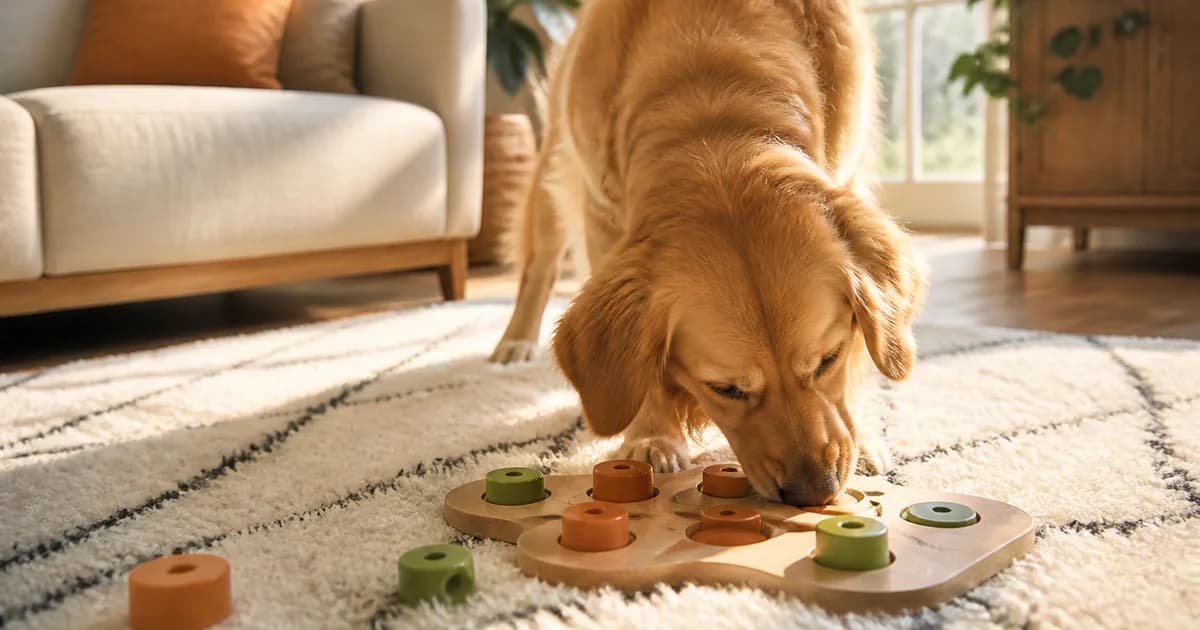
Cognitive Enrichment: Problem-solving activities that challenge a dog mentally. Puzzle toys that require manipulation to release treats. Training sessions that teach new behaviors or refine existing ones. Hide-and-seek games that require the dog to use their nose and memory. Cognitive enrichment tires the brain, which often translates to calmer behavior.
Physical Enrichment: Movement and exercise that goes beyond basic walks. Agility courses, even homemade ones using household items. Digging pits filled with sand or dirt where dogs are allowed to dig. Swimming for dogs who enjoy water. Physical enrichment should match the dog's age, health, and physical capabilities.
Social Enrichment: Positive interaction with other dogs and humans. Supervised playdates with compatible dogs. Training classes that provide structured social exposure. Quality time with human family members through play, grooming, or simply being together. Social enrichment must be positive. Forced interaction creates stress rather than satisfaction.
Occupational Enrichment: Giving dogs jobs that use their natural abilities. Carrying a backpack on walks. Learning to retrieve specific items by name. Participating in canine sports like nosework or rally obedience. Occupational enrichment works particularly well for working breeds who need purpose to feel content.
Easy Enrichment Activities to Start Today
Scatter Feeding: Instead of using a bowl, scatter your dog's kibble on the floor or in the grass. This turns every meal into a foraging activity. Start with easy scattering in a small area, then increase difficulty by spreading food over larger spaces or hiding it in grass.
Frozen Treats: Fill a Kong or similar toy with wet food, yogurt, or soaked kibble and freeze it. The frozen contents extend the time it takes to eat and provide cooling relief in warm weather. This simple activity can occupy a dog for twenty to thirty minutes.
Box Destruction: Save cardboard boxes and let your dog tear them apart to find hidden treats. Most dogs love the ripping and shredding action. Supervise to ensure they do not eat the cardboard, and remove the debris when they finish.
Snuffle Mats: These fabric mats have strips of material where you can hide treats. Dogs use their noses to hunt for the food. Snuffle mats provide intense sniffing activity in a small space, making them ideal for apartments or bad weather days.
Find It Games: Hide treats around a room and ask your dog to find them. Start with easy hiding spots while they learn the game, then increase difficulty. This game builds confidence and reinforces the use of scenting abilities.
DIY Puzzle Feeders: Use muffin tins, tennis balls, or rolled towels to create feeding puzzles. Place food in the compartments and let the dog figure out how to access it. These homemade options test problem-solving without requiring purchased toys.
Matching Enrichment to Your Dog
Not all dogs enjoy the same activities. Observing your dog's natural preferences helps you choose enrichment that actually engages them.
The Sniffer: If your dog constantly has their nose to the ground, focus on scent-based enrichment. Long sniff walks, nosework games, and scent puzzles will satisfy them most.
The Problem Solver: Dogs who manipulate objects with their paws or mouth enjoy puzzle toys and interactive feeders. These dogs need cognitive challenges that require thinking and experimentation.
The Mover: High-energy dogs who love to run and jump need physical enrichment. Agility, fetch variations, and active games burn energy constructively.
The Social Butterfly: Dogs who love people and other dogs thrive on social enrichment. Prioritize positive interactions, training classes, and supervised play.
The Destroyer: Dogs who chew and tear need appropriate outlets for this behavior. Heavy-duty chew toys, destruction boxes, and occupational activities channel this drive productively.
Common Enrichment Mistakes
Too Much Too Soon: Starting with complex puzzles frustrates dogs who have not built problem-solving confidence. Begin with easy challenges and increase difficulty gradually as your dog succeeds.
Ignoring Preferences: Forcing a dog to engage with activities they dislike creates stress rather than enrichment. If your dog ignores a puzzle toy, try a different type of activity rather than insisting.
Inconsistent Implementation: Enrichment works best as part of daily routine. Occasional enrichment sessions help, but regular mental exercise produces the most noticeable behavioral benefits.
Forgetting Supervision: Some enrichment activities require monitoring. Dogs can destroy and ingest inappropriate items if left unsupervised with certain toys or materials.
Neglecting Physical Exercise: While mental stimulation is important, it does not fully replace physical activity. Most dogs need both for complete wellbeing.
Measuring Enrichment Success
Effective enrichment produces observable changes in behavior. Signs that your enrichment program works include reduced destructive behavior, less attention-seeking behavior, calmer demeanor in the evening, improved focus during training, more settled behavior when alone, and increased confidence in new situations.
These changes typically appear gradually over weeks of consistent enrichment. One session will not transform behavior, but regular mental exercise produces cumulative benefits.
Building an Enrichment Routine
Sustainable enrichment fits into daily life without overwhelming the owner. Consider these integration strategies:
Meal Times: Replace bowl feeding with enrichment feeding at least once daily. This requires no additional time while providing significant mental stimulation.
Weather Contingencies: Have indoor enrichment options ready for bad weather days. Frozen treats, puzzle toys, and training sessions work regardless of conditions outside.
Weekend Projects: Use weekends for more elaborate enrichment activities that require setup time, like obstacle courses or complex hiding games.
Rotation: Rotate toys and activities to maintain novelty. Dogs lose interest in familiar items, so keeping some toys put away and introducing them periodically renews interest.
FAQ
How much enrichment does my dog need daily?
Most dogs benefit from at least thirty minutes of dedicated mental enrichment daily, plus enrichment integrated into routine activities like feeding. High-energy or working breeds may need more.
Can enrichment replace walks?
No. Enrichment complements physical exercise but does not replace it. Dogs need both mental and physical activity for complete health.
What if my dog gets frustrated with puzzle toys?
Start with easier puzzles where success comes quickly. Show your dog how it works initially. If frustration persists, try a different type of enrichment. Not all dogs enjoy puzzles.
Are expensive enrichment toys necessary?
No. Many effective enrichment activities use household items. Cardboard boxes, muffin tins, and scattered kibble provide excellent enrichment at no cost.
Can senior dogs benefit from enrichment?
Yes. Adjust activities to match physical limitations, but mental exercise remains valuable for older dogs. Gentle scent games and simple puzzles keep senior minds active.
Will enrichment help with my dog's anxiety?
Enrichment often reduces anxiety by providing appropriate outlets for energy and satisfying natural behavioral needs. However, severe anxiety may require additional interventions beyond enrichment.
How do I know if an activity is actually enriching?
Watch your dog's response. Enrichment activities should engage them, hold their attention, and leave them satisfied afterward. If your dog ignores an activity or seems stressed by it, it is not enriching for them.
Can I overdo enrichment?
Yes. Too much intense mental stimulation can tire a dog excessively. Watch for signs of fatigue or overstimulation, and provide rest periods between enrichment sessions.
What about puppies - can they do enrichment?
Puppies benefit greatly from appropriate enrichment. Keep sessions short, use safe materials they cannot swallow, and focus on gentle exploration rather than complex problem-solving.
How does enrichment affect behavior problems?
Many behavior problems stem from boredom and unmet behavioral needs. Enrichment addresses these root causes, often reducing or eliminating problem behaviors without additional training.
Where can I learn more about what my dog is trying to communicate?
Download Dog Translator to better understand your dog's vocalizations and body language. The app helps you interpret their reactions and adjust activities to match their personality.
Related Articles
Try it with your dog
Record a bark, scan a dog photo, or play a sound and see what happens next.