2026-05-20 · 8
Dog Translator App: How AI Turns Barks into Meaning
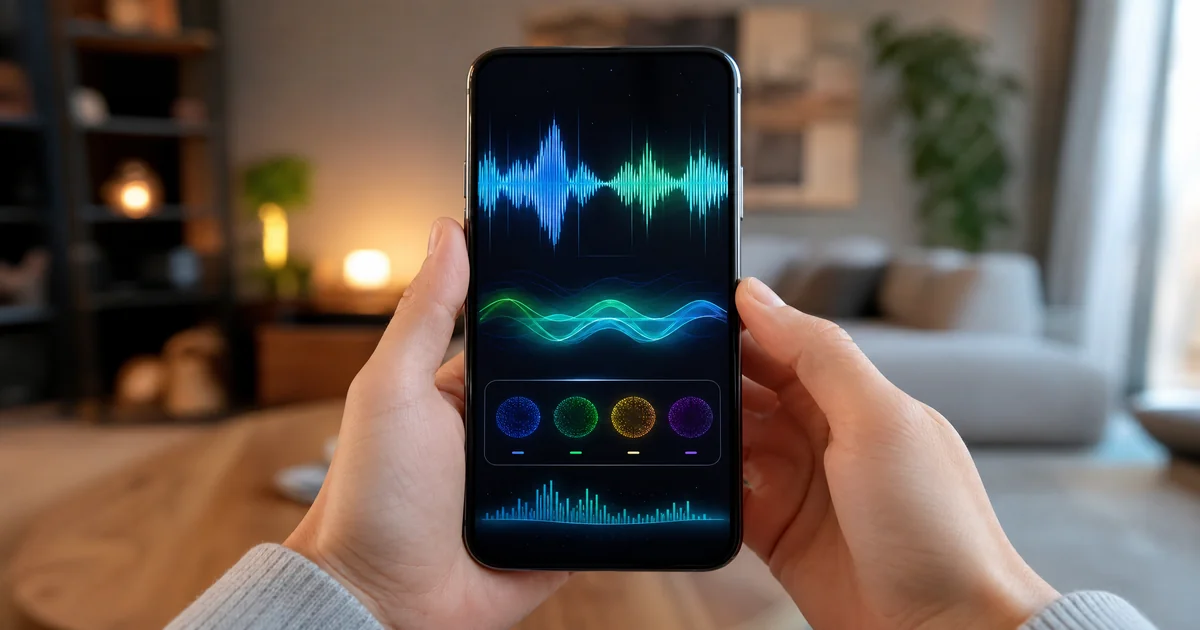
Dog translator apps use machine learning algorithms to analyze acoustic properties of barks including pitch, duration, frequency patterns, and rhythm. The AI compares these features against trained models to identify emotional states like excitement, fear, or hunger. While no app can literally translate words, modern AI can distinguish between different emotional vocalizations with surprising accuracy.
What Most People Get Wrong About the Technology
The biggest misconception is that these apps understand language like humans do. They don't. Your dog isn't forming sentences. What AI actually analyzes is the acoustic signature of vocalizations and matches patterns to emotional states.
People also assume all dog translator apps use the same technology. They don't. Some apps employ sophisticated neural networks trained on thousands of samples. Others use simple pattern matching that produces unreliable results. The difference in underlying technology explains why some apps work better than others.
Another common mistake is thinking the AI works instantly for every dog. These systems improve with use. The first analysis might seem generic because the AI hasn't learned your specific dog's vocal patterns yet. Accuracy increases as the system adapts.
The Science Behind Bark Analysis
Researchers have studied canine vocalizations for decades. Dogs produce sounds across a frequency range from 40 Hz to over 3000 Hz. Different emotions create distinct acoustic signatures within this range.
Key acoustic features analyzed:
Pitch and fundamental frequency: Higher pitches often correlate with excitement or distress. Lower pitches suggest aggression or warning. The base frequency of a bark reveals emotional baseline.
Duration and timing: Short, repetitive barks differ significantly from sustained howls. The rhythm of vocalization provides context about urgency and intensity.
Harmonic structure: Sound waves contain fundamental frequencies plus harmonics. The distribution of energy across these harmonics varies by emotional state.
Amplitude modulation: How the loudness changes over time reveals whether a bark is spontaneous or reactive. Sharp amplitude spikes indicate surprise or alarm.
Modern apps extract these features using digital signal processing techniques similar to those in music recognition software.
How Machine Learning Models Are Trained
Creating a reliable dog translator requires extensive training data. Researchers collect recordings of dogs in various situations with known emotional contexts.
The training process works like this:
- Data collection: Record thousands of dog vocalizations in controlled settings
- Labeling: Expert behaviorists classify each recording by emotional state
- Feature extraction: Algorithms identify measurable acoustic properties
- Model training: Neural networks learn associations between features and labels
- Validation: Test the model against new recordings it hasn't seen before
- Refinement: Adjust parameters to improve accuracy on edge cases
Quality training data makes the difference between reliable apps and gimmicks. Apps trained on diverse breeds, ages, and situations perform better than those using limited datasets.
The Role of Deep Learning
Advanced dog translator apps use deep learning architectures called convolutional neural networks (CNNs). These networks excel at pattern recognition in audio data.
CNNs process sound in layers:
- First layers detect simple features like pitch and volume
- Middle layers combine features into complex patterns
- Deep layers recognize high-level emotional categories
This hierarchical processing mimics how mammalian brains process sound. The result is more nuanced analysis than simpler algorithms can achieve.
Some apps now incorporate transformer architectures similar to those powering large language models. These systems process entire sequences of barks rather than analyzing sounds in isolation. Context improves accuracy significantly.
Real-Time Analysis vs Batch Processing
Dog translator apps face a technical challenge. Accurate analysis requires significant computation. Users want instant results. Balancing these competing demands separates good apps from bad ones.
Edge computing runs AI models directly on smartphones. This approach protects privacy and works offline. However, phone processors limit model complexity. Simpler models run faster but may sacrifice accuracy.
Cloud processing sends audio to remote servers for analysis. More powerful hardware enables sophisticated models. The trade-off is latency and internet dependency. Recordings upload, process, and download results.
The best apps use hybrid approaches. Simple analysis happens locally for speed. Complex processing uploads to the cloud when connectivity permits. Users get the best of both worlds.
Download Dog Translator to experience real-time bark analysis powered by modern AI.
Confidence Scores and Uncertainty
Honest AI systems admit when they're uncertain. Good dog translator apps display confidence scores alongside their predictions. This transparency helps users interpret results appropriately.
A result showing "80% excitement, 15% attention-seeking, 5% anxiety" provides useful nuance. The app recognizes excitement as most likely while acknowledging some uncertainty. Users learn to trust high-confidence predictions and treat low-confidence ones as tentative.
Apps claiming 100% accuracy for every bark are misleading. Real AI systems deal in probabilities. The best apps communicate this uncertainty clearly.
Breed-Specific Adaptations
Dogs vocalize differently based on size, anatomy, and genetics. A Chihuahua's bark has different acoustic properties than a Great Dane's. Effective AI accounts for these variations.
Modern apps incorporate breed information to improve accuracy. When you register your dog's breed, the AI adjusts its expectations accordingly. Frequency ranges considered normal for a Beagle differ from those for a Bulldog.
Some apps go further, learning individual dog characteristics over time. Your specific Labrador might vocalize differently than the breed average. Personalized models adapt to these individual variations.
The Counterintuitive Limitations
Here's what surprises many users. AI struggles most with the subtlest emotional distinctions. Distinguishing excitement from anxiety proves harder than telling a playful bark from an aggressive growl. The acoustic differences are smaller and more context-dependent.
Background noise presents another challenge. AI models trained on clean recordings falter with real-world audio. Traffic, television, and other household sounds interfere with analysis. Good apps include noise filtering, but perfection remains elusive.
Individual variation also complicates analysis. Your dog might have unusual vocal habits that diverge from training data. The AI learns these quirks over time but never achieves perfect personalization.
What the Future Holds
Dog translator technology continues evolving rapidly. Several developments promise improved accuracy and functionality.
Multimodal analysis combines audio with video. AI reading body language alongside vocalizations achieves better accuracy than sound alone. A wagging tail plus specific bark patterns confirms playfulness more reliably than either signal independently.
Larger training datasets improve model performance. As more users contribute recordings, training data grows more diverse and representative. Crowdsourced improvement benefits everyone.
Veterinary integration connects translation data with health monitoring. Changes in vocal patterns sometimes indicate medical issues before other symptoms appear. Future apps might alert owners to potential health concerns.
Cross-species translation expands beyond dogs to cats, birds, and other pets. Similar acoustic analysis principles apply across species with appropriate model adjustments.
How to Evaluate Translation Quality
Not all dog translator apps deliver on their promises. Here's how to assess whether an app uses legitimate AI or simple gimmicks.
Check for confidence scores: Real AI systems express uncertainty. Apps always showing 100% confidence are probably faking it.
Look for learning over time: Quality apps improve with use as they adapt to your specific dog. Static results suggest simple lookup tables rather than real machine learning.
Test with known situations: Record your dog in situations where you know the emotional state. See if the app identifies it correctly. Consistent accuracy across multiple tests indicates legitimate technology.
Research the development team: Apps created by teams with published research in animal behavior or audio processing are more likely to use genuine AI. Mystery developers with no credentials raise red flags.
Related Articles
- Best Dog Translator Apps of 2026: Tested and Ranked
- Human to Dog Translator: Can You Really Talk to Your Pet?
- Dog Bark Translator vs Dog Training: Which Should You Use?
- Dog Talking Buttons vs Dog Translator Apps: Which Actually Works?
- What Your Dog's Sounds Really Mean: A Complete Guide
Frequently Asked Questions
Can AI really understand what dogs are saying?
AI understands emotional states expressed through vocalizations, not literal language. It can distinguish excitement from fear, hunger from playfulness. It cannot translate specific thoughts or desires into human sentences.
How accurate are dog translator apps?
Accuracy varies by app and situation. Quality apps achieve 70-85% accuracy on clear emotional states like aggression or playfulness. Subtle distinctions prove harder, with accuracy dropping to 50-60%. Results improve as the AI learns your specific dog.
Do dog translators work for all breeds?
They work better for some breeds than others. Vocal breeds like Huskies and Beagles provide more data for analysis. Quiet breeds or those with unusual vocal anatomy challenge the AI more. Breed-specific adaptations help but don't eliminate all differences.
What technology powers these apps?
Most use convolutional neural networks or transformer architectures trained on labeled audio datasets. Signal processing extracts acoustic features. Machine learning models map features to emotional categories. Some incorporate computer vision for multimodal analysis.
Can the apps work offline?
Some can, depending on implementation. Edge computing runs simplified models locally. Full accuracy often requires cloud processing. Check app specifications if offline functionality matters for your use case.
Will AI replace dog behaviorists?
No. AI provides tools that complement professional expertise. Behaviorists interpret complex situations, design training programs, and address individual cases. AI offers convenient monitoring and preliminary insights. Both have valuable roles.
Experience AI-powered bark analysis yourself. Download Dog Translator and discover what your dog's vocalizations reveal.
Try it with your dog
Record a bark, scan a dog photo, or play a sound and see what happens next.