2026-07-14 · 8
Dog Body Language Decoded: How to Read Ears, Tail, and Posture Like a Pro
Your dog is talking to you constantly. Not with words, but with ears, tails, posture, and a hundred small movements most humans miss entirely. Learning to read these signals does not require psychic abilities or years of veterinary training. It requires paying attention to the right details and understanding what they mean in context.
The biggest mistake people make is interpreting body language signals in isolation. A wagging tail does not always mean a happy dog. Flattened ears do not always mean fear. The same signal can mean different things depending on what the rest of the body is doing, the environment, and the individual dog's normal behavior.
This guide breaks down the three main categories of canine body language: ears, tail, and overall posture. By the end, you will have a practical framework for understanding what your dog is actually trying to tell you.
Reading Your Dog's Ears
Ear position is one of the most reliable indicators of a dog's emotional state, but only if you know what normal looks like for your specific dog. A German Shepherd with prick ears shows emotion differently than a Basset Hound with floppy ears. Start by observing your dog in relaxed, neutral situations to establish a baseline.
Ears Forward and Alert
When a dog's ears are pointed forward and slightly raised, they are engaged and focused. This could mean interest in a toy, attention to a sound, or fixation on another dog or person. The key distinction is tension. Forward ears with a relaxed face indicate healthy curiosity. Forward ears with a tense jaw or wrinkled forehead suggest arousal that could tip into reactivity.
Ears Back and Flat
Flattened ears usually indicate submission, fear, or appeasement. Dogs pull their ears back to make themselves look smaller and less threatening. This is common during greetings with unfamiliar dogs or when a dog senses they are in trouble.
However, context matters. Some dogs flatten their ears when excited in a positive way, especially during play. Look at the rest of the body. Flat ears with a loose, wiggly body and open mouth usually mean friendly excitement. Flat ears with a crouched posture, tucked tail, or whale eye (showing the whites of the eyes) indicates anxiety or fear.
Ears Relaxed and Neutral
Neutral ear position varies by breed, but generally means the dog is calm and comfortable. For prick-eared breeds, this might mean ears slightly angled out to the sides. For floppy-eared breeds, this means ears hanging naturally without being pinned back or raised.
If your dog's ears are rarely in a neutral position, they might be living in a state of chronic stress or overstimulation. This is worth addressing through environmental changes or professional training support.
One Ear Forward, One Back
Asymmetrical ear positions often indicate uncertainty or conflicted emotions. The dog is processing multiple stimuli and has not decided how to respond. This is common in new situations or when a dog hears something interesting but also smells something concerning.
Understanding Tail Language
Tail position and movement provide crucial information about a dog's emotional state, but the popular belief that wagging always means happiness is dangerously incomplete. The height, speed, and pattern of the wag all matter.
High, Stiff Tail
A tail held high and stiff, sometimes with small rapid movements at the tip, indicates arousal and potential aggression. This dog is alert, confident, and possibly preparing for confrontation. The small movements are not friendly wags. They are indicators of intense focus.
Dogs displaying this tail position need space. Approaching them is risky, especially if the rest of their body is also tense and forward-leaning.
Mid-Height, Relaxed Wag
A tail held at natural height with a loose, sweeping wag is the classic sign of a friendly, comfortable dog. The wag involves the whole tail, not just the tip, and the body is usually loose and wiggly. This is the dog that is safe to approach, assuming other body language confirms the friendly intent.
Low or Tucked Tail
A tail held low or tucked between the legs indicates fear, submission, or anxiety. The dog is trying to make themselves smaller and less noticeable. This posture often accompanies other stress signals like flattened ears, lip licking, or yawning.
Some dogs naturally carry their tails low due to breed characteristics or past injuries. Know your dog's normal range before interpreting low tail position as distress.
Fast, Short Wags
Rapid, short wags at mid-height often indicate excitement that is not necessarily positive. The dog is aroused but conflicted about how to respond. This is common when dogs see something they want but cannot access, like a squirrel behind a fence or another dog across the street.
Slow, Broad Wags
Slow, sweeping wags usually indicate a calm, content dog. This is the tail movement of a dog who is comfortable in their environment and not feeling pressured or threatened.
Decoding Overall Posture
Individual body parts tell part of the story. Overall posture reveals the complete emotional picture. These postural categories will help you quickly assess your dog's state of mind.
Relaxed and Loose
A relaxed dog has soft eyes, an open mouth with possibly a lolling tongue, ears in neutral position, and a loose, wiggly body. Their weight is evenly distributed, and movement is fluid. This is the baseline for a happy, comfortable dog.
Tense and Forward-Leaning
When a dog leans forward with weight on their front paws, neck extended, and muscles tight, they are highly aroused and potentially reactive. This posture often precedes barking, lunging, or other aggressive behaviors. The dog is fixated on something and preparing to respond.
Crouched and Low
A crouched posture with weight back on the haunches indicates fear, submission, or uncertainty. The dog is making themselves small and unthreatening. This can be a normal greeting posture between dogs of different sizes, but in other contexts, it signals distress.
Play Bow
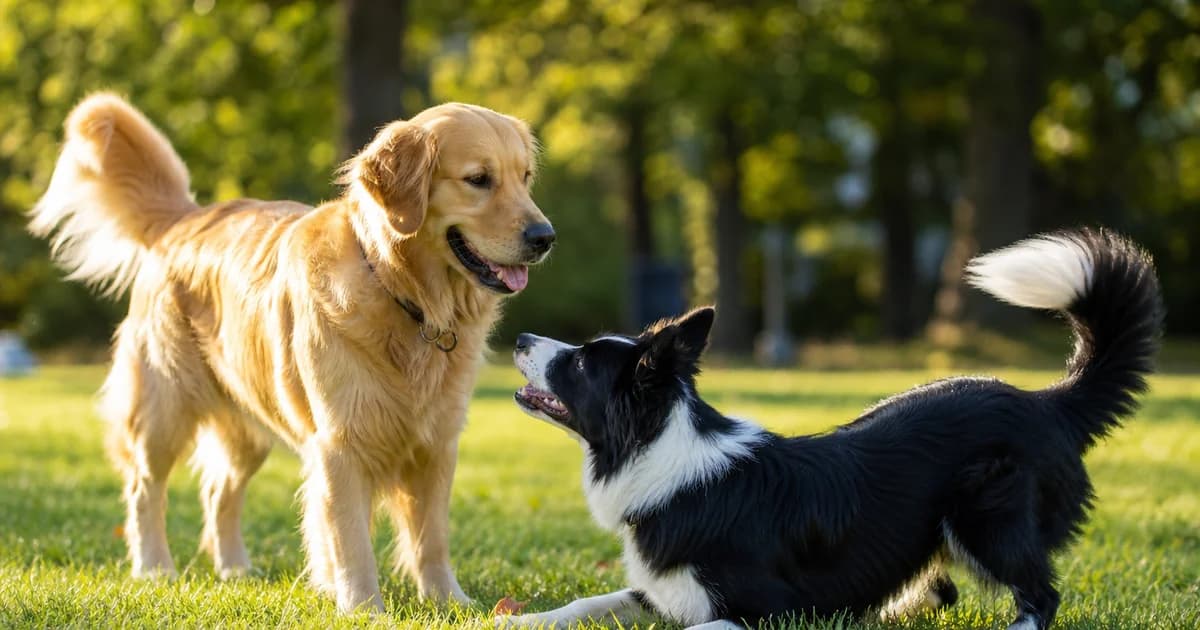
The play bow, front end down and rear end up, is one of the most recognizable and reliable dog signals. It is an invitation to play and a way to signal that subsequent rough behavior is playful, not aggressive. Dogs use play bows to initiate interaction and to defuse tension during play that gets too intense.
Shake Off
Dogs shake their bodies as if wet when they are not actually wet. This is a stress release behavior that often follows tense moments. If your dog shakes off after an interaction with another dog or a stressful event, they are resetting their emotional state. This is healthy coping.
Freezing
When a dog goes completely still, they are experiencing high stress or preparing for action. Freezing is not calm. It is the moment before fight or flight kicks in. A frozen dog is dangerous to approach because they are operating on instinct, not rational thought.
Facial Expressions and Micro-Signals
Beyond the big three of ears, tail, and posture, dogs communicate through subtle facial movements that are easy to miss if you are not looking for them.
Whale Eye
When a dog shows the whites of their eyes by looking to the side without turning their head, they are uncomfortable. This often happens when a dog is being hugged, restrained, or approached in a way they do not like. Whale eye is a warning signal that should be respected.
Lip Licking
Dogs lick their lips when there is no food around as a calming signal. It is a way of saying "I am not a threat" and self-soothing in stressful situations. Context matters. A dog licking their lips while staring at your sandwich is different from a dog licking their lips while being examined by a veterinarian.
Yawning
Like lip licking, yawning when not tired is a stress signal. Dogs yawn to calm themselves and communicate that they are not looking for conflict. If your dog yawns during training, at the vet, or in new situations, they are telling you they need a break.
Smiling
Some dogs show their teeth in what looks like a smile. This is usually a submissive grin, not aggression. The rest of the body will be loose and wiggly, and the dog may squint their eyes. True aggression involves a tense body, hard eyes, and often a growl.
Context Is Everything
The same signal can mean different things depending on context. A wagging tail at the dog park probably means a friendly greeting. A wagging tail when a stranger approaches your front door might indicate arousal that could become defensive.
Always look at the whole picture. Ears, tail, posture, facial expression, and the environment all work together to create a complete communication. A dog with a wagging tail but stiff body and hard eyes is not a dog who wants to be petted.
Common Misinterpretations
Myth: Wagging tail equals happy dog
Reality: Dogs wag their tails when aroused, and arousal can be positive or negative. A stiff, high wag is very different from a loose, mid-height wag. Look at the rest of the body before assuming friendliness.
Myth: A dog showing belly wants a belly rub
Reality: Dogs roll on their backs for multiple reasons. Sometimes it is an invitation to play or a request for affection. Other times it is a submissive display indicating discomfort or appeasement. A dog who rolls over and then freezes or shows whale eye does not want to be touched.
Myth: Growling is always bad
Reality: Growling is communication, not aggression. A dog who growls is giving you a warning before escalating to a bite. Punishing growling teaches dogs to skip the warning and go straight to biting. Thank your dog for growling and give them space.
Myth: A dog who approaches wants to be petted
Reality: Dogs approach for many reasons. Curiosity, social pressure, or the hope of treats do not necessarily mean the dog wants physical contact. Let the dog initiate contact and watch for signs that they want the interaction to end.
Putting It All Together: Real-World Scenarios
Scenario 1: The Vet Visit
Your dog enters the clinic with ears back, tail tucked, and body low. They are licking their lips and yawning despite being well-rested. This dog is experiencing significant stress and fear. Forcing them through the visit without addressing their emotional state will make future visits harder. Ask about fear-free handling techniques or medication to reduce anxiety.
Scenario 2: The Dog Park Greeting
A new dog approaches yours with loose, wiggly body, open mouth, and sweeping tail wag. Their ears are neutral and their approach is curved rather than direct. This is a friendly greeting. Allow the dogs to interact while monitoring for any shift in body language.
Scenario 3: The Resource Guarding Moment
Your dog freezes over their food bowl, ears forward, tail high and stiff, hard stare fixed on you. This is not aggression yet, but it is a clear warning. Back away and consult a professional trainer about resource guarding protocols. Do not punish this behavior or try to force the issue.
Scenario 4: The Play Session
Two dogs are wrestling. One dog shakes off, does a play bow, and re-engages. This is healthy play. The shake-off released tension, and the play bow confirmed that the roughhousing is still consensual. If one dog freezes, shows whale eye, or tries to disengage while the other persists, it is time to intervene.
FAQ
Why does my dog's tail wag when they are in trouble?
Tail wagging indicates arousal, not happiness. When you scold your dog, they might wag their tail because they are stressed and uncertain, not because they are happy about being in trouble. The wag is a sign of emotional intensity, not positive emotion.
My dog's ears are always back. Is something wrong?
Some dogs naturally carry their ears in a more backward position due to breed characteristics or past experiences. Establish what is normal for your individual dog. If the ear position changes suddenly or is accompanied by other stress signals, investigate further.
How do I tell the difference between play and real aggression?
Play involves loose, bouncy movement, reciprocal roles (taking turns being on top), and frequent play bows. Real aggression involves stiff bodies, hard stares, and one dog pursuing while the other tries to escape. When in doubt, separate the dogs.
Why does my dog yawn when I pet them?
Yawning when not tired is a stress signal. Your dog might be uncomfortable with the type of petting, the location, or the duration. Try gentler touch, different areas, or shorter sessions. Watch for other displacement behaviors like lip licking or turning away.
What does it mean when my dog shows me their belly?
It depends on context. During play, it is often an invitation to wrestle. In stressful situations, it is a submissive display indicating appeasement. Look at the rest of the body. A loose, wiggly dog wants interaction. A tense, frozen dog needs space.
Can dogs really smile?
Some dogs display a "submissive grin" that looks like a smile. The lips pull back to show teeth, but the rest of the body is loose and relaxed. This is different from an aggressive snarl, which involves tension, hard eyes, and often vocalization.
Why does my dog stare at me?
Eye contact can mean different things depending on intensity and context. Soft, relaxed eye contact is bonding behavior. Hard, fixed staring can be a challenge or warning. Context and the rest of the body language tell you which one you are seeing.
How quickly can a dog's body language change?
Very quickly. A dog can go from relaxed to aroused in seconds if triggered. This is why continuous observation matters, especially in new situations or around unfamiliar dogs. Do not assume that a dog who was friendly five seconds ago is still friendly now.
Should I correct my dog's body language?
You cannot correct body language directly. Body language is communication, not behavior. If your dog is displaying fear or stress signals, change the situation causing those emotions rather than trying to suppress the signals. Address the root cause, not the symptom.
Can I learn to read my dog's body language better?
Yes. Start by filming your dog in various situations and reviewing the footage. We miss a lot in real-time that becomes obvious on video. Also, practice observing dogs at a distance before trying to interpret your own dog up close. Objectivity helps.
Key Takeaways
Reading dog body language is a skill that develops with practice. Start with the basics: ears, tail, and overall posture. Learn what is normal for your specific dog. Always consider context before interpreting any signal. And remember that body language is communication, not behavior to be corrected.
The dogs in your life are constantly telling you how they feel. Learning to listen makes you a better guardian and strengthens the bond between you. It also prevents misunderstandings that can lead to fear, anxiety, or even bites.
Pay attention. Your dog is talking. You just need to learn the language.
Want to better understand what your dog is trying to tell you? Download Dog Translator for AI-powered bark analysis and behavior insights.
Try it with your dog
Record a bark, scan a dog photo, or play a sound and see what happens next.