2026-08-07 · 6
Dog Breed-Specific Behavior: Training Strategies by Breed Group
Not all dogs learn the same way. A training method that works perfectly for a Golden Retriever might frustrate a Siberian Husky, while techniques that motivate a Border Collie could overwhelm a Basset Hound. Understanding your dog's breed-specific tendencies helps you tailor your training approach for better results and a stronger relationship with your pet.
Why Breed Matters in Training
While every dog is an individual, breed groups share common behavioral tendencies developed through generations of selective breeding. Herding dogs were bred to control livestock, giving them high energy and a desire to chase moving objects. Hounds were bred to track scents, making them independent thinkers who follow their noses. Terriers were bred to hunt vermin, creating tenacious, feisty personalities.
These genetic predispositions do not determine behavior completely. Environment, socialization, and individual personality all play significant roles. However, ignoring breed tendencies means working against instincts that have been reinforced for centuries. Smart trainers use breed characteristics as starting points, then adjust for individual differences.
Herding Dogs: Channeling the Chase
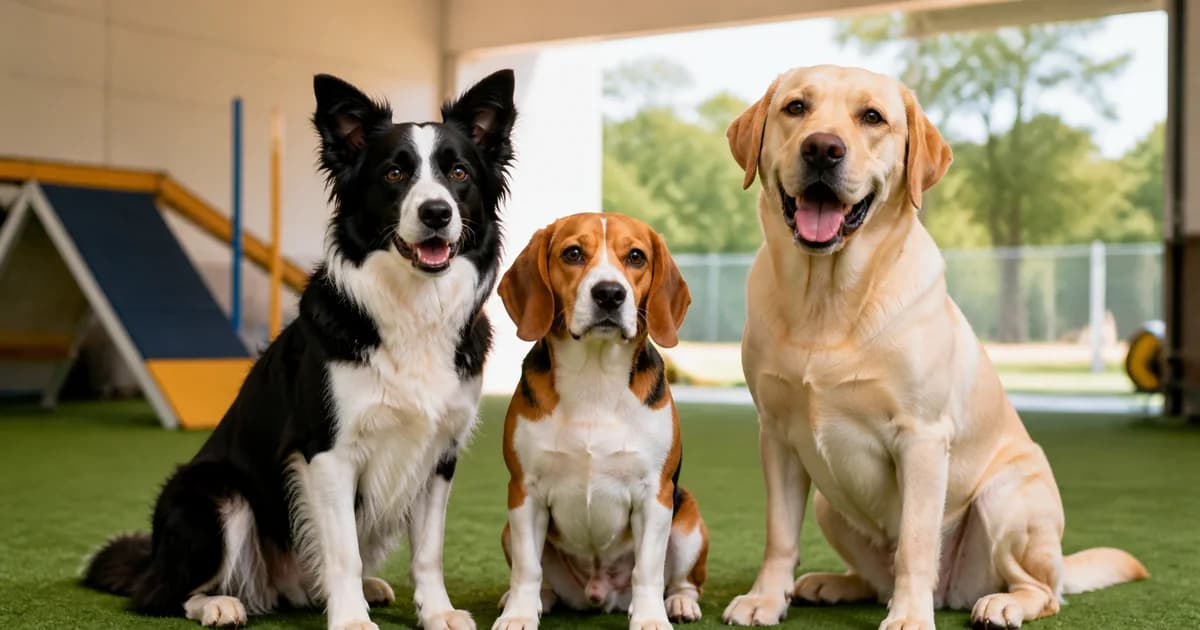
Border Collies, Australian Shepherds, Corgis, and other herding breeds share intense focus, high energy, and a strong desire to control movement. These traits make them highly trainable but also create specific challenges. Herding dogs often chase cars, bicycles, and running children, not out of aggression but from instinctive drive to gather and control.
Training herding dogs requires providing appropriate outlets for their energy and instincts. Agility, flyball, and herding trials give these dogs legitimate ways to use their natural abilities. Without such outlets, herding dogs may invent their own jobs, like chasing shadows or circling family members.
Mental stimulation matters as much as physical exercise for these breeds. Herding dogs excel at problem-solving and enjoy training sessions that challenge their intelligence. Short, varied sessions work better than repetitive drills, which can bore these quick learners. Use their desire to work with you as motivation, making training a collaborative activity rather than a command structure.
Hounds: Managing Independence
Beagles, Bloodhounds, Coonhounds, and other scent hounds present different training challenges. Bred to track scents independently, these dogs are less focused on human direction and more attuned to their noses. A Beagle who catches an interesting scent may completely ignore commands they normally follow perfectly.
Training hounds requires patience and realistic expectations. These dogs are not being stubborn when they ignore recall commands while tracking. They are following instincts stronger than their desire to please you. Management tools like long lines and secure fencing are essential while building reliable recall.
Food motivation works well with most hounds, as these breeds were often bred to be self-sufficient and food-focused. Use high-value treats to compete with environmental distractions. Keep training sessions interesting, as hounds can become bored with repetition. Scent work activities provide appropriate outlets for their tracking instincts.
Working Dogs: Respecting Power and Intelligence
German Shepherds, Rottweilers, Dobermans, and other working breeds combine intelligence with physical capability. These dogs were bred for demanding jobs like guarding, police work, and military service. They need clear leadership, consistent rules, and meaningful work to stay balanced.
Training working dogs requires establishing yourself as a competent leader without using force or intimidation. These dogs are smart enough to recognize unfair treatment and confident enough to resist it. Positive reinforcement works well, but these dogs also need to understand boundaries and consequences for their actions.
Working dogs thrive on having jobs. Obedience competition, protection sports, search and rescue, or therapy work give these dogs appropriate outlets for their drives. Without such direction, working dogs may become anxious, destructive, or attempt to manage their households inappropriately.
Terriers: Working with Tenacity
Jack Russell Terriers, Scottish Terriers, Bull Terriers, and other terrier breeds share determination, courage, and high prey drive. These small dogs were bred to hunt and kill vermin, often animals larger than themselves. Their fearlessness and persistence make them challenging but rewarding training subjects.
Terriers require creative training approaches. These dogs bore easily and may refuse to participate in repetitive drills. They respond well to games, challenges, and variety in training sessions. Their high prey drive means they need secure containment and careful management around small animals.
Despite their reputation for stubbornness, terriers are highly intelligent and capable of excellent obedience. The key is making training fun and engaging. Use their natural problem-solving abilities and competitive nature to motivate them. Short, energetic sessions work better than lengthy training marathons.
Sporting Dogs: Harnessing Cooperation
Labradors, Golden Retrievers, Spaniels, and other sporting breeds were developed to work closely with human hunters. These dogs tend to be cooperative, eager to please, and highly food-motivated. Their people-oriented nature makes them generally easier to train than more independent breeds.
Training sporting dogs is usually straightforward, but these dogs do present some challenges. Their friendliness can translate to jumping on people or overexcitement around strangers. Their love of food can lead to counter surfing and begging if not managed. Their energy levels require consistent exercise to prevent destructive behavior.
Retrievers particularly need to learn bite inhibition and gentle mouth behavior, as they were bred to carry game without damaging it. Sporting dogs excel at fetch, dock diving, and other retrieval activities that use their natural abilities. These activities also provide excellent exercise and bonding opportunities.
Toy Breeds: Building Confidence
Chihuahuas, Pomeranians, Yorkies, and other toy breeds often suffer from inconsistent training. Their small size leads owners to excuse behaviors that would be unacceptable in larger dogs. Small dogs can develop aggression, excessive barking, and house training problems when not given clear boundaries.
Training toy breeds requires the same consistency as training large dogs. Do not pick up your small dog to avoid problems; teach them to handle situations appropriately. Use appropriately sized rewards, as large treats can quickly overfill small stomachs. Be mindful of physical limitations, as small dogs can be injured by rough handling or high-impact activities.
Many toy breeds are surprisingly capable in obedience and agility when trained properly. Their small size allows them to participate in activities unsuitable for larger breeds. Build their confidence through positive experiences and avoid coddling behaviors that reinforce anxiety.
Northern Breeds: Understanding Independence
Siberian Huskies, Malamutes, Samoyeds, and other northern breeds were bred for sledding in harsh conditions. These dogs are intelligent, athletic, and notoriously independent. They were bred to make decisions while running sled teams, not to follow human direction blindly.
Training northern breeds requires accepting their independent nature. These dogs are not typically obedience stars and may never achieve the reliability of herding or sporting breeds. Focus on management, safety, and building a relationship based on mutual respect rather than control.
Secure containment is essential, as northern breeds are notorious escape artists. Their high prey drive means they cannot be trusted off-leash in unsecured areas. Provide plenty of physical exercise and opportunities to run in safe, enclosed spaces. These dogs thrive on activities like sledding, skijoring, and hiking.
Guarding Breeds: Managing Protection Instincts
Mastiffs, Great Danes, livestock guardian breeds, and other dogs bred for protection require careful socialization and training. Their size and natural suspicion of strangers make proper behavior essential for public safety. These dogs need to learn appropriate guarding behavior versus inappropriate aggression.
Early socialization is critical for guarding breeds. Expose them to diverse people, places, and situations during their formative months. Teach them that most strangers are not threats while maintaining their natural alertness. Inconsistent socialization can create dangerous dogs who react aggressively inappropriately.
Training should emphasize calm, controlled behavior. These dogs do not need protection training; their size and appearance provide deterrence naturally. Focus on obedience, manners, and teaching them to look to you for guidance about potential threats. Harsh corrections can damage their confidence or trigger defensive aggression.
Mixed Breeds: Reading the Individual
Mixed breed dogs may display characteristics from any of their ancestral breeds. Observing your dog's behavior provides clues about their genetic background. A mixed breed who obsessively chases moving objects may have herding ancestry. One who follows their nose relentlessly likely has hound heritage.
Train mixed breeds by identifying their dominant behavioral tendencies and using appropriate strategies. You may need to combine techniques from multiple breed categories. The advantage of mixed breeds is that extreme breed-specific drives are often moderated, creating more flexible, adaptable dogs.
DNA testing can provide insights into your mixed breed's ancestry, helping predict behavioral tendencies. However, treat these results as guidelines rather than definitive answers. Your individual dog's behavior matters more than their genetic background.
Adjusting for Individual Differences
Within every breed, individual dogs vary significantly. Some Golden Retrievers are aloof rather than friendly. Some Huskies are surprisingly obedient. Some terriers are laid-back rather than intense. Use breed tendencies as starting points, then adjust based on your specific dog's personality.
Age also affects training approaches. Puppies of all breeds need socialization and foundation training. Adolescent dogs often test boundaries regardless of breed. Adult dogs may have established habits that require modification. Senior dogs need adjustments for physical limitations.
Your lifestyle and experience level should also influence breed selection and training approaches. High-energy working breeds do not suit sedentary owners. Independent northern breeds frustrate novice trainers. Choose breeds compatible with your life and seek professional help when working with challenging breeds.
Frequently Asked Questions
Can you train any dog regardless of breed?
Yes, all dogs can learn basic obedience and good manners. However, breed tendencies affect how easily dogs learn certain behaviors and what motivates them. Understanding your dog's breed helps set realistic expectations and choose effective training methods.
Are some breeds untrainable?
No breed is untrainable, though some present greater challenges than others. Independent breeds like Huskies and scent hounds may never achieve the off-leash reliability of herding dogs. This reflects their breeding rather than intelligence or willingness to learn.
Should I choose a dog based on trainability?
Trainability is one factor among many. Consider your lifestyle, experience level, activity preferences, and living situation. An easily trained breed that does not match your energy level or interests will be less satisfying than a more challenging breed that fits your life.
Do mixed breeds have the same behavioral tendencies as purebreds?
Mixed breeds may display characteristics from any of their ancestral breeds. They often show moderated versions of breed-specific drives, making them more flexible than purebreds. Observe your individual dog's behavior to identify their dominant tendencies.
How do I know what breed group my dog belongs to?
If you know your dog's breed, research which group that breed belongs to. For mixed breeds, observe their behavior and physical characteristics. DNA testing can provide ancestry information that helps predict behavioral tendencies.
Can training overcome breed instincts?
Training can manage and redirect instincts but rarely eliminates them completely. A herding dog can learn not to chase children, but the instinct to control movement will remain. A hound can learn recall, but may still follow scents when not supervised. Work with instincts rather than against them.
Should I use different training methods for different breeds?
Yes, adjust your approach based on what motivates your dog and what challenges they present. Food-motivated sporting dogs respond well to treat-based training. Independent hounds need high-value rewards and patience. Intelligent herding dogs need mental challenges to stay engaged.
Are certain breeds naturally aggressive?
No breeds are naturally aggressive toward humans, though some have stronger guarding instincts that require careful management. Aggression usually results from poor socialization, training, or individual temperament rather than breed. Properly raised dogs of any breed can be friendly and safe.
Conclusion
Understanding breed-specific behavior helps you become a more effective trainer and a better partner for your dog. While every dog is an individual, breed groups share tendencies developed through generations of selective breeding. Working with these tendencies rather than against them produces better results and happier dogs.
The key is balancing breed awareness with individual observation. Use breed characteristics as starting points, then adjust based on your specific dog's personality, age, and experiences. Remain flexible in your approach, willing to try different techniques until you find what works for your particular dog.
Remember that breed is just one factor among many. Socialization, training, environment, and individual personality all shape behavior. Even dogs of the same breed can differ dramatically based on their upbringing and genetics. The best trainers combine breed knowledge with attention to the individual dog in front of them.
Whether you have a herding dog who needs a job, a hound who follows their nose, or a terrier with more determination than sense, understanding their breed background helps you provide appropriate outlets and effective training. The result is a well-behaved dog and a stronger bond between you.
Want to better understand what your dog is trying to tell you? Download Dog Translator to decode barks, body language, and behavior.
Related Articles
- Herding Dog Instincts: Border Collie and Corgi Behavior Guide
- Dog Body Language Complete Guide: Ears, Tail, Posture
- Dog Calming Signals Stress Communication Guide
- Dog Enrichment Activities Mental Stimulation Guide
- Dog Training: Positive Reinforcement Explained
- Dog Separation Anxiety Training Complete Guide
- Puppy Crate Training Potty Training Complete Guide
- Rescue Dog 3-3-3 Rule Adjustment Guide
Try it with your dog
Record a bark, scan a dog photo, or play a sound and see what happens next.