2026-08-25 · 7
Dog First Aid: Building an Emergency Kit and Handling Common Injuries
Your dog will never injure herself at a convenient time. The cut paw happens at 10 PM on Sunday. The bee sting swells during a holiday weekend hike when your vet is closed. The chocolate bar disappears from the counter while you are grabbing groceries.
I have been there. Standing in my kitchen at midnight with a bleeding dog, wondering if this warrants an emergency vet visit or if I can handle it at home. Those moments are stressful enough without also realizing you do not have gauze, or you do not know how to check if the bleeding is serious.
This guide covers what to keep on hand and how to handle common injuries. It is not a substitute for veterinary care. When in doubt, call your vet. But the minutes between injury and professional treatment matter. Knowing what to do in those minutes can keep a bad situation from getting worse.
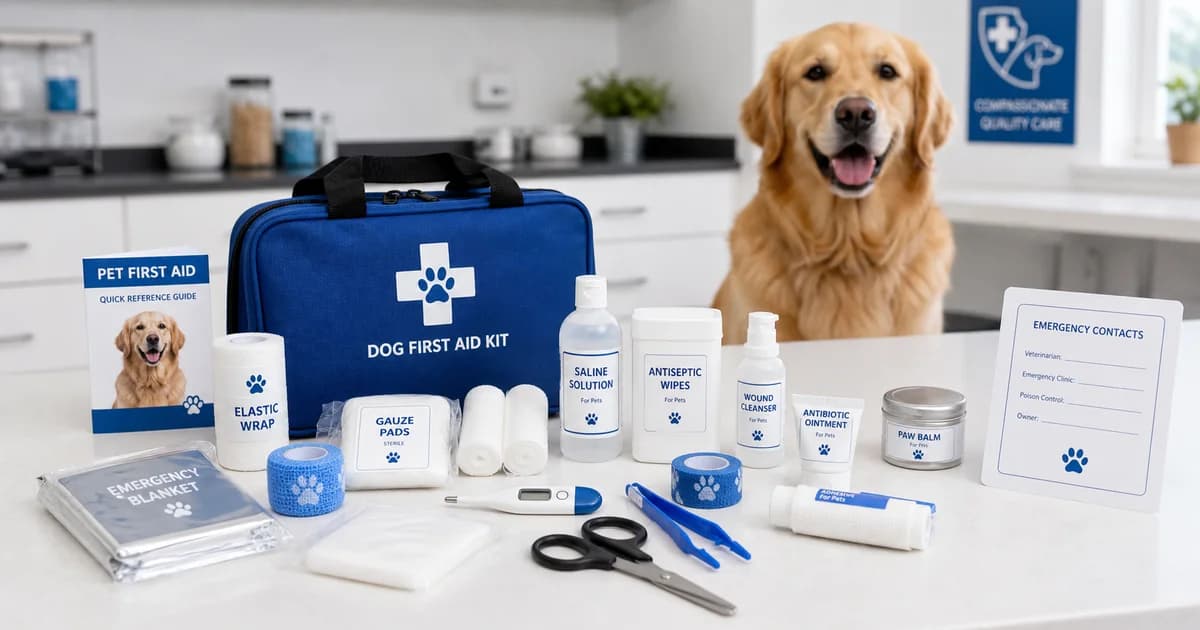
Building Your Dog First Aid Kit
Your dog first aid kit needs to be separate from your human kit. Dogs have different needs, different risks, and very different reactions to medications. Store it in a waterproof container somewhere you can grab it quickly. Check it every six months for expired items.
Essential Supplies:
Gauze pads and rolls in multiple sizes. You will need these for bleeding control and wound covering. Non-stick pads are better for wounds that have already been cleaned. Regular gauze works for wrapping and pressure application.
Adhesive tape designed for medical use. Do not use human adhesive bandages directly on dog fur. They stick to hair and cause more damage when removed. Medical tape wraps around gauze and holds it in place without touching the fur directly.
Antiseptic solution. Chlorhexidine or povidone-iodine solutions work well for cleaning wounds. Avoid hydrogen peroxide for wound cleaning. It damages tissue and delays healing. Peroxide has one specific use in canine first aid, which we will cover later.
Digital thermometer. A dog's normal temperature runs higher than humans, between 101 and 102.5 degrees Fahrenheit. Rectal thermometers give the most accurate reading. Have one dedicated to your dog and label it clearly.
Blunt-tipped scissors. These cut gauze, tape, and in emergencies, they can cut away fur to expose a wound. The blunt tips prevent accidental stabbing if your dog moves suddenly.
Tweezers for splinter and tick removal. Fine-point tweezers work better for ticks than the wider versions. Have a separate pair for tick removal to avoid cross-contamination.
Styptic powder or pencil. This stops bleeding from nail trims that cut too close to the quick. It works through chemical cauterization and provides immediate relief from minor bleeding.
Saline solution for eye flushing. Contact lens solution works if it is pure saline without additives. Use this to flush debris from eyes or clean wounds when nothing else is available.
Muzzle or soft cloth strip. Even the gentlest dog may bite when in pain. A proper basket muzzle allows panting and some drinking while preventing bites. In a pinch, a soft cloth can wrap around the snout, but monitor breathing carefully.
Emergency contact card. Your vet's number, the nearest 24-hour emergency clinic, and the ASPCA Animal Poison Control Center number (888-426-4435) should be written down. Your phone might be dead or broken when you need this information.
Handling Bleeding Wounds
Blood looks worse than it usually is. The challenge is staying calm enough to assess what you are actually seeing.
For minor cuts, clean with saline or antiseptic. Apply gentle pressure with gauze for several minutes. Once bleeding stops, a thin layer of antibiotic ointment and a non-stick pad wrapped in gauze will protect it.
For serious bleeding, apply firm, direct pressure with a clean cloth. Do not lift the dressing to check if it stopped. This disrupts clotting. Hold steady pressure for at least five minutes. If blood soaks through, add more layers on top. Do not remove the saturated material.
If bleeding does not slow after 10 minutes of firm pressure, go to the emergency vet now. Apply a pressure bandage if you know how. Transport carefully.
Never use a tourniquet unless you have specific training. Done wrong, a tourniquet causes tissue death and can cost your dog a limb.
Dealing with Burns
Burns come from hot pavement, spilled coffee, cooking accidents, house fires. Severity depends on depth and how much skin is affected.
For minor burns, cool with room temperature water. Do not use ice. Ice causes constriction that worsens tissue damage. Run cool water for 10 to 15 minutes, then cover loosely with a clean, non-stick dressing.
Chemical burns need different handling. Brush off dry chemical first, then flush with lots of water for at least 20 minutes. Do not try to neutralize chemicals with other substances. Water is the only first aid you need.
Electrical burns are often worse than they look. Internal damage can be significant even with small surface wounds. Any electrical burn needs veterinary evaluation.
Burns covering more than a small patch, burns on the face or genitals, and any burn with blistering are emergencies. Transport carefully, keep the burned area elevated if possible, and cover with a clean, dry cloth.
Choking and Airway Emergencies
A choking dog is terrifying. The gasping, pawing at the mouth, panicked behavior. It triggers panic in you too. Staying calm enough to help is hard but necessary.
First, see if you can spot the object. Open your dog's mouth carefully, watching for bites, and look down the throat. If you can see it and reach it easily, remove it with fingers or tweezers. Do not blindly fish around. You can push it further down.
If you cannot see or reach the object, position small dogs with their spine against your chest, head up. For large dogs, stand behind them. Place your fist just below the ribcage and give quick, firm thrusts upward and forward. This is the canine Heimlich. Check the mouth after each thrust.
Once the object is out, your dog still needs veterinary evaluation. Choking can damage the throat and airways in ways you cannot see.
Poisoning and Toxic Ingestion
Dogs eat things they should not. Chocolate, grapes, xylitol, medications, antifreeze, household cleaners. The response depends on what and how much.
First, identify the substance if you can. Save packaging, take photos, collect a sample. This helps veterinarians determine treatment.
Call your vet or the ASPCA Animal Poison Control Center immediately. They can tell you if the amount is dangerous and what to do. Some toxins need immediate vomiting. Others cause more damage if vomited. Do not induce vomiting without professional guidance.
Hydrogen peroxide (3% solution) is the standard home emetic when vomiting is appropriate. The dose is 1 teaspoon per 10 pounds of body weight, max 3 tablespoons. This is the only appropriate use of peroxide in canine first aid. Do not repeat if vomiting does not happen within 15 minutes. Go to the vet.
Transport to veterinary care even if your dog seems fine after vomiting. Many toxins have delayed effects. Early supportive care improves outcomes.
Seizures
Watching your dog seize is distressing. The good news: single seizures are rarely immediately life-threatening. The bad news: you cannot stop one once it starts.
During a seizure, clear the area of objects that could cause injury. Do not put your hands near your dog's mouth. They cannot swallow their tongue, but they can bite you hard. Note the time. Most seizures last 30 seconds to 2 minutes.
When it ends, your dog will be disoriented and possibly temporarily blind. This post-ictal phase can last minutes to hours. Keep them calm, prevent stumbling into danger, offer comfort without restraining.
Any seizure lasting more than 5 minutes is a medical emergency. Status epilepticus, continuous or cluster seizures, can cause brain damage and death without rapid intervention.
When to Skip First Aid and Go Straight to the Vet
Some situations need professional care immediately. Home first aid only delays necessary treatment.
Difficulty breathing, pale or blue gums, collapse, severe bleeding that does not stop with pressure, seizures over 5 minutes, known toxin ingestion of dangerous substances, trauma from vehicle strikes or falls, bloating with unproductive retching in large dogs. All of these need emergency veterinary care now.
In these cases, your job is transport, not treatment. Call ahead if possible so the clinic can prepare. Get your dog there safely and quickly.
Preventing Emergencies
The best first aid is prevention. Keep toxic foods and substances secured. Use leashes near traffic. Supervise interactions with unfamiliar dogs. Maintain secure fencing. These simple measures prevent most of the emergencies that send dogs to emergency clinics.
Regular veterinary care catches health issues before they become emergencies. Know your dog's normal behavior, appetite, and energy level. Changes often signal problems before obvious symptoms appear.
FAQ
What should I do if my dog eats chocolate?
Call your vet or poison control immediately with the type and amount of chocolate. Dark chocolate and baking chocolate are more dangerous than milk chocolate. Do not wait for symptoms to appear.
Can I use human pain medication on my dog?
Never give human pain medications without veterinary direction. Many are toxic to dogs, including ibuprofen and acetaminophen. Even safe medications require weight-appropriate dosing.
How do I know if a wound needs stitches?
Wounds longer than half an inch, wounds with visible fat or muscle, wounds that gape open, and any wound on the face or near joints typically need professional closure. When in doubt, have it checked.
What temperature is dangerous for dogs?
Body temperature above 103.5 or below 99 degrees Fahrenheit warrants veterinary attention. Heat stroke (temperature above 105) is an emergency requiring immediate cooling and veterinary care.
Should I muzzle my injured dog?
Yes, if you need to handle them and they are not your own dog or if they are showing signs of pain aggression. Even gentle dogs may bite when hurt. Use a basket muzzle that allows panting.
How often should I check my first aid kit?
Review contents every six months. Replace expired medications, restock used supplies, and ensure your emergency contact numbers are current.
Conclusion
Being prepared for canine emergencies does not require veterinary training. It requires having the right supplies and knowing when to treat versus when to transport. Most dog emergencies are manageable with prompt, calm response and appropriate first aid.
Build your kit this week. Program emergency numbers into your phone. Write them on a card for the kit. Take a pet first aid course if one is available near you. The time you invest pays off in the moments when your dog needs you.
First aid is temporary care, not definitive treatment. Your goal is stabilization and safe transport to professional veterinary care. Know your limits. Trust your instincts when something feels wrong. Never hesitate to call for help when you need it.
Understanding your dog's normal behavior, body language, and vocalizations helps you recognize emergencies early. The Dog Translator app helps you interpret what your dog is trying to communicate, making it easier to spot when something is wrong.
Related Articles
Try it with your dog
Record a bark, scan a dog photo, or play a sound and see what happens next.