2026-07-14 · 6
Dog Car Anxiety: Complete Training Guide for Travel and Vet Visits
Your dog pants in the back seat. Whines at stoplights. Vomits on the highway. You have tried treats, toys, and reassuring words. Nothing works. The problem is not your dog's stubbornness. It is their nervous system responding to a situation they find threatening.
Car anxiety affects more dogs than most owners realize. Research published in 2025 found that 84% of dogs exhibit fear or anxiety behaviors in some context. For many, the car is ground zero. The combination of motion, noise, confinement, and unpredictable destinations creates a perfect storm of stress triggers.
Understanding why your dog fears the car is the first step toward fixing it. The second step is a systematic training approach that rebuilds their association with vehicle travel. This guide covers both.
Why Dogs Develop Car Anxiety
Dogs are not born fearing cars. The anxiety develops through experience, association, or lack of early exposure. Common causes include:
Negative associations. If a dog's only car trips end at the veterinarian, groomer, or boarding facility, they learn to predict unpleasant outcomes. The car becomes a signal that something bad is about to happen.
Motion sickness. Puppies are particularly susceptible to nausea in moving vehicles. The inner ear structures that regulate balance are still developing. A few episodes of vomiting can create lasting anxiety even after the physical sensitivity resolves.
Lack of early exposure. Dogs not exposed to car travel during their critical socialization period (roughly 3 to 14 weeks) may find the experience overwhelming as adults. Novel sounds, smells, and sensations trigger fear responses.
Traumatic experiences. A car accident, sudden braking that caused a fall, or even a loud horn at the wrong moment can create lasting fear. Dogs generalize poorly, so one bad experience can color all future car trips.
Confinement stress. Some dogs experience anxiety specifically related to being restrained or enclosed. Crates, seat belts, and even the closed environment of a vehicle can trigger panic in dogs with confinement issues.
Recognizing Car Anxiety in Your Dog
Dogs communicate distress through body language and behavior. Signs of car anxiety include:
- Panting, drooling, or excessive salivation
- Whining, whimpering, or barking
- Pacing or inability to settle
- Trembling or shaking
- Lip licking or yawning (displacement behaviors)
- Attempting to escape or hide
- Vomiting or diarrhea
- Refusal to enter the vehicle
Some dogs show subtle signs that owners miss. A dog that sits frozen, staring straight ahead, may be experiencing high anxiety even without vocalizing. Learn your dog's specific stress signals.
The Foundation: Counter-Conditioning
Counter-conditioning changes your dog's emotional response to the car. Instead of fear, they learn to associate the vehicle with positive experiences. This is not about forcing exposure. It is about creating new associations at a pace your dog can handle.
The process starts with the car stationary and engine off. Simply being near the vehicle should trigger good things: treats, toys, attention. For severely anxious dogs, this might mean starting across the street and gradually moving closer over multiple sessions.
Step 1: Approach and retreat. Walk toward the car with your dog. When they show calm behavior, mark it with a clicker or verbal marker and reward. If they show anxiety, increase distance until they relax. End the session before stress escalates.
Step 2: Entering the vehicle. Once your dog approaches calmly, reward them for investigating the open door. Progress to placing front paws inside, then all four paws, then sitting inside. Each step gets rewarded. Never force your dog into the car.
Step 3: Settling in the stationary car. With your dog inside and engine off, practice calm behavior. Reward for lying down, for relaxed posture, for looking at you instead of scanning for escape routes. Keep sessions short: five minutes maximum at first.
Step 4: Engine on, stationary. Start the engine while your dog is settled. Some dogs react specifically to engine noise and vibration. Reward calm behavior. If your dog panics, turn off the engine and return to an earlier step.
Desensitization to Motion
Once your dog tolerates the stationary car with engine running, introduce movement. This is where many training plans fail by moving too fast.
Step 5: Rolling without engine. Put the car in neutral and have someone push it slightly, or roll down a gentle slope. The motion is minimal, and the engine noise is absent. Reward calm behavior.
Step 6: Short driveway trips. Drive to the end of your driveway and back. Ten seconds of movement. Reward heavily. Gradually increase distance: to the corner, around the block, two blocks.
Step 7: Variable destinations. The critical step. If every car trip ends at the veterinarian, anxiety persists. Create a schedule where most trips end somewhere fun: a park, a friend's house, a hiking trail. The destination must be unpredictable from your dog's perspective.
Managing Motion Sickness
For dogs with nausea, anxiety training alone is insufficient. Address the physical symptoms alongside the behavioral ones.
Feeding schedule. Do not feed your dog for at least two hours before car travel. An empty stomach reduces nausea and the risk of vomiting.
Positioning. Face your dog forward if possible. Rear-facing crates can worsen motion sickness. The center of the vehicle experiences less motion than the sides.
Ventilation. Fresh air helps. Crack a window to reduce pressure changes and provide sensory distraction through smells.
Medication. For severe cases, consult your veterinarian about anti-nausea medication. Cerenia is commonly prescribed for motion sickness in dogs. Addressing the physical symptoms makes behavioral training more effective.
Crate Training vs. Seat Restraint
The safety method you choose affects anxiety levels. Each option has trade-offs.
Crates provide a familiar, enclosed space that some dogs find comforting. For others, the confinement increases panic. If using a crate, introduce it in the home first. The crate should be associated with safety and rest, not just car travel.
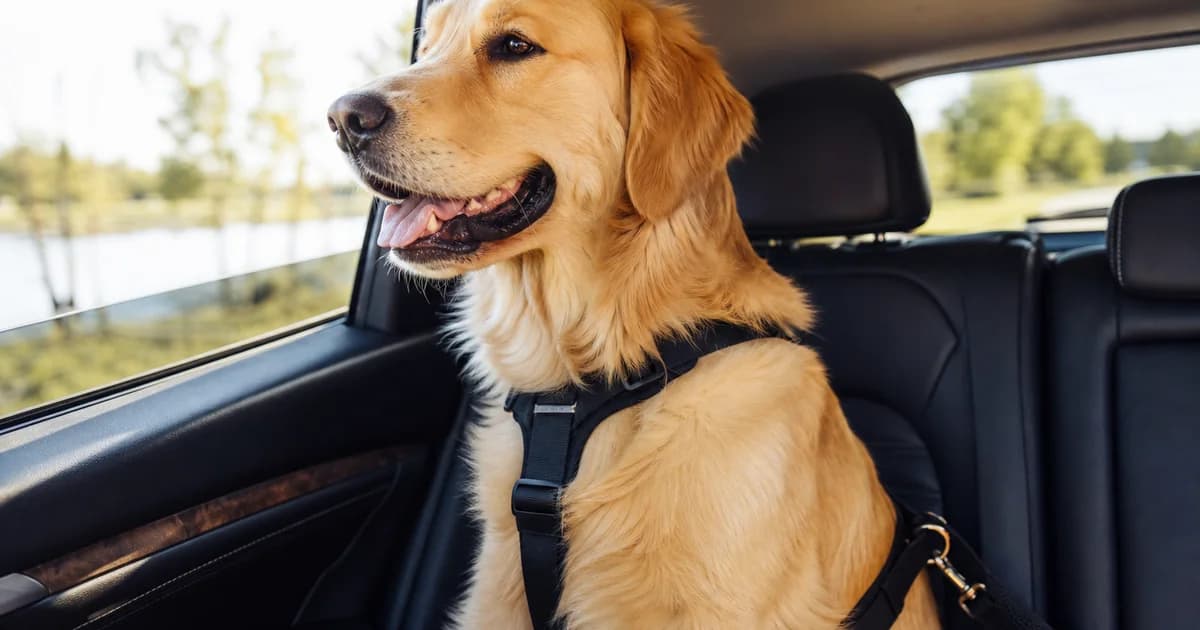
Seat belts and harnesses allow more freedom of movement and visual contact with owners. Some dogs prefer this. Others pace more, which can increase nausea. Choose a harness designed for vehicle safety, not just walking.
Barriers like backseat dividers create a defined space without full enclosure. This middle ground works for some dogs but offers less protection in accidents.
Experiment to find what works for your specific dog. There is no universal solution.
Building Positive Associations
Beyond the systematic desensitization protocol, create positive associations with car-related stimuli.
The car as dining room. Feed your dog meals in the stationary car. Start with the bowl just outside the vehicle, then just inside the door, then fully inside. The car becomes associated with one of life's most reliable pleasures.
The car as toy box. Keep special toys that only appear in the vehicle. A stuffed Kong, a chew toy, or a puzzle feeder reserved for car time creates anticipation rather than dread.
The car as rest stop. Practice relaxation exercises in the stationary car. Teach your dog to settle on a mat or bed. The vehicle becomes a place where good things happen, not just a transportation device.
When to Seek Professional Help
Some cases of car anxiety require professional intervention. Consider consulting a certified behavior consultant or veterinary behaviorist if:
- Your dog's anxiety is severe (panic, attempts to escape, self-injury)
- You have attempted systematic desensitization without progress after several weeks
- The anxiety generalizes to other contexts
- Your dog shows aggression related to car travel
- You are unable to implement training due to safety concerns
Veterinary behaviorists can prescribe anti-anxiety medication for severe cases. Medication does not replace training, but it can lower arousal enough for training to take hold. Common options include trazodone, gabapentin, and fluoxetine.
Long-Term Management
Even after successful training, maintenance matters. Continue to vary destinations so the car does not predict specific outcomes. Occasionally drive to fun locations just to reinforce the positive association.
Monitor for regression. Stressful events, illness, or changes in routine can cause anxiety to resurface. Return to earlier training steps if needed. Regression is normal, not failure.
For dogs that never fully overcome car anxiety, management strategies can still improve quality of life. Limit car travel to essential trips. Use medication when necessary. Consider alternatives like veterinary house calls or mobile grooming services when available.
Frequently Asked Questions
How long does it take to fix car anxiety in dogs?
Timeline varies dramatically. Mild cases may improve in weeks. Severe anxiety can take months of consistent training. Factors include the dog's temperament, the severity of the anxiety, and how consistently owners can implement training protocols.
Can all dogs overcome car anxiety?
Most dogs can improve significantly with systematic training. Some may never fully enjoy car travel but can learn to tolerate it without distress. A small percentage have anxiety rooted in physical conditions or trauma that limits progress.
Should I use treats or toys for car training?
Both work. High-value food rewards are effective for most dogs. Some respond better to toys or play. The key is finding what your individual dog values most and using it exclusively for car-related training.
Is it okay to let my anxious dog ride on my lap?
No. This is unsafe for both of you. Anxious dogs can interfere with driving, and airbags deploy with force that can injure or kill a dog in the front seat. Use proper restraint in the back seat.
Can puppies outgrow car sickness?
Many do. The inner ear structures that regulate balance mature around 6 months of age. However, negative experiences during the susceptible period can create lasting anxiety even after physical maturation.
What if my dog only gets anxious going to the vet?
This is association-based anxiety. Increase the frequency of car trips to fun destinations so the veterinarian becomes unpredictable. Practice relaxation exercises in the veterinary parking lot without entering the building.
Car anxiety is one of the most common behavior problems dog owners face. It is also one of the most treatable. With patience, systematic training, and attention to your dog's specific needs, you can transform the car from a source of fear to a neutral or even positive experience.
Download Dog Translator to better understand your dog's communication signals during training. The app helps decode vocalizations and body language, giving you insight into your dog's emotional state.
Related Articles
- Dog Separation Anxiety Training Complete Guide 2026
- Dog Noise Phobia Training Fireworks Anxiety Guide
- Dog Calming Signals Stress Communication Guide
- Dog Body Language Guide
- Dog Stress Signals Calming Signals Guide
- Dog Barking Communication Guide
- Dog Enrichment Activities Mental Stimulation Guide
- Puppy Crate Training Potty Training Complete Guide
Try it with your dog
Record a bark, scan a dog photo, or play a sound and see what happens next.