2026-11-15 · 4 min read
Why Does My Dog Lean on Me? Read the Whole Situation
Your dog might lean on you because close contact feels comfortable, because the behavior has earned attention before, or because your dog needs support in that moment. The lean alone does not prove love, anxiety, guarding, illness or dominance. Look at the whole body, what happened just before and after, and whether this is normal for your dog. Unsteadiness changes the picture: if your dog seems to be using you for physical support, contact your veterinarian.
Start with the whole situation
One movement can be easy to misread. VCA's canine communication guidance focuses on posture and body language rather than treating a single gesture as a complete message. Before settling on an explanation, consider four things:
-
Think back to what happened just before the lean. Did you stop petting, sit down, enter a busy place or hear an unfamiliar sound?
-
Look beyond the point of contact. Check the eyes, mouth, ears, tail and muscle tension, and notice whether your dog can freely move away.
-
Watch what follows your response. Your dog might settle, seek more contact, walk away or continue to look uncomfortable.
-
Compare it with your dog's usual behavior. A regular evening lean is different from suddenly using you for balance while appearing unsteady.
Four common context patterns
These patterns can help you observe what is happening, but they are not translations. More than one may fit. The details around the lean matter more than the lean itself.
-
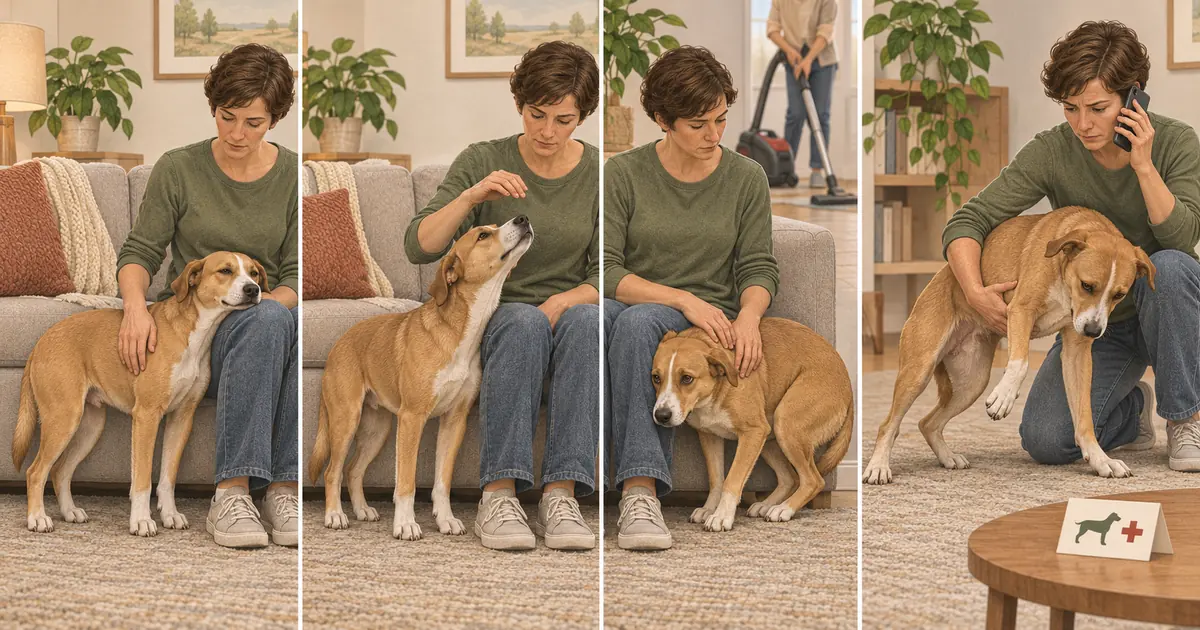
A dog with a loose body may rest a shoulder or side against you and settle there. Veterinary behaviorist Sagi Denenberg describes leaning as a possible affiliative behavior, but it cannot prove one exact feeling.
-
Leaning can also become a learned request. It may show up when petting stops or when your dog wants interaction, especially if it usually leads to more attention.
-
In a difficult moment, the lean may come with trembling, fast breathing, a lowered posture, a tucked tail or ears held back. Respond to the cluster by reducing pressure and checking the situation. The lean does not diagnose anxiety.
-
A sudden change deserves a different response. When your dog looks unsteady and leans on you for support, arrange a veterinary assessment rather than trying to interpret the posture at home.
How to respond without guessing
Pause before deciding what the lean means. Give your dog room to move away, then see what happens next.
-
A loose body and continued, voluntary contact can be left alone if the quiet closeness is comfortable for both of you.
-
If leaning has become an inconvenient request for attention, wait for another calm behavior before responding. That gives your dog another way to earn attention without being scolded for seeking contact.
-
Several discomfort signals together are a cue to create more distance from the likely trigger and make the situation less intense. Let your dog decide whether to remain close.
-
Physical unsteadiness calls for a veterinary assessment. Do not spend time testing different behavioral explanations when your dog appears to need support.
Body leaning is not the same posture as head pressing
This guide covers a dog placing its torso, shoulder or side against a person. Holding or pushing the head against a wall or another object is a different observable posture, so these interpretations do not apply to it.
Can an app tell you why your dog leaned?
No app can turn a lean into a reliable sentence or identify its exact motive. Dog Translator is a playful bark simulation with fictional interpretations for entertainment. It can add some fun to an interaction, but it cannot replace watching your dog's posture, surroundings and physical changes. The official listing says that all described features require a Dog Translator Premium subscription.
What to do the next time your dog leans
Next time your dog leans, notice what happened first, scan the whole body and see what changes when you pause or move. A familiar lean with a loose posture may be comfortable contact or a practiced request. Several discomfort signals together call for less pressure and more support. If your dog is unsteady and leaning for physical support, call your veterinarian.
Try it with your dog
Record a bark, scan a dog photo, or play a sound and see what happens next.