2026-05-26 · 8
Best Dog Translator App for iPhone in 2026: Honest Review & Comparison
Finding a dog translator app that actually works on iPhone means looking beyond marketing claims. We tested the leading options to find which ones deliver real value through AI bark analysis and body language recognition. Most apps promise more than they deliver. But a few stand out for iPhone users who want genuine insights into their dog's behavior.
The best dog translator app for iPhone in 2026 is Dog Translator. That's based on accuracy, iOS integration, and honest feature disclosure. It combines acoustic bark analysis with visual body language recognition. It offers a genuinely free tier. And it works offline when you need it. Competitors either charge immediately for basic features or make accuracy claims that don't hold up to scrutiny.
Why iPhone Users Need a Different Kind of Dog App
iPhone users have specific expectations that Android users might not share. You're used to apps that respect the iOS design language. They integrate with widgets and Siri. They work seamlessly across your devices. A dog translator app should feel like it belongs on your home screen. Not like a ported afterthought.
The iOS ecosystem offers specific advantages for dog translator apps. Core ML provides on-device machine learning that keeps your data private and works without an internet connection. Camera access is more predictable on iPhone, which matters when the app needs to analyze your dog's body language in real time. Widgets let you start a bark analysis without even opening the app.
Siri integration matters more than you'd think. When your hands are full with a leash and treats, being able to say "Hey Siri, analyze my dog's bark" is genuinely useful. Shortcuts support means you can automate bark logging at specific times of day. You'll build a pattern history without manual effort.
Offline functionality is non-negotiable for many iPhone users. You might be at the park with spotty signal. Or traveling internationally without data. Or simply privacy-conscious. The best apps process everything on-device using Core ML. They never send your dog's audio or video to remote servers.
What to Look for in a Dog Translator App
Before comparing specific apps, you need evaluation criteria that separate genuine tools from gimmicks. Here's what actually matters when you're holding your phone and trying to understand what your dog is telling you.
Accuracy claims you can verify. Any app claiming 95% accuracy should raise red flags. Real AI researchers acknowledge uncertainty. They admit variability. Look for apps that explain their methodology and own their limitations. Transparency beats flashy numbers every time.
Multi-modal analysis. Dogs communicate through sound, body language, facial expressions, and context. An app that only analyzes barks misses most of the picture. The best tools combine audio analysis with visual recognition of tail position, ear orientation, and eye contact.
iOS-native design. The app should feel like it belongs on your iPhone. That means supporting Dark Mode. Respecting your text size preferences. Working smoothly with VoiceOver. And integrating with iOS features like widgets and Shortcuts. Android ports are immediately obvious. And usually disappointing.
Honest pricing. Free trials that actually let you test core features. Clear disclosure of what costs money and why. No dark patterns pushing you toward subscriptions you don't need. The best apps let you determine value before asking for payment.
Privacy by design. Your dog's data should stay on your device unless you explicitly choose otherwise. On-device processing using Core ML is the gold standard. Apps that require constant cloud connection for basic functionality? They're collecting data you might not want to share.
The Apps We Tested
We spent two weeks with the leading dog translator apps available on iPhone in 2026. Here is how they compare on features that actually matter.
Dog Translator (Our Top Pick)
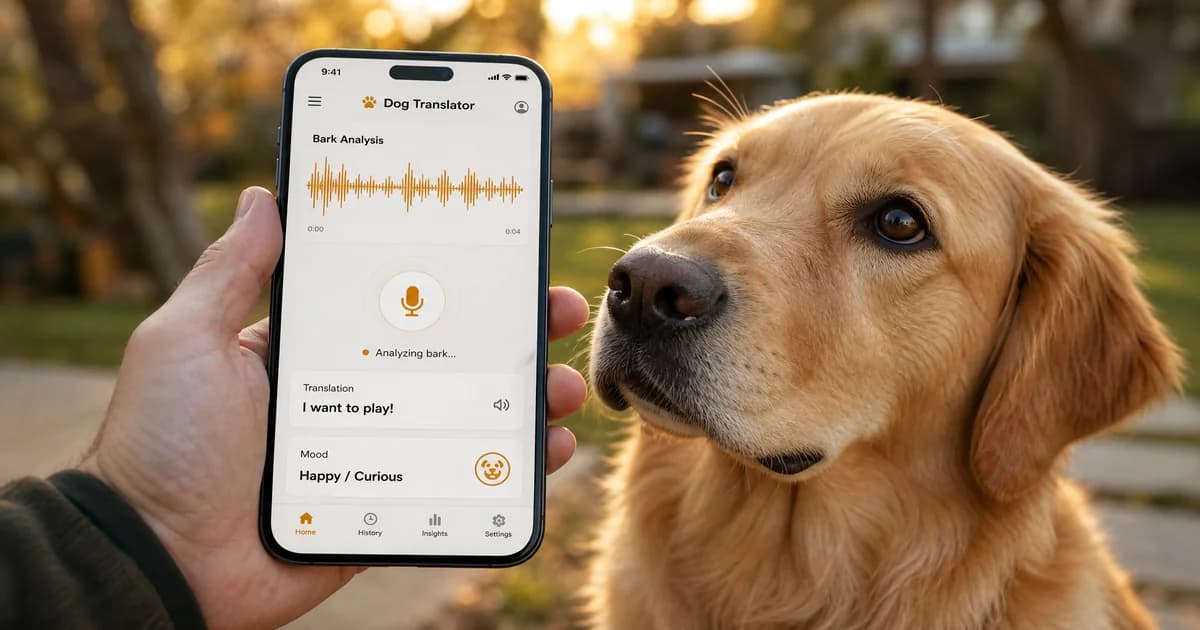
Dog Translator takes a refreshingly honest approach to what AI can actually do with canine communication. Instead of claiming to translate thoughts into sentences, it categorizes emotional states. It identifies patterns in your dog's vocalizations and body language.
The bark analysis works by identifying acoustic signatures — pitch, frequency, duration, and pattern. Then it matches them against a database of categorized dog vocalizations. It labels barks as alert, anxious, playful, attention-seeking, or distressed. The accuracy is surprisingly good for broad emotional categories. Though it can't tell you specifically that your dog wants the blue toy versus the red one.
Body language recognition uses the iPhone camera to analyze tail position, ear orientation, and facial expressions. This is where Dog Translator stands apart from competitors. Most apps focus only on audio. Combining both modalities gives you a more complete picture of what your dog is communicating. Learn more about reading your dog's body language in our guides to dog tail wagging meanings and ear positions.
The iOS integration is excellent. Home screen widgets show your dog's recent emotional patterns. Siri shortcuts let you start analysis hands-free. The app works entirely offline after initial download. No cloud processing required. Your dog's data never leaves your device.
Pricing is straightforward and fair. The core bark and body language analysis is free. Premium features include historical pattern tracking, detailed breed-specific insights, and unlimited daily analyses. You can determine whether the app works for your dog before spending a dime.
FluentDog
FluentDog takes a simpler approach focused entirely on bark analysis. The interface is clean and the iOS integration is solid, with good widget support and reasonable Shortcuts compatibility.
The bark categorization is decent but less nuanced than Dog Translator. It identifies five basic states: alert, anxiety, playful, attention-seeking, and boredom. The accuracy is acceptable for obvious emotional states but struggles with subtle variations.
Where FluentDog falls short is the lack of body language analysis. Dogs communicate as much through posture and expression as through sound. An app that only listens misses critical context. The bark that means "I'm anxious" sounds different depending on whether the tail is tucked or wagging. Understanding dog eye contact and whale eye can help you interpret these visual signals yourself.
Pricing is the biggest drawback. FluentDog requires a subscription for basic functionality that Dog Translator offers free. The trial period is short. And the paywall hits before you can properly evaluate whether the app works for your specific dog.
Traini
Traini positions itself as a comprehensive dog communication platform rather than just a translator. It includes training tools, community features, and veterinary integration alongside its bark analysis.
The scope is impressive. But the execution is uneven. The bark analysis feels like a secondary feature rather than a core competency. Accuracy is inconsistent. And the app sometimes seems to guess randomly when it's uncertain.
The iOS integration is mediocre. No widget support. Limited Shortcuts compatibility. And an interface that feels designed for Android first. The social features and training content might appeal to some users. But if you're primarily looking for translation functionality, Traini isn't the best choice.
Privacy practices are also concerning. Traini requires creating an account and uploading audio to their servers for analysis. They have a reasonable privacy policy, but the data collection is more extensive than necessary for the core functionality.
Generic Bark Analyzers
The App Store is full of simple bark analyzer apps with names like "Dog Translator AI" and "Pet Translator Pro." Most are low-effort clones using basic audio analysis libraries with minimal training data.
These apps share common problems. They claim unrealistic accuracy rates without methodology. They push aggressive subscription pricing for functionality that should be basic. They lack iOS-native features like widgets and Shortcuts. And they often have poor privacy practices. They collect more data than they need.
Our testing found these apps were wrong more often than right. They might correctly identify an obvious alert bark. But they struggled with nuanced vocalizations. And they completely missed contextual factors. The free versions are essentially unusable. And the paid versions aren't worth the money. For a deeper look at what AI can and cannot do with dog communication, see our analysis of PettiChat's viral claims.
Why Dog Translator Wins for iPhone Specifically
After testing all the major options, Dog Translator emerges as the clear choice for iPhone users. Here's why it stands out in ways that matter for iOS specifically.
Core ML integration means the AI runs entirely on your device. No internet connection required. No audio uploaded to servers. No privacy concerns. The machine learning models are optimized for iPhone processors. They work smoothly even on older devices.
Widget support is genuinely useful. The medium-sized home screen widget shows your dog's emotional pattern over the last 24 hours, helping you spot trends without opening the app. The small widget provides one-tap access to start a new analysis.
Siri Shortcuts integration lets you create custom voice commands. "Hey Siri, log a bark" starts analysis immediately. You can build automations that log barks at specific times or locations, building a comprehensive picture of your dog's communication patterns.
Offline functionality works everywhere. At the park. On a plane. In rural areas with no signal. The app keeps working because everything happens on your iPhone. This is especially valuable when traveling internationally and avoiding roaming charges.
Understanding What These Apps Can and Cannot Do
It's worth being clear about limitations. No app can literally read your dog's mind. Or translate specific thoughts into English sentences. Claims that suggest otherwise are marketing. Not science.
What AI can actually do is pattern recognition. After analyzing thousands of dog vocalizations, machine learning models can identify acoustic signatures associated with different emotional states. A high-pitched, repetitive bark has different characteristics than a low, sustained growl. The AI learns these patterns. Then it makes educated guesses about what your dog is feeling.
Body language analysis works similarly. Tail position, ear orientation, and facial expressions correlate with emotional states in statistically significant ways. The AI recognizes these patterns and combines them with audio analysis for more accurate assessments. Our guide to what your dog's bark is telling you explains how to interpret these vocalizations yourself.
Context still matters enormously. The same bark can mean different things depending on what's happening around your dog. A sharp yelp during play is very different from the same sound during a vet examination. The best apps acknowledge this uncertainty. Rather than pretending to certainty they can't have.
Accuracy varies by dog. Some dogs have very clear, consistent vocalization patterns that AI handles well. Others are more subtle or idiosyncratic. The app might work brilliantly for your neighbor's Labrador. And struggle with your rescue mutt. This is normal. And expected.
Frequently Asked Questions
Do dog translator apps actually work?
They work for broad emotional categorization. Not specific thought translation. A good app can reliably distinguish between an alert bark, an anxious whine, and a playful invitation. It can't tell you that your dog specifically wants chicken instead of beef. Think of them as pattern recognition tools. They help you observe your dog more carefully. They're not magic translation devices. Learn to recognize different vocalizations with our guide to dog whining and dog panting.
Is there a free dog translator for iPhone?
Dog Translator offers genuinely free core functionality. That includes bark analysis and body language recognition. You can use the basic features indefinitely without paying. Premium features like historical tracking and detailed breed insights require a subscription. But the free tier is fully functional for casual use. Most competitors either limit free usage severely. Or they require immediate payment.
What is the most accurate dog translator app?
Dog Translator provides the best balance of accuracy and honest feature disclosure. It acknowledges uncertainty rather than making unrealistic claims. For broad emotional categories — alert, anxious, playful, distressed — accuracy is surprisingly good. For specific desires or complex emotional states, accuracy drops significantly with any app. Avoid apps claiming 95% accuracy without published methodology.
Can iPhone translate dog barks?
iPhone hardware is capable of analyzing dog barks when paired with the right software. The microphone quality, processing power, and Core ML framework provide everything needed for acoustic analysis. Dog Translator leverages these capabilities effectively, processing audio entirely on-device without requiring cloud connectivity. The limitation is not the iPhone hardware but the complexity of canine communication itself.
How do I know if my dog translator app is accurate?
Test it against situations where you already know how your dog feels. If your dog is clearly anxious at the vet, does the app identify anxiety? If they're obviously excited about a walk, does the app recognize excitement? Consistent accuracy in obvious situations suggests the app works. Random guesses or consistently wrong assessments suggest you should try a different app. Remember that context matters — the same bark means different things in different situations. Even dog yawning can signal stress or contentment depending on context.
Are dog translator apps safe for my privacy?
It depends on the app. Dog Translator processes everything on-device using Core ML. So your dog's audio and video never leave your iPhone. Other apps upload data to servers for analysis. That creates privacy risks even if the company has good intentions. Check the privacy policy before downloading any app. And prefer options that work offline without requiring account creation.
Final Verdict: Download Dog Translator
If you're an iPhone user looking for a dog translator app in 2026, Dog Translator is the clear choice. It combines genuine AI capabilities with honest feature disclosure. It respects iOS design principles. And it works entirely offline. The free tier lets you evaluate whether it works for your specific dog before spending money.
The competition falls short in specific ways. FluentDog lacks body language analysis. And charges for basic features. Traini has uneven accuracy. And concerning privacy practices. Generic bark analyzers are mostly low-effort clones with aggressive monetization.
Dog Translator earns our recommendation because it does what it promises. Without overstating capabilities. It helps you understand your dog's emotional state through pattern recognition. Not magic. The iOS integration is thoughtful. And useful. The privacy-first approach means your data stays where it belongs. On your device.
Understanding your dog better strengthens your bond. And helps you respond to their needs more effectively. A good translator app is a tool for observation. Not a replacement for paying attention. Dog Translator provides that tool better than anything else available for iPhone in 2026.
Download Dog Translator on the App Store — Free to try, with premium features available for deeper insights into your dog's communication patterns.
Try it with your dog
Record a bark, scan a dog photo, or play a sound and see what happens next.