2026-07-06 · 8
Dog Noise Phobia Training: Complete Fireworks Anxiety Guide
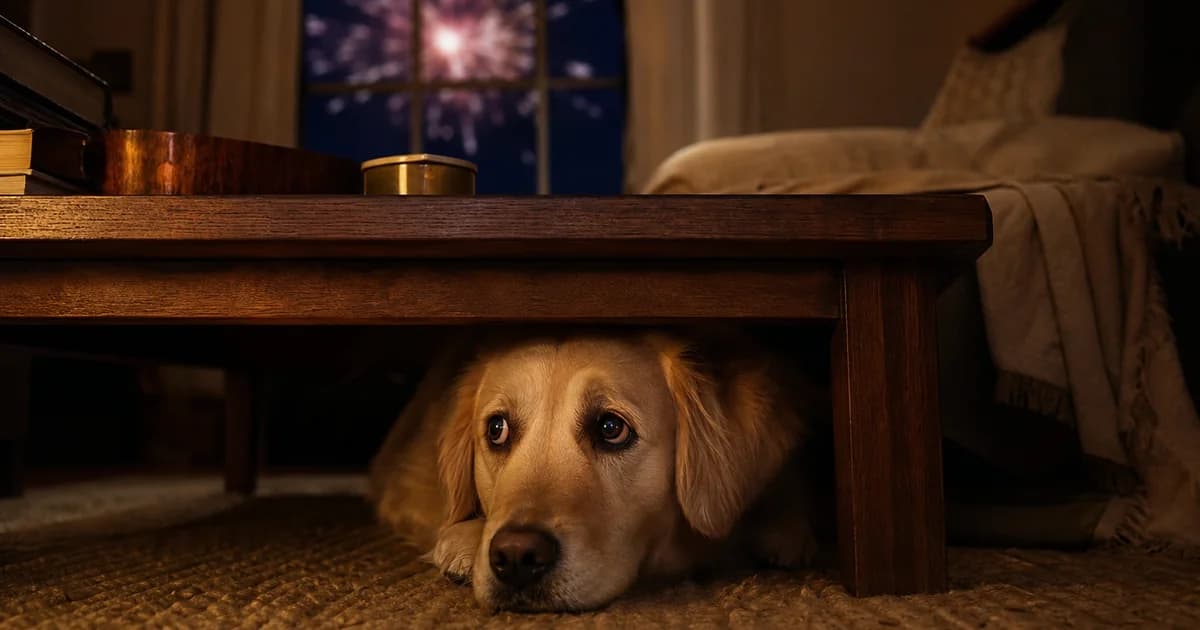
The Fourth of July is America's worst day for dogs. The explosions start around dusk and continue for hours. For dogs with noise phobia, this is not just unpleasant. It is genuine terror.
Nearly half of all dogs show some fear response to loud noises. Fireworks trigger the strongest reactions because they are unpredictable, intense, and impossible to escape. The bright flashes and burning smells add sensory overload to the acoustic assault.
This guide covers everything you need to help your dog through fireworks season. From immediate coping strategies to long-term desensitization training, these methods have helped countless dogs reclaim their calm.
Understanding Noise Phobia in Dogs
Noise phobia is an excessive, irrational fear response to sound. It differs from normal startle reactions. A dog who jumps at a sudden bang then recovers is experiencing healthy caution. A dog who trembles for hours, destroys furniture, or tries to escape through windows has a phobia.
The condition often worsens over time. Each negative experience reinforces the fear. A dog mildly concerned about thunder at age two may be panicked by fireworks at age five. Early intervention prevents this escalation.
Certain breeds show higher predisposition. Herding breeds, German Shepherds, and some retrievers appear more susceptible. However, any dog can develop noise phobia regardless of breed or background.
Why Fireworks Are Particularly Triggers
Fireworks combine multiple fear-inducing elements. The sounds are loud, sharp, and unpredictable. Unlike thunder, which often builds gradually, fireworks explode without warning. The intervals between explosions vary, preventing dogs from anticipating the next blast.
The visual component matters too. Flashing lights activate prey drive in some dogs while triggering fear in others. The sulfur smell adds another sensory layer. For dogs with sensitive noses, this chemical assault compounds their distress.
Location amplifies the problem. Fireworks happen everywhere on July 4th. Dogs cannot predict when their neighborhood will erupt. The random timing prevents them from feeling safe at any hour.
Immediate Strategies for Fireworks Night
When fireworks begin, your goal is damage control. You will not fix the phobia in one evening. You can prevent it from becoming traumatic.
Create a safe space - Find the most sound-insulated room in your home. Basements work well. Interior bathrooms without windows are another option. Set up your dog's bed, favorite toys, and water in this location before fireworks start.
Mask the noise - Turn on fans, air purifiers, or white noise machines. Play calming music at volumes loud enough to partially obscure explosions. Classical music, reggae, and soft rock have shown calming effects in studies.
Close curtains and blinds - Blocking visual flashes reduces sensory overload. Heavy curtains also provide minor sound dampening.
Stay calm yourself - Dogs read human emotional states. If you act anxious, your dog assumes the threat is real. Speak in normal tones. Avoid excessive comforting that reinforces the idea something is wrong.
Provide distraction - Offer frozen treats, puzzle toys, or long-lasting chews. Occupying your dog's mouth and mind reduces their capacity to focus on external sounds.
Never punish fear responses - A dog who eliminates indoors or destroys property during fireworks is panicking, not misbehaving. Punishment increases anxiety and damages trust.
Desensitization Training: The Long-Term Solution
Desensitization gradually teaches dogs that loud sounds are not threatening. This process takes weeks or months but produces lasting change. Start during quiet periods, well before the next fireworks holiday.
Step 1: Find threshold volume - Play firework sounds at the lowest possible volume. Your dog should notice the sound but not show fear. This is your starting point.
Step 2: Pair with positive experiences - While the sound plays at threshold volume, give your dog high-value treats, play their favorite game, or engage in training they enjoy. The goal is creating positive associations with the sound.
Step 3: Gradually increase volume - Over multiple sessions, slowly raise the volume. Never increase so much that your dog shows fear. If they react, you moved too fast. Return to a lower volume and proceed more gradually.
Step 4: Add variability - Once your dog tolerates consistent firework sounds, introduce recordings with random intervals. Real fireworks do not explode predictably. Your training should reflect this.
Step 5: Generalize to real situations - Eventually practice with actual distant fireworks or have a friend create sharp noises while you maintain the positive association routine.
Sessions should be short, five to ten minutes maximum. End on a positive note while your dog is still relaxed. Daily practice produces better results than occasional long sessions.
Counterconditioning Techniques
Counterconditioning changes your dog's emotional response to triggers. Where desensitization reduces sensitivity, counterconditioning replaces fear with positive feelings.
The process is simple in concept. Every time a loud sound occurs, something wonderful happens for your dog. This can be treats, play, or affection depending on what your individual dog values most.
Timing matters enormously. The positive experience must begin immediately when the sound starts and end when the sound stops. This creates a clear association. Sound predicts good things.
For dogs with severe phobia, you may need to start with recorded sounds at very low volumes. Real fireworks are too intense for initial counterconditioning work.
Environmental Modifications
Your home environment can either amplify or reduce firework anxiety. Strategic changes help sensitive dogs cope.
Soundproofing - Weather stripping around doors and windows reduces sound transmission. Heavy curtains, rugs, and upholstered furniture absorb sound rather than reflecting it. Consider temporary sound-dampening panels for extremely sensitive dogs.
Safe spaces - Some dogs prefer enclosed spaces during stress. A covered crate, under-bed area, or closet can provide security. Never force your dog into these spaces, but make them available and appealing.
Pheromone diffusers - Synthetic dog appeasing pheromone products mimic the calming signals mother dogs emit. Diffusers, collars, and sprays provide mild anxiety reduction for some dogs.
Pressure wraps - Thundershirts and similar products apply gentle, constant pressure that may reduce anxiety. Effectiveness varies by individual. Some dogs show dramatic improvement. Others are unaffected.
Exercise and Mental Stimulation
A tired dog has less energy for anxiety. On fireworks days, provide substantial physical and mental exercise before evening explosions begin.
Long walks, fetch sessions, or agility practice burn physical energy. Puzzle toys, training games, or nose work tire the brain. A dog who has worked hard all day sleeps more soundly through evening noise.
Avoid intense exercise immediately before fireworks if your dog is already showing anxiety signs. Exercise increases cortisol, which can amplify stress responses in already-anxious dogs.
Medication Options
For dogs with severe phobia, behavioral training alone may be insufficient. Veterinary intervention provides additional support.
Sileo - This FDA-approved medication specifically targets noise aversion in dogs. It is a gel applied to the gums that takes effect within 30-60 minutes. Unlike sedatives, it reduces fear without causing significant drowsiness.
Trazodone - This anti-anxiety medication provides sedation and fear reduction. It requires veterinary prescription and should be given 1-2 hours before anticipated noise events.
Gabapentin - Originally developed for seizures and pain, this medication has anti-anxiety properties. Some veterinarians prescribe it for noise phobia, particularly in combination with other medications.
Alprazolam - This benzodiazepine provides rapid anxiety relief. It works quickly but can cause sedation and has abuse potential, requiring careful veterinary oversight.
CBD products - While popular, CBD has limited scientific support for canine anxiety. Quality varies enormously between products. Discuss with your veterinarian before use.
Never use human medications without veterinary guidance. Many common human anti-anxiety drugs are toxic to dogs. Dosages differ dramatically between species.
Natural and Supplement Options
Some owners prefer natural approaches before trying pharmaceuticals. Several supplements show modest evidence for anxiety reduction.
L-theanine - This amino acid found in green tea promotes relaxation without sedation. It is available in veterinary formulations.
Melatonin - This hormone regulates sleep cycles and may reduce anxiety in some dogs. It is generally safe but check with your veterinarian for appropriate dosing.
Valerian root - This herbal supplement has mild sedative properties. Quality varies between products.
Rescue Remedy - This Bach flower essence is popular among some owners, though scientific evidence is minimal.
Supplements work best for mild anxiety. Severe phobia typically requires pharmaceutical intervention.
When to Seek Professional Help
Some dogs require professional intervention beyond what owners can provide at home. Consider consulting a veterinary behaviorist or certified applied animal behaviorist if:
Your dog injures themselves during panic episodes. Self-trauma indicates severe distress requiring immediate professional attention.
Your dog's phobia generalizes to other sounds. A dog initially afraid of fireworks who becomes frightened of car doors, dropping objects, or television sounds needs specialized help.
Your dog's quality of life is significantly impaired. If noise phobia prevents normal activities for weeks surrounding fireworks holidays, professional intervention is warranted.
Behavioral medications may be appropriate for long-term management. These differ from situational medications used on fireworks nights. They require weeks to reach effectiveness and are used daily during firework season.
Preparing for Next Year
Once this year's fireworks pass, begin preparing for next year immediately. The desensitization process takes months. Starting in January gives you adequate time before July.
Track what worked and what failed this year. Note which medications, environmental modifications, or training techniques provided relief. This information guides next year's strategy.
Consider professional training classes focused on confidence building. Agility, nose work, or obedience competition builds dogs' resilience and handler focus. Confident dogs handle stress better than insecure ones.
Frequently Asked Questions
Why is my dog suddenly afraid of fireworks when they were fine before?
Noise phobia often develops between ages one and three as dogs mature. A single negative experience can trigger new phobia. Age-related hearing changes may also make sounds more startling.
Can I just hold my dog during fireworks to comfort them?
Physical restraint can increase panic in some dogs. Others find comfort in contact. Know your individual dog. If holding helps, do it. If they struggle to escape, let them move freely.
Will getting another dog help my noise-phobic dog?
Sometimes. Dogs often take cues from confident companions. However, a second dog may also learn fear from the phobic dog. There is no guarantee of improvement.
Is it okay to sedate my dog for fireworks?
Sedation prevents panic behavior but does not address underlying fear. The dog remains frightened but too drugged to respond. Anti-anxiety medications are generally preferred over pure sedatives.
How long does desensitization training take?
Significant improvement typically requires two to three months of consistent practice. Severe phobia may need six months or longer. The investment pays off in years of reduced stress.
Can puppies develop noise phobia?
Yes, though early positive exposure to various sounds reduces risk. The socialization window between three and sixteen weeks is crucial for preventing sound sensitivity.
What should I do if my dog runs away during fireworks?
Ensure your dog has current identification tags and microchip registration. Keep them leashed during fireworks season. If they escape, contact local shelters immediately and post on neighborhood social media.
Are certain breeds more prone to noise phobia?
Herding breeds, German Shepherds, and some sporting breeds show higher rates. However, any dog can develop noise phobia regardless of breed.
Can noise phobia be completely cured?
Many dogs show significant improvement with training and management. Complete elimination of all fear response is uncommon but not necessary for good quality of life. The goal is reducing fear to manageable levels.
Should I ignore my dog's fear to avoid reinforcing it?
This outdated advice is incorrect. Fear is an emotion, not a behavior. You cannot reinforce emotions. Comforting your dog provides support without making fear worse.
Final Thoughts
Fireworks anxiety is one of the most common and treatable behavioral issues in dogs. The suffering it causes is real, but so is the potential for improvement. With patience, appropriate training, and sometimes medical support, most dogs can learn to tolerate or even ignore fireworks explosions.
The key is starting early and being consistent. Desensitization works. Counterconditioning works. Environmental management works. Medication works. Combined thoughtfully, these tools transform July 4th from a nightmare into just another evening.
Your dog depends on you to advocate for their wellbeing. Understanding noise phobia and taking action to address it is one of the most important gifts you can give your anxious companion.
Try it with your dog
Record a bark, scan a dog photo, or play a sound and see what happens next.