2026-05-24 · 7
Dog Ear Positions: What Your Dog's Ears Are Telling You
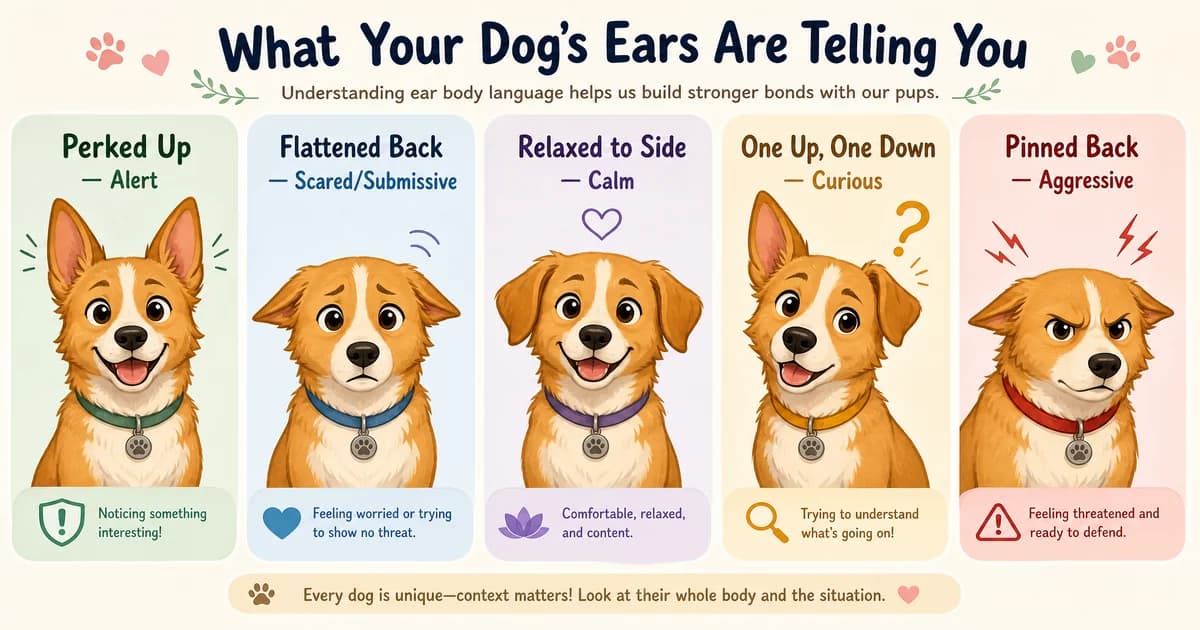
Dog ears are expressive communication tools that reveal your pet's emotional state. While tail wagging gets more attention, ear position provides equally important information about how your dog is feeling. Learning to read these subtle signals helps you understand your dog better and respond appropriately to their needs.
Why Dog Ears Matter for Communication
Dogs use their ears to communicate with other dogs and with humans. Ear position indicates attention level, emotional state, and intentions. Combined with other body language, ears help create a complete picture of what your dog is experiencing.
Unlike tails, which some dogs cannot control well, ears often move reflexively based on emotional state. This makes them reliable indicators of genuine feelings rather than deliberate signals. A dog may wag their tail to appease you while their ears reveal true anxiety.
Different breeds have different ear types, which affects how they communicate. Dogs with upright ears like German Shepherds can make more dramatic position changes. Floppy-eared breeds like Beagles communicate more subtly. Understanding your specific dog's ear type helps you read their signals accurately.
Alert and Forward: Paying Attention
When a dog's ears stand upright and point forward, they are alert and focused on something. This position indicates interest, curiosity, or vigilance. The dog has detected something worth their attention and is gathering information.
The degree of forward positioning matters. Slightly forward ears suggest casual interest. Ears pushed far forward indicate intense focus. This might be a squirrel in the yard or a unfamiliar sound that needs investigation.
Body language accompanying forward ears provides context. A relaxed body with forward ears suggests friendly curiosity. A tense body with forward ears indicates potential arousal that could become aggression. Always consider the whole picture, not just the ears.
Puppies often hold their ears forward as they explore the world. Everything is new and interesting, so their ears are constantly shifting to catch sounds. This natural curiosity diminishes somewhat as they mature and become familiar with their environment.
Relaxed and Neutral: Feeling Comfortable
A dog with ears in a natural, neutral position is relaxed and comfortable. For upright-eared breeds, this means ears standing up but not pushed forward. For floppy-eared breeds, ears hang naturally without being pinned back.
This is your dog's baseline position when they feel safe and content. Learning this neutral position for your specific dog helps you recognize when something changes their emotional state. The shift from neutral tells you more than the position itself.
Relaxed ears often accompany other signs of comfort. The mouth may be slightly open in a relaxed pant. The body is loose and movable. The tail hangs naturally or wags gently. These combined signals confirm genuine relaxation.
Dogs in their home environment with trusted people typically maintain neutral ear positions. If your dog rarely shows neutral ears, they may be experiencing chronic stress that deserves attention.
Pinned Back: Fear or Submission
When a dog pins their ears back against their head, they are communicating fear, anxiety, or submission. This position makes the dog appear smaller and less threatening. It is a defensive signal meant to prevent conflict.
The degree of pinning indicates the intensity of emotion. Slightly back ears suggest mild uncertainty. Ears pressed flat against the head indicate significant fear or stress. Extreme pinning can make ears almost disappear against the skull.
Other body language accompanies pinned ears. The body may be lowered or crouched. The tail often tucks between the legs. The dog may avert their gaze or show whale eye (white showing around the iris). These combined signals confirm distress.
Pinned ears during greetings are often submissive rather than fearful. The dog is acknowledging your social status and meaning no challenge. Context helps distinguish between submission and genuine fear.
One Forward, One Back: Uncertainty
A dog with one ear forward and one ear back is experiencing conflicting emotions. They are interested in something but also uncertain about it. This asymmetrical position reveals internal conflict.
This position often appears when a dog encounters something new or ambiguous. They want to investigate but also want to be ready to retreat. The split position reflects their divided mindset.
Puppies show this ear position frequently as they navigate the world. Their curiosity pulls them forward while their caution holds them back. This normal developmental stage helps them learn about their environment safely.
Adult dogs may show this position when encountering unfamiliar dogs or people. They are deciding whether to approach or avoid. Giving them time and space to make this decision reduces anxiety.
Swiveling Ears: Processing Information
Dogs can move their ears independently to catch sounds from different directions. Rapid ear swiveling indicates your dog is processing multiple auditory inputs and trying to locate important sounds.
This behavior is normal and healthy. Your dog is simply being attentive to their environment. Hunting breeds often show pronounced ear swiveling as they track sounds. This is their genetics at work.
Excessive ear swiveling without obvious environmental triggers may indicate anxiety. The dog is hypervigilant, constantly scanning for threats. This stress response deserves attention and possible intervention.
Breed Differences in Ear Communication
Not all dogs can communicate with their ears equally. Breed characteristics significantly affect ear expression. Understanding these differences prevents miscommunication.
Upright-eared breeds like Huskies, German Shepherds, and Corgis have the most expressive ear language. They can make dramatic position changes that are easy to read. Their ear communication is precise and reliable.
Floppy-eared breeds like Labradors, Beagles, and Spaniels communicate more subtly. Their ear positions are less visible and change less dramatically. You must look more carefully to read their signals.
Some breeds have cropped ears, which limits their communication ability. Dogs with cropped ears cannot express themselves fully, which may lead to misunderstandings with other dogs and humans.
Ear Position and Aggression Risk
Certain ear positions can indicate potential aggression, especially when combined with other warning signals. Recognizing these combinations helps you prevent dangerous situations.
Ears forward with a stiff body, direct stare, and raised hackles suggest a dog preparing for confrontation. This is not curiosity but challenge. Give this dog space and avoid approaching.
Ears pinned with showing teeth and growling indicates fear aggression. The dog is terrified but willing to defend themselves. This is dangerous because fearful dogs may bite without warning.
Sudden ear position changes during interaction warrant attention. A dog whose ears were neutral but suddenly pin back is communicating discomfort. Respect this signal before it escalates.
Teaching Children to Read Ear Signals
Children benefit from learning basic ear communication. Simple lessons help them interact safely with dogs and recognize when to give space.
Teach children that forward ears mean the dog is paying attention. Neutral ears mean the dog is relaxed. Pinned ears mean the dog is scared and should not be approached.
Practice identifying ear positions with photos or videos before encountering real dogs. This builds recognition skills in a low-pressure environment. Supervised practice with calm, familiar dogs reinforces learning.
Emphasize that children should never approach unfamiliar dogs, regardless of ear position. Even friendly-looking dogs may bite if startled or threatened. Safety rules come before communication skills.
When Ear Position Indicates Health Issues
Sometimes ear position changes indicate physical problems rather than emotional states. Recognizing these signs ensures your dog gets needed veterinary care.
One ear held consistently lower than the other may indicate an ear infection. The infected ear is painful to hold in normal position. Other signs include head shaking, scratching, and odor.
Ears that suddenly change position in an older dog may indicate neurological issues. Nerve damage or cognitive decline can affect ear control. Sudden changes warrant veterinary evaluation.
Dogs with painful ear conditions may resist having their ears touched. If your normally tolerant dog becomes head-shy, check for physical problems before assuming behavioral issues.
Improving Your Ear Reading Skills
Like any language, ear communication requires practice to master. Deliberate observation of your own dog and others builds fluency over time.
Photograph your dog in different emotional states. Review the photos to identify ear positions associated with specific feelings. This creates a reference library for your individual dog.
Watch videos of dogs with the sound off. Focus only on ear position and try to identify the emotional state before learning the context. This trains your visual recognition skills.
Ask knowledgeable dog professionals for guidance. Trainers, behaviorists, and experienced owners can help you interpret confusing signals. Their expertise accelerates your learning.
The Complete Picture
Ear position is one piece of the communication puzzle. For accurate interpretation, always consider ears alongside tail position, body posture, facial expressions, and vocalizations.
A dog with forward ears and a wagging tail is curious and friendly. The same forward ears with a stiff body and hard stare indicate potential aggression. Context transforms meaning.
Learning your individual dog's communication style takes time. Each dog is unique in how they express emotions. Patient observation reveals patterns specific to your pet.
The effort invested in learning canine body language pays off in a stronger relationship. When you understand what your dog is telling you, you can respond appropriately to their needs. This mutual understanding builds trust and deepens your bond.
Related Articles
- Dog Tail Wagging: What Your Dog's Tail Is Saying
- Dog Barking Communication Guide
- Dog Whining: Understanding This Common Behavior
- Dog Panting: Understanding Heavy Breathing
- Dog Body Language: What Your Pup Is Really Saying
Frequently Asked Questions
Why does my dog pin their ears back when I pet them?
Pinned ears during petting often indicate enjoyment and submission. Your dog is showing they accept your touch and mean no challenge. However, if accompanied by tension or attempts to move away, it may indicate discomfort.
Can dogs with cropped ears communicate normally?
Cropped ears limit communication ability. These dogs cannot express themselves as fully through ear position, which may lead to misunderstandings. They often rely more heavily on other body language signals.
Why do my dog's ears move when they are sleeping?
Dogs process sounds even while sleeping. Ear movements during sleep indicate your dog is monitoring their environment for important sounds. This normal protective behavior shows they feel safe enough to rest while remaining alert.
Do puppies have different ear positions than adult dogs?
Puppies often hold their ears more forward due to curiosity about the world. Their ear muscles are also still developing. Adult ear positions become more stable and predictable as dogs mature.
Can ear position tell me if my dog is in pain?
Yes. Dogs in pain may hold one ear lower, pin both ears back, or resist ear movement. Sudden changes in normal ear position, especially with other signs of discomfort, warrant veterinary attention.
Want to understand your dog better? Download Dog Translator for bark analysis, body language tips, and breed information.
Try it with your dog
Record a bark, scan a dog photo, or play a sound and see what happens next.