2026-05-25 · 6
That Viral 95% Accurate Pet Translator? Here's What the Science Actually Says
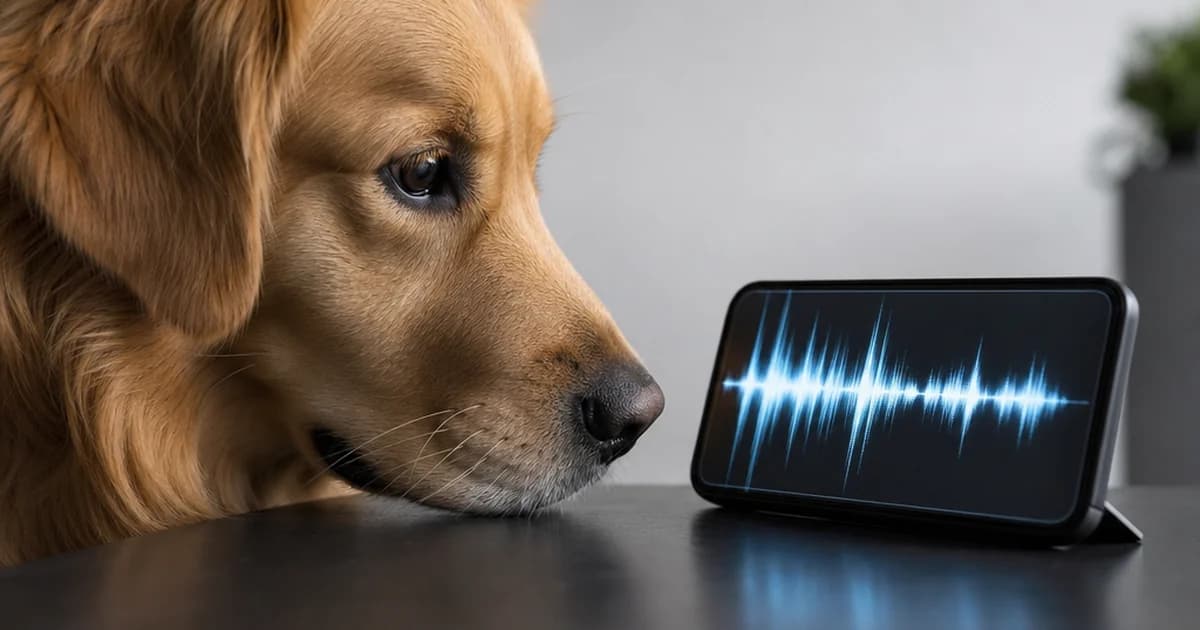
A Chinese startup called Meng Xiaoyi recently went viral claiming their PettiChat device can translate pet sounds with 95% accuracy. The internet went wild. But here's the truth: no AI can truly understand what your dog is saying. What AI can do is recognize patterns in pitch, frequency, and tone. That's useful, but it's not translation.
What Most People Get Wrong About Pet Translators
The biggest misconception is that AI understands language the way humans do. It doesn't. When a pet translator app claims to turn a bark into "I want to go outside," it is not decoding meaning. It is matching sound patterns to pre-programmed guesses based on context.
Most people see a viral video of a collar translating a meow into English and think the device "gets it." The reality is far more mechanical. The AI has heard thousands of similar sounds and learned to associate them with specific outcomes. It is pattern recognition dressed up as conversation.
The PettiChat Claims: Breaking Down the Numbers
Meng Xiaoyi launched PettiChat in May 2025 with bold promises. The Hangzhou-based startup claims their device achieves 94.6% contextual accuracy for cats and 92.3% for dogs. They say it is built on Alibaba Cloud's Qwen AI model and trained on 1.5 million pet audio samples and 3,200 hours of video data.
The device costs $149, clips onto your pet's collar, and promises real-time two-way translation. Over 10,000 units were reserved within weeks. The company secured $1 million in seed funding. On paper, it looks impressive.
But here's what the coverage glosses over: Meng Xiaoyi was founded in January 2025. That's four months before launch. No peer-reviewed studies support the 95% claim. The company has not published any independent testing data. The accuracy figures come from their own marketing materials, not third-party verification.
Dexerto, Oddity Central, and Mint all covered the launch with healthy skepticism. The consensus among experts quoted in these pieces is consistent: the claims are unverified and scientifically dubious.
What AI Can Actually Do With Dog Sounds
Let's separate the hype from the reality. Modern AI can analyze audio signals with remarkable precision. When your dog barks, AI can measure:
- Pitch and frequency: Higher pitches often indicate excitement or distress. Lower tones may signal warning or aggression.
- Duration and rhythm: Short, repetitive barks differ meaningfully from long, sustained ones.
- Tonal patterns: The way a bark rises or falls carries information about emotional state.
- Contextual timing: Barks during play versus barks at the door have different acoustic signatures.
This is not nothing. How AI dog translators actually work explains the technical side in more detail. The technology can categorize barks into broad emotional buckets: playful, anxious, alert, distressed. It can track changes in your dog's vocal patterns over time. It can even correlate specific sounds with specific triggers if you log the context.
But this is classification, not comprehension. The AI does not know your dog wants a treat. It recognizes that this particular yelp pattern often accompanies food-related situations. That's a big difference.
What AI Cannot Do (And May Never Do)
True semantic translation requires understanding intent, context, and the rich inner life of another being. AI is nowhere close to this for human languages, let alone animal communication.
Dogs do not have a structured language with grammar and vocabulary. They communicate through a complex mix of vocalizations, body language, scent, and situational context. A bark at the mail carrier carries different meaning than the same bark at a squirrel, even if they sound identical to audio analysis.
AI also struggles with individual variation. Your dog's "play with me" bark might sound completely different from another dog's. Without extensive personalized training, generic models miss these nuances. They default to statistical averages that may not apply to your specific pet.
The PettiChat claim of two-way translation is even more questionable. The idea that AI can convert human speech into "dog language" assumes we know what dog language is. We don't. We can make educated guesses about what certain tones and patterns mean, but we cannot encode Shakespeare into barks.
Why the 95% Claim Falls Apart Under Scrutiny
Accuracy metrics in AI are notoriously slippery. What does 95% accurate even mean in this context? Accurate at detecting a bark? Accurate at categorizing the emotional tone? Accurate at translating specific meaning?
Meng Xiaoyi has not defined their methodology. They have not published confusion matrices, error rates, or testing protocols. The 95% figure appears to be a marketing number, not a scientific measurement.
Compare this to established speech recognition systems. Google's speech-to-text, trained on orders of magnitude more data with teams of researchers, achieves around 95% accuracy for human speech in ideal conditions. And human speech has structure, grammar, and predictable patterns. Dog vocalizations have none of these advantages.
The claim becomes even harder to swallow when you consider the two-way translation feature. There is no scientific basis for converting human language into dog-interpretable audio. We don't have a Rosetta Stone for canines. Any "translation" in this direction is pure speculation.
What Real Bark Analysis Looks Like
Legitimate research into dog vocalizations takes a more modest approach. Scientists at UC Davis and other institutions have studied how dogs use sound to communicate. Their work focuses on acoustic properties and behavioral correlations, not semantic translation.
For example, research shows that dogs use different bark types for different situations: isolation distress barks have different acoustic properties than territorial barks. Play barks are distinct from warning barks. These findings are valuable for understanding dog behavior, but they don't claim to extract specific messages.
What your dog is actually trying to say covers the real science of canine communication. The honest answer is that we understand more than we used to, but far less than viral AI products suggest.
How to Actually Understand Your Dog
If AI translation is mostly hype, what actually works? The answer is surprisingly old-school: observation and attention.
Your dog is constantly communicating. Understanding dog body language gives you more insight than any app. Ears, tail, posture, and facial expressions tell you volumes about emotional state. A wagging tail doesn't always mean happiness. A yawn might indicate stress, not sleepiness.
The complete guide to dog barking breaks down what different vocalizations actually indicate. Context matters more than sound. The same bark means different things depending on what's happening around your dog.
The best "translator" is the bond you build through time together. You learn your dog's specific signals. You notice when their bark changes pitch because you know their normal voice. No AI can replicate that personal history.
Where Dog Translator Apps Actually Help
This isn't to say AI tools are useless. They just do different things than the marketing claims suggest.
A good bark analysis app can help you notice patterns you might miss. It can track frequency and timing of vocalizations. It can alert you to changes that might indicate health issues. Some dogs bark more when they're in pain or distress. Quantifying this helps you make better decisions about veterinary care.
Apps can also be valuable for training. If you're working on reducing excessive barking, having data about when and how often your dog barks gives you a baseline. You can measure progress objectively rather than guessing.
The key is realistic expectations. These tools augment your observation skills. They don't replace them. And they certainly don't turn your dog into a conversational partner.
Dog Translator: The Honest Alternative
We built Dog Translator with transparency as a core principle. We don't claim 95% accuracy because that would be dishonest. We don't promise two-way translation because that's not scientifically possible.
What we do offer is solid bark analysis based on real acoustic research. Our AI recognizes patterns in pitch, frequency, and tone. It categorizes vocalizations into broad emotional states. It tracks your dog's vocal patterns over time so you can spot changes that might indicate health or behavioral issues.
We also include breed identification through our Paw AI feature. Different breeds have different vocal tendencies. Understanding your dog's breed-specific traits helps you interpret their communication more accurately.
The app is designed to be fun without being fake. You get real insights into your dog's vocal behavior. You don't get fictional conversations that pretend your dog is a person.
Frequently Asked Questions
Is 95% accuracy possible for dog translation?
No. Not with current technology, and possibly not ever. The claim made by Meng Xiaoyi for their PettiChat device has no peer-reviewed scientific support. True semantic translation requires understanding meaning, context, and intent. AI can recognize patterns in sound, but it cannot comprehend what a dog is actually thinking or wanting. The 95% figure appears to be a marketing claim, not a measured result from independent testing.
How does AI actually analyze barks?
AI bark analysis works by processing audio signals to extract features like pitch, frequency, duration, and tonal patterns. Machine learning models are trained on large datasets of labeled dog vocalizations. They learn to associate certain acoustic signatures with emotional states or situations. For example, a high-pitched, repetitive bark might be classified as "excited" while a low, sustained growl might be labeled "warning." This is pattern matching, not understanding. The AI has no concept of what "excited" actually means to a dog.
Can any app truly understand what dogs say?
No app can truly understand dog communication the way humans understand each other. Dogs don't have a structured language with grammar and vocabulary. Their communication combines vocalizations, body language, scent, and context. AI can categorize vocalizations and identify patterns, but it cannot extract specific meaning like "I want the blue toy, not the red one." Any app claiming true two-way translation is overstating its capabilities.
What is the difference between Dog Translator and PettiChat?
Dog Translator focuses on honest bark analysis without overpromising. We use AI to recognize patterns in your dog's vocalizations and categorize them into broad emotional states. We track changes over time to help you monitor your dog's wellbeing. We do not claim 95% accuracy or offer two-way translation because those claims are not scientifically supportable. PettiChat makes bold claims about accuracy and two-way communication that have not been independently verified. The choice comes down to whether you prefer transparency or marketing hype.
Should I trust viral pet translator claims?
Approach viral claims with skepticism, especially when they lack independent verification. Red flags include specific accuracy percentages without published methodology, claims of two-way translation, and companies that won't share their testing data. Look for apps that explain what their technology actually does rather than making it sound like magic. The honest products will tell you their limitations upfront. The questionable ones will promise things that sound too good to be true.
The Bottom Line
The PettiChat viral moment says more about our desire to communicate with our pets than about the actual state of AI technology. We love our dogs. We want to understand them better. That desire makes us vulnerable to claims that promise more than they can deliver.
The honest truth is that AI can help us observe and categorize dog vocalizations. It can track patterns and flag changes. It cannot translate thoughts or enable conversation. Anyone claiming otherwise is selling something that doesn't exist yet.
If you want to understand your dog better, start with observation. Learn their body language. Pay attention to context. Use tools like Dog Translator as aids, not oracles. The real connection happens through time and attention, not through a collar that claims to speak dog.
Download Dog Translator on the App Store and start understanding what your dog's barks really mean.
Try it with your dog
Record a bark, scan a dog photo, or play a sound and see what happens next.