2026-11-14 · 4 min read
Why Does My Dog Bring Me a Toy When I Come Home?
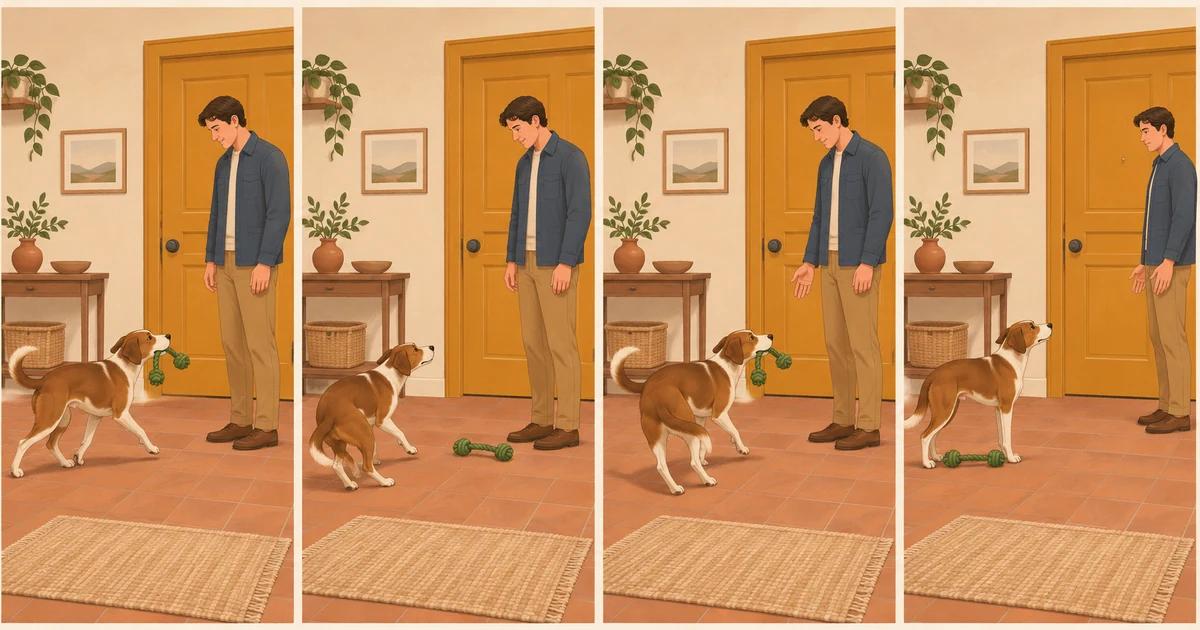
Your dog is probably turning your return home into a familiar ritual. The toy may be part of their excitement, an invitation to play, a learned bid for attention or simply something to keep their mouth occupied. Calling it a gift is a sweet way to see it, but the toy cannot reveal one exact message or emotion. Watch the whole dog instead: body posture, response to your approach and whether they let go freely.
The toy is only one part of the greeting
A toy is not a sentence. PetMD lists several possible homecoming contexts, including play, a light game and an outlet for an excitable dog. The same action may even belong to different routines in the same home.
Everything around the toy is more useful than the object alone. Is your dog's body loose? How do they move, how much distance do they keep, and what changes when you come closer? The complete dog body language guide can help you read those signals together rather than assigning a fixed meaning to one object.
Repetition can shape the greeting too. Perhaps arriving with a toy usually earns attention, a chase or a game. When that response happens reliably, it may reinforce the routine. This is not manipulation. It is simply a sequence that has worked before.
Four homecoming contexts to compare
More than one of these possibilities may fit, so do not treat them as firm labels. Begin with what you can see and notice whether your dog remains comfortable as you enter.
-
Loose carrying: The approach looks easy and the body stays relaxed. The ASPCA includes relaxed posture, excitement and tail wagging in its description of greeting behavior, though no single sign proves a particular emotion.
-
Possible play invitation: The toy comes close, is released freely or reappears after you start a familiar game. That fits a play context, but it still cannot be translated into one exact request.
-
Learned attention loop: Your dog carries the toy past you, circles back or presents it again after getting attention. A response that keeps working can become part of the arrival routine.
-
A reason to pause: Loose movement changes to a stiff posture, or your dog responds aggressively as you approach the toy. Stiffness alone does not diagnose guarding, but it does mean you should stop moving closer. Do not reach for the object. The resource guarding guide has more guidance for repeated tension around valued items.
How to respond at the door
-
Pause before reaching. Leave enough room for your dog to finish approaching, and watch whether the movement remains loose or starts to look tense.
-
When your dog stays relaxed and offers the toy freely, answer with the calm attention or familiar play you want to encourage at future greetings.
-
When the toy stays in your dog's mouth, do not chase, pry the mouth open or assume the refusal has one meaning. The RSPCA notes that running away with a toy is a game for some dogs, while trying to remove a highly valued toy can prompt aggression.
-
Practise a drop cue at another time, when things are calm. The RSPCA describes rewarding the release first and waiting before picking up the toy, so your dog is not immediately competing with you for it.
-
Make one household rule clear to children and visitors: leave the toy alone. That gives your dog space and prevents anyone from testing an uncertain greeting.
When to give space or get help
Give your dog space if approaching repeatedly leads to tension or aggression. When releasing toys remains difficult, the RSPCA recommends help from a qualified trainer or behaviorist rather than turning the moment into a contest.
A sudden change in the greeting needs separate attention, especially alongside regular signs of stress, fear or aggression. Ask your vet for advice because behavior changes can have several causes. The dog stress signals guide can help you record what you see without trying to diagnose the cause yourself.
What to notice at the next homecoming
At the next homecoming, wait a moment before touching the toy. Is your dog approaching loosely, inviting a familiar game, repeating a routine that gets attention or moving away when you come closer? That brief sequence says more than the toy alone. Based on what you see, you can join the greeting, wait quietly or give your dog space.
Sources
- PetMD: dogs bringing toys at homecoming
- ASPCA: dog greeting behavior
- RSPCA: understanding dog behavior
Try it with your dog
Record a bark, scan a dog photo, or play a sound and see what happens next.