2026-11-04 · 3 min read
Why Does My Dog Follow Me From Room to Room? Read the Whole Situation
Following you from room to room does not point to one clear motive. Staying close can be normal social behavior. Your dog may also be curious, scared, hoping for something or used to receiving affection or treats when they tag along. Watch what happens before and after they follow, whether they can settle without you and whether the habit changed suddenly.
Read the behavior through five contexts
-
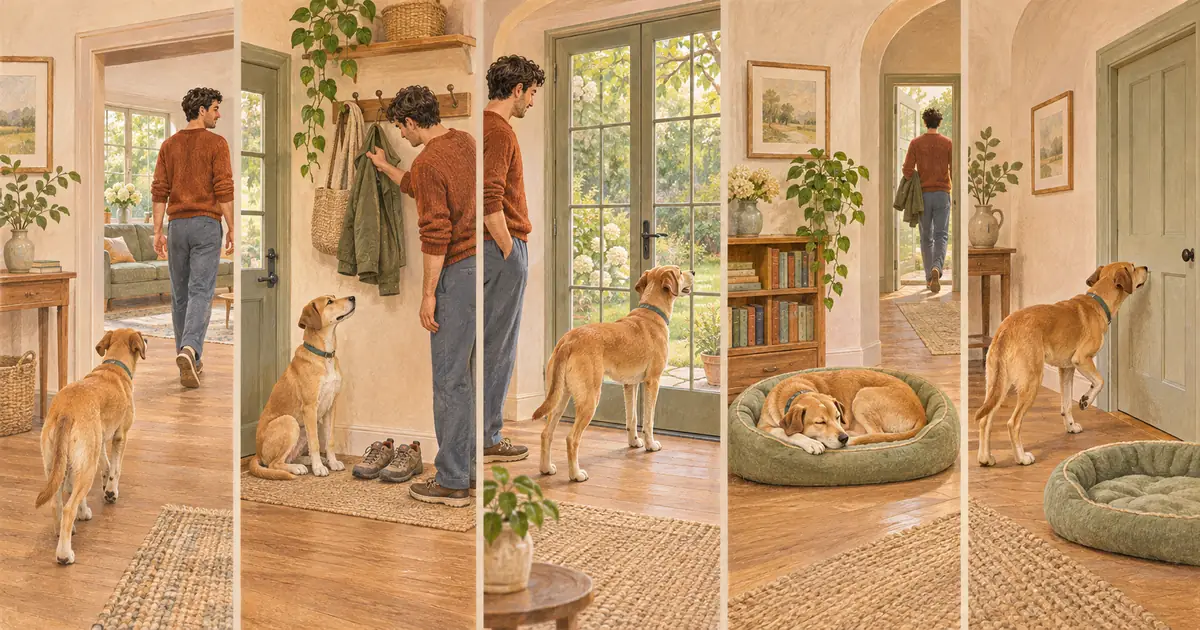
Sometimes a dog simply wants to be nearby. If yours tags along with a relaxed posture and settles afterward, look at the rest of their body language before deciding what the behavior means.
-
Consider what happens when your dog catches up with you. Petting, conversation, food or another welcome response may make the habit more frequent. The AKC specifically notes the influence of affection and treats.
-
Notice if your dog keeps leading you toward a door, bowl or familiar activity. The sequence may point you toward something worth checking, but it does not mean you have decoded a message.
-
Also notice the moments when your dog stays on a bed or in another comfortable place as you leave. Being able to settle independently suggests that the habit is flexible. It does not define an attachment style.
-
What happens during an actual separation matters more than room-to-room movement while you are home. Panic when left alone is different from preferring your company.
Keep a 24-hour observation log
Try keeping a simple log for one ordinary day. It can reveal repeated sequences that are hard to spot in the moment. Write down only what you observe, without turning the behavior into words on your dog's behalf.
-
Start with the time, the room you entered and whatever was happening just before you moved.
-
Record whether your dog came straight after you, waited, stayed behind or went toward a particular object or doorway.
-
Describe what the body did. Note whether it looked loose or tense and whether your dog settled after arriving.
-
Include your response and what happened next, such as attention, food, access outside or no response. This may reveal an outcome that regularly follows the behavior.
-
Keep behavior during ordinary absences in a separate part of the log. It is not interchangeable with following you around the house.
Respond to the pattern you observe
Calm following is not automatically a problem, especially when your dog can rest without you too. In that situation, a trip down the hallway can simply be part of normal social behavior.
When staying close reliably earns attention or treats, choose when you want those rewards to happen. For example, you might offer attention after your dog settles on a bed instead of responding every time they trail behind you. Your dog still gets companionship, along with another workable option.
If the behavior seems tied to a practical request, check ordinary needs and the surrounding routine. Distress that appears specifically when you leave deserves separate attention. Following by itself is not enough to diagnose separation anxiety.
When following needs professional attention
Arrange a veterinary checkup if this is a sudden change or your dog has become much clingier than usual. A physical problem is one possible explanation, though clinginess alone does not prove illness or pain.
If the behavior concerns you, contact a veterinarian or behaviorist. They can consider the full pattern rather than drawing a conclusion from a single action.
Where the Dog Translator app fits
If your dog barks during the routine, the Dog Translator app can create a playful, fictional interpretation from acoustic features in the recording. Its App Store listing describes the result as entertainment, not scientific translation of a sentence.
Treat the result as fun rather than an explanation for the following. It cannot tell you whether your dog is anxious or unwell. The more useful next step is to watch the trigger, posture, response and outcome across an ordinary day.
Sources
- The Kennel Club
- American Kennel Club
Try it with your dog
Record a bark, scan a dog photo, or play a sound and see what happens next.