2026-11-13 · 2 min read
Why Do Dogs Sneeze When They Play?
A quick sneeze in the middle of loose, back-and-forth play can accompany excitement or friendly play communication. It is only one clue. It does not prove that your dog is happy, wants the game to continue or has given the other dog permission to carry on. Watch what follows. If the sneezing becomes frequent or comes with other symptoms, contact your veterinarian.
Read the whole play sequence
The moments around the sneeze tell you more than the sound itself. What were the dogs doing just before it? Did either dog pause, and did both choose to start playing again? A single sound cannot be translated into a sentence.
-
Look at the interaction. Is the play loose and mutual, or does one dog seem to be asking for more space?
-
Pay attention to what follows the sneeze. A short pause gives either dog a chance to leave or choose to continue.
-
Both dogs may willingly return to loose play, which places the sneeze within a friendly exchange. If one retreats, stiffens or keeps avoiding contact, respect that response instead of treating the sneeze as permission.
Three patterns to compare
-
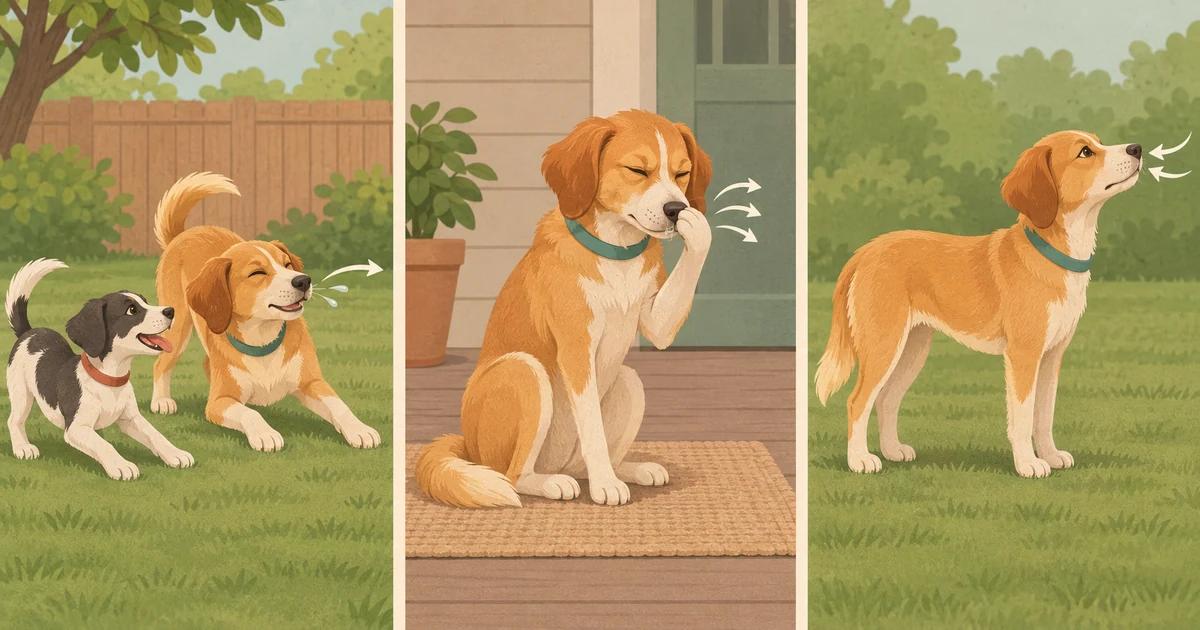
One sneeze during relaxed play can accompany excitement or friendly communication. It cannot tell you exactly how the dog feels, so keep watching the interaction.
-
Repeated ordinary sneezing, especially away from play or with other physical symptoms, should not be read as a behavioral message. Contact a veterinarian instead of guessing at the cause.
-
Loud inward snorting while the dog stands still with the head and neck extended may resemble reverse sneezing rather than an ordinary play sneeze. The dog appears to pull air in instead of pushing it out.
How a reverse sneeze looks different
An ordinary sneeze rapidly pushes air out through the nose. A reverse sneeze pulls air inward and usually sounds like loud snorting. VCA Animal Hospitals describes dogs as commonly standing still, stretching the head and neck forward and taking repeated, forceful breaths inward during an episode.
If you are not sure what happened, record it when you can do so safely and note what happened immediately before and after. A clear description or video may help your veterinarian assess an event that has already stopped. Do not assume that every snort during play is a harmless reverse sneeze.
When to contact your veterinarian
Contact your veterinarian if the sneezing becomes frequent or appears with nasal discharge, repeated nose pawing, bleeding or signs of pain. These clues do not reveal the cause, so do not try to diagnose an allergy, infection, foreign body or airway problem from the sneeze alone.
After one isolated sneeze during otherwise loose play, watch the next few moments. Notice whether the dogs pause and whether both freely return to the game. Their choices add useful context, but they cannot rule out a health problem or explain exactly why the dog sneezed.
Try it with your dog
Record a bark, scan a dog photo, or play a sound and see what happens next.