2026-09-06 · 7
How to Socialize an Adult Rescue Dog: A Realistic Guide for New Owners
Adult rescue dogs can learn to socialize, but the process looks nothing like puppy socialization. The critical window for easy social learning closes around 16 weeks. An adult dog with limited positive experiences needs a different strategy entirely. The good news is that adult dogs can learn new associations, build trust, and develop social skills. It just takes more patience, better timing, and a willingness to follow the dog's pace instead of your own.
Why Adult Dog Socialization Is Different
Puppy socialization is about exposure. You introduce a young dog to people, dogs, sounds, and environments during the critical period, and the puppy absorbs these as normal. Adult dog socialization is about rehabilitation. You are not introducing a blank slate. You are helping a dog unlearn fear, rebuild trust, and form new associations with stimuli that may already carry negative meaning.
This distinction matters because the wrong approach makes things worse. Flooding an adult dog with overwhelming experiences, forcing interactions, or moving too fast reinforces fear instead of reducing it. The goal is not to expose the dog to everything. The goal is to create enough positive experiences that the dog generalizes confidence to new situations.
Before You Start: Assess Where Your Dog Is
Not every rescue dog needs the same plan. Some are simply under-socialized: they missed early experiences but are not fearful. Others have active fear responses, reactivity, or trauma that need a more careful approach.
Signs your dog is under-socialized but not fearful:
- Hesitant around new people but warms up quickly with treats
- Unsure about new environments but explores within a few minutes
- Does not know how to interact with other dogs but shows curiosity
- Startles at sudden sounds but recovers fast
Signs your dog may have fear-based issues requiring professional help:
- Freezes, shuts down, or tries to escape in new situations
- Shows aggression (growling, lunging, snapping) toward people or dogs
- Has a history of biting or multiple failed adoptions
- Shows extreme panic to specific triggers, such as men, children, or loud vehicles
If your dog falls into the second category, consult a certified behaviorist before socializing. Fear-based aggression is not something to DIY.
The Foundation: Build Trust First
Before any socialization work, your dog needs to trust you. This is not about affection. It is about predictability. A rescue dog who has experienced instability needs to learn that you are a reliable source of safety, food, and guidance.
Establish a daily routine with consistent feeding times, walk routes, and sleep schedules. Use positive reinforcement for every desirable behavior, no matter how small. Sit, eye contact, coming when called in the house: these build a communication foundation you will need later.
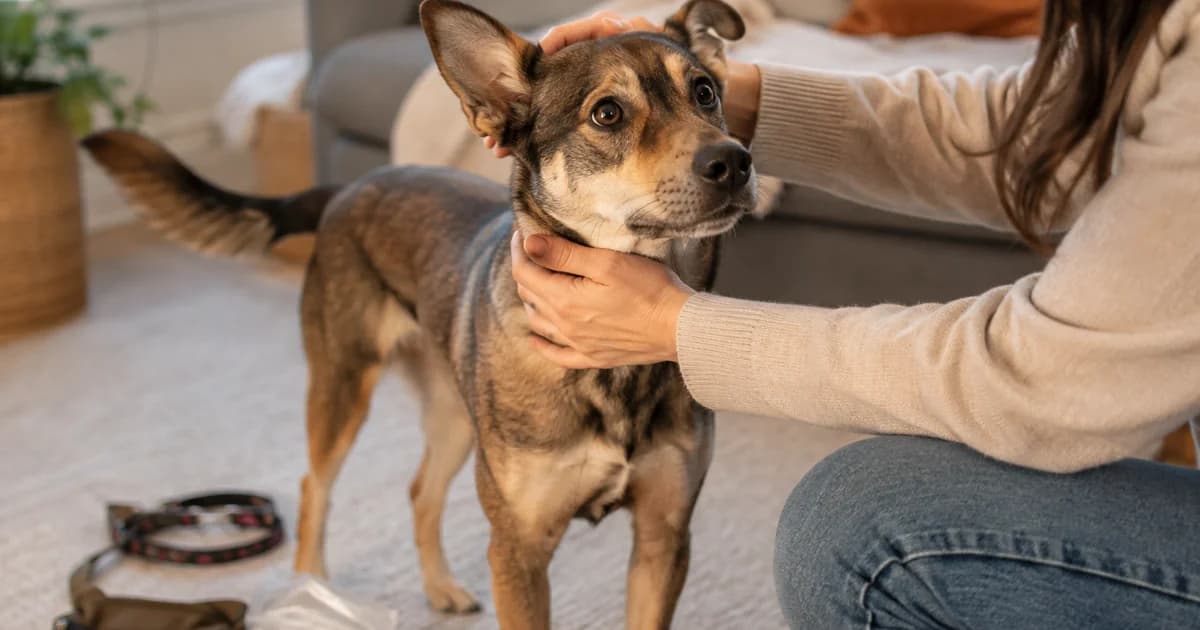
Do not rush physical affection. Some rescue dogs are hand-shy or uncomfortable being touched in certain areas. Let the dog approach you. Offer treats with an open palm. Avoid looming over the dog or reaching for the top of the head, which many dogs find threatening.
Step 1: Create Positive Associations at Home
Socialization starts inside your home. Before your dog meets new people or dogs, they need to learn that new sounds, objects, and experiences predict good things.
Practice with recorded sounds: traffic, thunder, doorbells, children playing. Start at a very low volume while feeding treats or playing a game. Gradually increase the volume over multiple sessions. The goal is for the dog to hear the sound and look at you expectantly, not cower or bark.
Introduce novel objects: umbrellas, hats, wheelchairs, strollers. Let the dog investigate at their own pace. Reward curiosity with treats. If the dog retreats, do not force interaction. Leave the object out and let the dog approach when ready.
Step 2: Controlled People Meetings
Once your dog is comfortable at home and shows basic trust signals, you can introduce new people. The key word is controlled. One person at a time, in a familiar environment, with clear instructions.
Tell your guest to ignore the dog initially. No eye contact, no reaching out, no cooing. Let the dog approach on their own terms. If the dog approaches, the guest can toss a treat to the floor. If the dog retreats, the guest continues to ignore them.
Repeat this with multiple guests over several weeks. Vary the people: different ages, genders, heights, and clothing styles. A dog comfortable with women may still be uncertain around men. A dog who likes calm adults may find children overwhelming.
Never force a greeting. If your dog chooses not to approach a guest, that is information, not failure. Some dogs will never be social butterflies, and that is okay. The goal is tolerance and lack of fear, not enthusiasm.
Step 3: Dog-to-Dog Introductions
This is where most owners make mistakes. They take their rescue dog to a dog park or set up a playdate and hope for the best. This is a recipe for disaster with an under-socialized adult.
Start with parallel walking. Find a calm, neutral dog and handler you trust. Walk on opposite sides of a wide street or path. The dogs see each other but do not interact. Reward calm behavior. Gradually decrease the distance over multiple sessions.
If parallel walking goes well, progress to a structured meeting on leash in a neutral area. Keep leashes loose, not tight. Tension travels down the leash and creates reactivity. Let the dogs sniff for three seconds, then call them apart. Short, positive interactions beat long, uncertain ones.
Avoid dog parks entirely until your dog has multiple successful one-on-one meetings. Dog parks are unpredictable, and one negative experience can undo weeks of progress.
Step 4: Environmental Socialization
Once your dog is comfortable with new people and calm around other dogs, expand to new environments. Start with low-stimulation locations: quiet streets during off-peak hours, empty parking lots, calm parks.
Bring high-value treats and reward calm behavior constantly. If your dog notices a trigger, such as a cyclist or a loud truck, and looks at you instead of reacting, mark and reward. This is the core skill you are building: the ability to notice something potentially scary and choose to check in with you instead.
Gradually increase the difficulty: busier streets, pet-friendly stores, outdoor cafes. Always watch your dog's body language. Lip licking, yawning, whale eye, and lowered tail are signs of stress. If you see these, increase distance from triggers or end the session.
Common Mistakes to Avoid
Moving too fast: The most common error is progressing to the next step before the current one is solid. If your dog is still nervous around guests, do not introduce them to other dogs yet. Each layer depends on the one below it.
Using corrections for fear: Leash pops, verbal scolding, or e-collars for fearful behavior make the fear worse. The dog learns that the trigger predicts both the scary thing and punishment. Always use positive reinforcement and distance management.
Forcing interactions: Pushing a dog toward a person or dog they are afraid of is called flooding. It rarely works and often causes learned helplessness or aggression. Let the dog choose to engage.
Inconsistent handling: If one family member forces greetings while another respects boundaries, the dog gets mixed signals. Everyone in the household needs to follow the same protocol.
Giving up too soon: Adult dog socialization takes months, not weeks. Some dogs show dramatic improvement in six to eight weeks. Others need six months or longer. The timeline depends on the dog's history, genetics, and the consistency of your work.
When to Seek Professional Help
Some dogs need more than a dedicated owner can provide. Contact a certified behaviorist if your dog:
- Shows aggression toward people or dogs that you cannot manage with distance and treats
- Has bitten or attempted to bite
- Shows extreme panic that does not improve with gradual exposure
- Has regressed significantly after initial progress
Look for professionals certified by the IAABC or CCPDT. Avoid trainers who promise quick fixes or use dominance-based methods.
Using Technology to Support Socialization
The Dog Translator app can help you read your dog's emotional state during socialization work. It analyzes vocalizations and body language to tell you whether your dog is curious, anxious, excited, or fearful. This real-time feedback helps you know when to push forward and when to retreat.
If the app detects stress signals during a guest visit, end the session early. If it shows curiosity during a parallel walk, your dog is ready to decrease distance. The app does not replace observation skills, but it adds objective data that helps new owners who are still learning to read canine body language.
Related Dog Behavior Guides
- Rescue Dog 3-3-3 Rule Adjustment Guide
- Dog Separation Anxiety Training Complete Guide
- Dog Body Language Complete Guide
- Dog Calming Signals Stress Communication Guide
- Dog Fear Periods Developmental Stages Complete Guide
FAQ
Can you socialize an adult dog?
Yes, adult dogs can learn new social skills, but the process is slower and more structured than puppy socialization. It focuses on building positive associations and trust rather than simple exposure.
How long does it take to socialize a rescue dog?
It varies widely. Some dogs show significant improvement in six to eight weeks. Others need six months or more. The timeline depends on the dog's history, genetics, and the consistency of your training.
What if my rescue dog is aggressive?
Fear-based aggression requires professional help from a certified behaviorist. Do not attempt to socialize an aggressive dog without guidance. Management and safety come first.
Should I take my rescue dog to a dog park?
Not initially. Dog parks are unpredictable and can be overwhelming for under-socialized dogs. Start with controlled one-on-one meetings and parallel walks. Only consider dog parks after multiple successful structured interactions.
How do I know if my dog is making progress?
Look for these signs: faster recovery from startles, voluntary approach toward new people or dogs, relaxed body language in previously stressful situations, and checking in with you when noticing triggers.
What if my dog never becomes social?
Some dogs will never enjoy meeting new people or dogs, and that is acceptable. The goal is a dog who can tolerate everyday situations without fear or aggression, not a dog who loves everyone.
Can I socialize my dog without treats?
Treats are the most reliable tool for creating positive associations, but they are not the only one. Play, praise, and access to preferred activities can also reinforce calm behavior. However, treats are especially important for fearful dogs because they create a strong, immediate positive link.
Does the breed matter for adult socialization?
Breed tendencies influence socialization ease. Herding breeds may be more reactive to movement. Guardian breeds may be more reserved with strangers. But individual temperament matters more than breed. A well-bred, well-socialized adult of any breed can learn. A poorly socialized puppy of any breed can struggle.
Conclusion
Socializing an adult rescue dog is one of the most rewarding challenges in dog ownership. It demands patience, consistency, and humility. You cannot force a dog to trust you, and you cannot rush a dog past their fear. What you can do is show up every day with treats, a calm demeanor, and a willingness to follow the dog's timeline.
The dogs who take the longest to socialize often form the deepest bonds once they get there. The trust you build through this slow process becomes the foundation for everything else. Walks become enjoyable. Vet visits become manageable. New people become neutral rather than threatening.
Your rescue dog may never be the life of the party. But with the right approach, they can become a calm, confident companion who navigates the world without fear. That is worth the work.
Download Dog Translator to better understand your dog's emotional signals during socialization training and build a stronger bond through communication.
Try it with your dog
Record a bark, scan a dog photo, or play a sound and see what happens next.