2026-09-09 · 5
A Real AI Pet-Tech Wearable Just Launched: What PetPhone Gets Right (and Where an App Like Dog Translator Fits In)
At IFA 2026 in Berlin, pet-tech brand petpogo announced a full AI ecosystem upgrade that signals where the industry is heading. The system includes three connected products: the PetPhone wearable, the PetCam AI camera, and the petpogo app. It is trained on a vocalization database of millions of recorded animal sounds, and it reads movement patterns and vocal cues to interpret emotional states. For anyone watching the pet communication space, this is a meaningful launch. It is also a useful moment to clarify what a hardware ecosystem does differently from an app-based translator, and why both have a place.
What petpogo's Ecosystem Actually Does
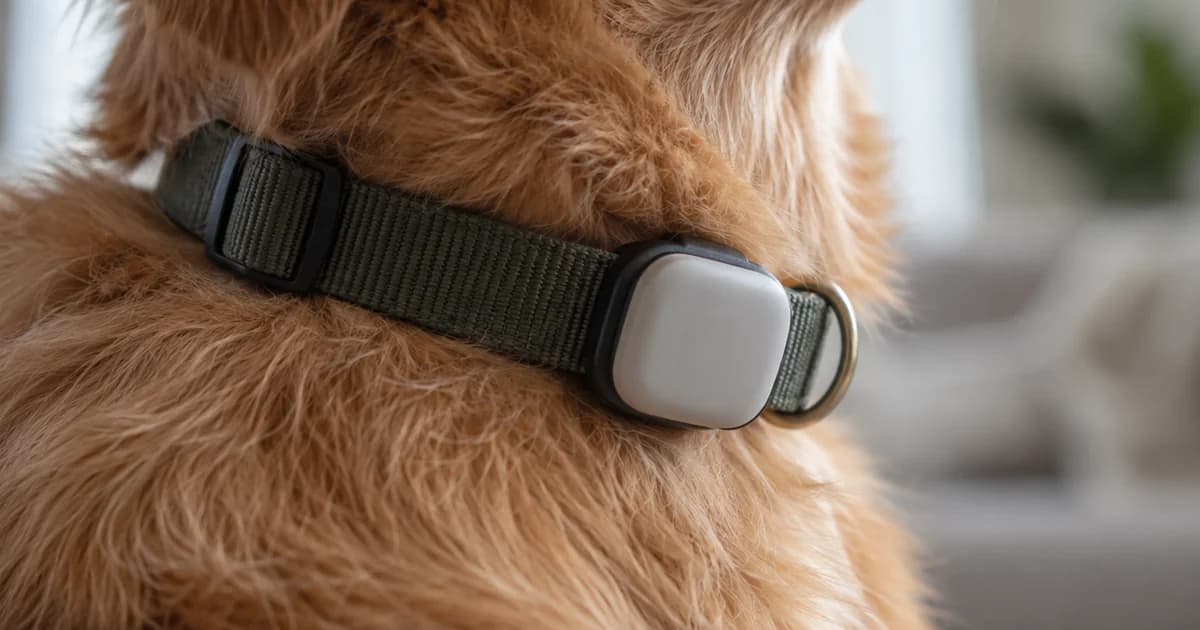
The PetPhone is a wearable device that attaches to a pet's collar. It includes two-way audio, so an owner can speak to their pet remotely, and it captures vocalizations and movement data continuously throughout the day. The PetCam AI camera adds visual context, reading body language and activity patterns in the home. The petpogo app ties both data streams together, presenting insights about the pet's emotional state.
The geofencing feature is worth noting specifically. Unlike many GPS trackers that alert an owner only after a pet has crossed a boundary, the PetPhone alerts as the pet approaches the boundary. This is a small but meaningful distinction for prevention.
uCloudlink CEO Jeff Chen, speaking at the launch, said the goal is "to make the world a less lonely place." The parent company, uCloudlink, is Nasdaq-listed, which gives petpogo a level of institutional backing that many pet-tech startups do not have.
How This Differs From an App-Based Approach
A wearable ecosystem and a translation app solve adjacent problems in fundamentally different ways. The PetPhone is always on, always attached, and always collecting. It builds a longitudinal picture of a pet's behavior over days and weeks. An app like Dog Translator, by contrast, is used in the moment. You open it when your dog barks, whines, or growls, and you get an immediate interpretation of that specific vocalization.
The hardware approach excels at pattern recognition over time. It can tell you that your dog is more anxious on Tuesdays, or that vocalizations spike at 3 PM when the mail arrives. The app approach excels at immediate clarity. It answers the question "what did that specific bark mean" without requiring a device to be worn continuously.
There is also the matter of data source. The PetPhone captures vocalizations directly from the pet's throat via the collar-mounted device, which may yield cleaner audio than a phone microphone at a distance. An app relies on the phone's microphone, which is more accessible but potentially noisier.
What This Signals About the Industry
The petpogo launch is not an isolated product. It is part of a broader trend of investor and consumer interest in pet emotional-communication technology. The fact that a Nasdaq-listed company is backing this ecosystem suggests the market is moving from novelty to infrastructure. Pet owners are no longer asking whether technology can help them understand their animals. They are asking which technology fits their lifestyle.
This is where the distinction between wearable and app becomes relevant. Some owners want the comprehensive monitoring that a collar device provides. Others want the simplicity of opening an app when a specific situation arises. The market is large enough for both, and the existence of one does not invalidate the other.
Where a Translation App Fits Differently
If you are trying to decide between a wearable ecosystem and a translation app, the question is not which is better. It is which matches your needs.
A wearable system like petpogo's makes sense if you want continuous monitoring, remote interaction, and geofencing safety features. It requires purchasing hardware, charging devices, and managing a subscription for full app functionality.
A translation app makes sense if you want immediate interpretations without additional hardware. You can use it at the dog park, at a friend's house, or while traveling without remembering to charge a collar device. Apps like Dog Translator use AI trained on bark pattern databases to classify vocalizations into emotional categories in real time, directly on your phone.
For a deeper look at how app-based translation works, see our guide on how AI dog translators work. If you are curious about the broader debate around whether these tools are genuinely useful or mostly hype, our article on human-to-dog translators covers the skepticism and the science.
Notable Phrases and What They Mean
The petpogo marketing materials emphasize "emotional states" rather than specific word-for-word translation. This is an honest framing. Current AI can classify vocalizations into broad categories, such as anxious, excited, or distressed. It cannot tell you that your dog is saying "I want the blue toy, not the red one." The gap between emotion classification and literal translation is important, and petpogo's language generally respects that boundary.
The claim of training on millions of recorded animal sounds is plausible given the scale of uCloudlink's resources. Larger datasets generally improve classification accuracy, though the diversity of breeds, sizes, and individual vocal characteristics means no dataset is ever truly complete.
Frequently Asked Questions
What is the PetPhone wearable?
The PetPhone is a collar-mounted device from petpogo that captures vocalizations and movement data, includes two-way audio for remote communication, and features geofencing alerts that notify owners as a pet approaches a boundary.
How does petpogo's AI work?
The system is trained on a vocalization database of millions of recorded animal sounds. It reads movement patterns and vocal cues to interpret emotional states, presenting insights through the petpogo app.
Is the PetPhone available now?
The ecosystem was announced at IFA 2026 on September 4, 2026. Availability and pricing details would need to be confirmed through petpogo's official channels.
How is a wearable different from a dog translator app?
A wearable collects continuous data over time and requires hardware. An app provides immediate interpretations of specific vocalizations using the phone's microphone, with no additional device needed. Both approaches have different strengths.
Can AI really understand what my dog is saying?
Current AI can classify vocalizations into emotional categories with reasonable accuracy. It cannot provide word-for-word translation. For more detail, see our article on how AI dog translators work.
Who owns petpogo?
petpogo is the pet-tech brand under uCloudlink, a Nasdaq-listed company. CEO Jeff Chen announced the ecosystem upgrade at IFA 2026.
This article covers the petpogo AI pet-tech ecosystem announced at IFA 2026 in Berlin on September 4, 2026.
Try it with your dog
Record a bark, scan a dog photo, or play a sound and see what happens next.