2026-08-06 · 6
Dog Scavenging Behavior: How to Stop Counter Surfing & Food Stealing
You turn your back for thirty seconds and your sandwich vanishes from the counter. Your dog stands nearby with telltale crumbs on their nose, looking pleased with themselves. Counter surfing, food stealing, and scavenging behaviors frustrate countless dog owners, yet many struggle to eliminate these habits despite consistent attempts. Understanding why dogs engage in these behaviors and applying the right training approach can permanently solve the problem.
Why Dogs Scavenge and Counter Surf
Dogs are natural scavengers. Their ancestors survived by finding and consuming whatever food sources were available. This evolutionary history means that searching for and taking food is not misbehavior in the dog's mind. It is a successful survival strategy that has worked for thousands of years. Your dog is not being stubborn or defiant when they snatch food from counters. They are following deeply ingrained instincts that tell them to take advantage of available resources.
The behavior becomes self-reinforcing because it works. Every time your dog successfully grabs food from a counter, they receive a powerful reward. The taste of the food, the satisfaction of eating, and the relief of hunger all reinforce the behavior. Even occasional success is enough to maintain the habit. A dog who scores a sandwich once a week will continue checking counters daily because the payoff justifies the effort.
Some dogs develop scavenging behaviors due to insufficient nutrition or medical conditions that increase appetite. If your dog suddenly becomes obsessed with finding food, a veterinary checkup can rule out issues like diabetes, thyroid problems, or medication side effects. Most counter surfing, however, stems from normal canine behavior combined with opportunities to practice it.
The Management Mistake Most Owners Make
The most common approach to counter surfing involves management: keeping food out of reach, supervising the dog in the kitchen, and using baby gates to restrict access. These strategies prevent the behavior in the moment but do nothing to teach the dog what they should do instead. Management fails the moment someone forgets to put away leftovers or leaves a snack within reach.
Management has its place, especially during the early stages of training. However, relying on management alone creates a fragile situation where the behavior can resurface whenever circumstances change. True behavior change requires teaching the dog that counters are always off limits, not just when humans are watching or when food is obviously present.
Teaching Alternative Behaviors
The most effective counter surfing solutions give dogs something else to do instead of searching for food. A dog who knows to lie on a mat while you cook cannot simultaneously patrol the counters. A dog who responds reliably to a "leave it" cue can be interrupted before they grab that dropped piece of chicken.
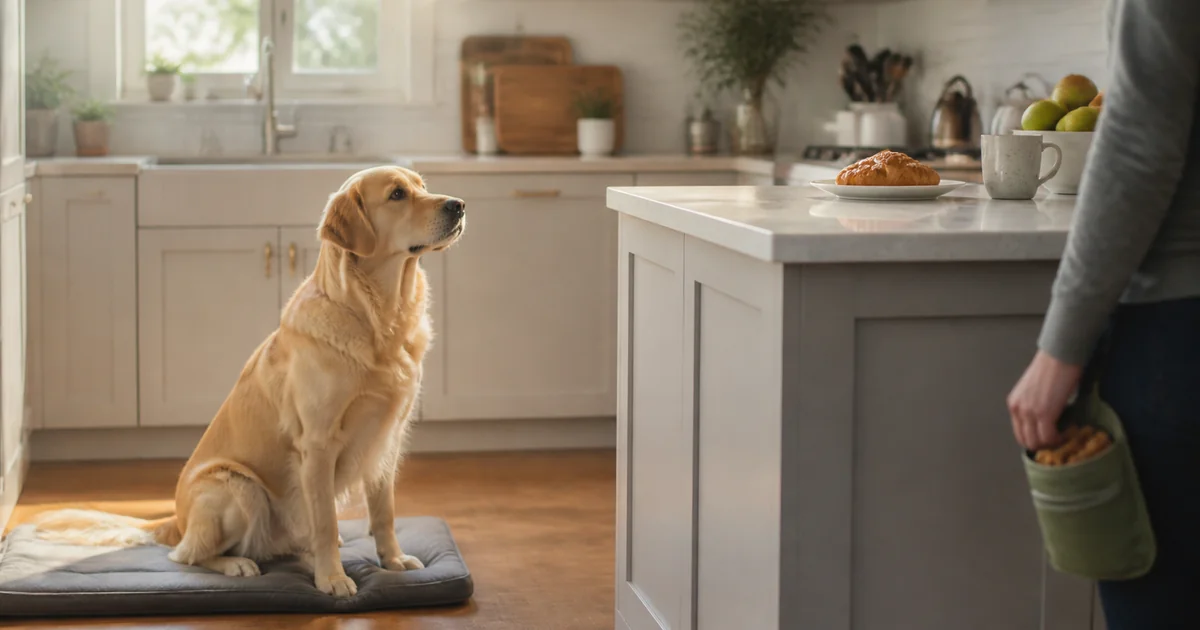
Start by teaching a strong "place" or "mat" cue. Choose a specific bed or mat and reward your dog heavily for going to that spot and staying there. Practice in low distraction environments first, then gradually add challenges like food preparation sounds, the smell of cooking, and eventually actual food on counters. The goal is to make going to their mat more rewarding than checking for scraps.
The "leave it" cue provides another essential tool. Teach your dog that ignoring food on command leads to better rewards than taking the food themselves. Begin with low-value items and gradually increase difficulty. Eventually, your dog should be able to walk past food on the floor or resist items on low tables when told to leave them.
Making Counters Unrewarding
While teaching alternative behaviors, you must simultaneously make counter surfing unsuccessful. This means ensuring your dog never gets food from counters during the training period. Every successful theft sets back your progress significantly. Enlist everyone in your household to commit to keeping food secured and supervising the dog when food is being prepared.
Some trainers recommend booby traps like motion-activated alarms or stacked cans that fall when the dog investigates counters. These can work for some dogs but risk creating anxiety or fear that generalizes beyond the kitchen. A better approach focuses on preventing success while building strong alternative behaviors that the dog chooses voluntarily.
The Importance of Exercise and Mental Stimulation
Dogs with excess energy and boredom often channel those feelings into searching for food. A tired dog is less likely to patrol counters looking for entertainment. Ensure your dog receives adequate physical exercise appropriate for their age, breed, and health status. A long walk or play session before meal preparation times can reduce scavenging urges.
Mental stimulation matters equally. Dogs need opportunities to use their brains and satisfy their natural foraging instincts in appropriate ways. Puzzle feeders, snuffle mats, and frozen Kong toys give dogs legitimate outlets for food-seeking behavior. When dogs can engage in natural scavenging behaviors in appropriate contexts, they are less driven to seek out inappropriate opportunities.
Training Through Real-Life Scenarios
Once your dog understands basic cues like "place" and "leave it," practice in realistic kitchen scenarios. Set up training sessions where you pretend to cook while your dog practices staying on their mat. Reward them frequently for good choices. If they get up to check counters, calmly redirect them back to their spot without anger or punishment.
Gradually increase the difficulty by placing low-value food items on counters during training sessions. If your dog ignores the food and stays on their mat, reward them with something better than what they resisted. This teaches them that ignoring counter food leads to superior rewards, making the choice obvious.
Addressing Trash and Floor Scavenging
Counter surfing often extends to trash can raids and floor scavenging during walks. The same principles apply: prevent success, teach alternative behaviors, and reward good choices. Use trash cans with locking lids or store them in cabinets. On walks, teach your dog to check in with you frequently and reward them for ignoring food on the ground.
Some dogs develop intense scavenging behaviors on walks, lunging toward every crumb or wrapper on the sidewalk. This requires patient training where you reward your dog for attention and gradually introduce distractions. A head halter or front-clip harness can provide additional control during the training process.
When to Seek Professional Help
If your dog's scavenging behavior is extreme, dangerous (consuming toxic foods or non-food items), or unresponsive to consistent training, consult a certified professional dog trainer or veterinary behaviorist. Some dogs have compulsive disorders that require specialized intervention. Dogs who consume rocks, fabric, or other non-food items may have pica, a condition requiring veterinary attention.
Professional trainers can assess whether your approach needs adjustment and provide personalized guidance for your specific situation. They can also identify whether underlying anxiety or other emotional factors contribute to the scavenging behavior.
Preventing Scavenging in Puppies
Starting prevention early is far easier than fixing established habits. With puppies, focus on teaching that good things come from humans, not from independent foraging. Hand-feed portions of meals during training sessions to build engagement and reinforce that you are the source of food rewards.
Supervise puppies closely in kitchen and dining areas. Use baby gates or leashes to prevent access when you cannot supervise directly. Reward puppies heavily for ignoring food on low tables or counters during supervised exposure. Building these habits early prevents the behavior from developing in the first place.
The Role of Nutrition and Feeding Schedule
Dogs who are genuinely hungry scavenger more intensely. Ensure you are feeding appropriate amounts of a nutritionally complete diet. Some dogs need more frequent meals to prevent hunger-driven scavenging. Consider whether your dog's current food satisfies them or leaves them searching for more.
Feeding schedules also matter. Dogs fed once daily often become intensely focused on food as mealtime approaches. Splitting the same daily amount into two or three meals can reduce this preoccupation. Some dogs benefit from puzzle feeders or slow-feeding bowls that extend meal duration and provide mental engagement.
Frequently Asked Questions
Why does my dog only counter surf when I am not looking?
Dogs learn quickly when rules are enforced and when they are not. If your dog only gets food when you are out of the room, they learn to wait for those opportunities. Consistent prevention and teaching alternative behaviors that work even when unsupervised solves this problem.
Is it okay to let my dog clean up dropped food?
Teaching a "clean up" cue for accidentally dropped food is fine, but distinguish this from allowing random scavenging. Your dog should only take food you specifically offer or direct them to take. Random floor food should be ignored unless given permission.
Will punishment stop my dog from counter surfing?
Punishment after the fact is ineffective because dogs cannot connect consequences to actions that occurred minutes ago. Even immediate punishment often creates fear and anxiety without teaching what behavior is desired. Focus on prevention and teaching alternatives instead.
My dog counter surfs even when they are not hungry. Why?
Food is inherently rewarding to dogs regardless of hunger level. The taste, texture, and experience of eating provide satisfaction beyond simple hunger relief. Additionally, the act of finding and obtaining food is mentally stimulating and self-reinforcing.
How long does it take to stop counter surfing?
With consistent training, most dogs show significant improvement within two to four weeks. However, breaking established habits can take longer, especially if the dog has been successfully scavenging for months or years. Consistency and preventing setbacks are key to faster progress.
Should I use a shock mat or other aversive devices?
Aversive devices can create fear and anxiety that extends beyond the specific behavior you want to stop. Dogs may become afraid of the kitchen or generalize the fear to other surfaces or situations. Positive reinforcement training builds better long-term results without emotional side effects.
Can certain breeds be trained out of scavenging more easily?
While some breeds have stronger food motivation than others, all dogs can learn to control scavenging behavior. Breeds developed for hunting or scavenging may require more consistent training, but they are equally capable of learning household rules.
What if my dog steals food that could be dangerous?
For dogs who consume toxic foods or non-food items, immediate management is essential while training progresses. Use baby gates, crates, or leashes to prevent access to dangerous situations. Some dogs require lifelong management for their own safety even after training improves their behavior.
Conclusion
Counter surfing and scavenging behaviors frustrate dog owners, but they are natural canine behaviors that can be modified through patient, consistent training. The key lies in understanding that your dog is not being bad; they are following instincts that served their ancestors well. Your job is to teach them that in your household, different rules apply.
Success requires preventing the behavior from being rewarded while building strong alternative behaviors that your dog chooses voluntarily. Management helps during training but should not replace actual behavior modification. With time and consistency, your dog can learn to ignore food on counters and focus on appropriate activities instead.
Remember that every dog learns at their own pace. Some will grasp these concepts quickly while others need months of consistent practice. Stay patient, celebrate small improvements, and maintain your training approach even when progress feels slow. The result, a dog who ignores counters and waits politely for appropriate food opportunities, is worth the effort.
Want to better understand what your dog is trying to tell you? Download Dog Translator to decode barks, body language, and behavior.
Related Articles
- Dog Counter Surfing Training Solutions Complete Guide
- Dog Body Language Complete Guide: Ears, Tail, Posture
- Dog Calming Signals Stress Communication Guide
- Dog Enrichment Activities Mental Stimulation Guide
- Dog Training: Positive Reinforcement Explained
- Dog Separation Anxiety Training Complete Guide
- Dog Recall Training Off-Leash Reliability Guide
- Puppy Crate Training Potty Training Complete Guide
Try it with your dog
Record a bark, scan a dog photo, or play a sound and see what happens next.