2026-06-19 · 7
Dog Paw Lifting Behavior: What Your Dog's Raised Paw Really Means
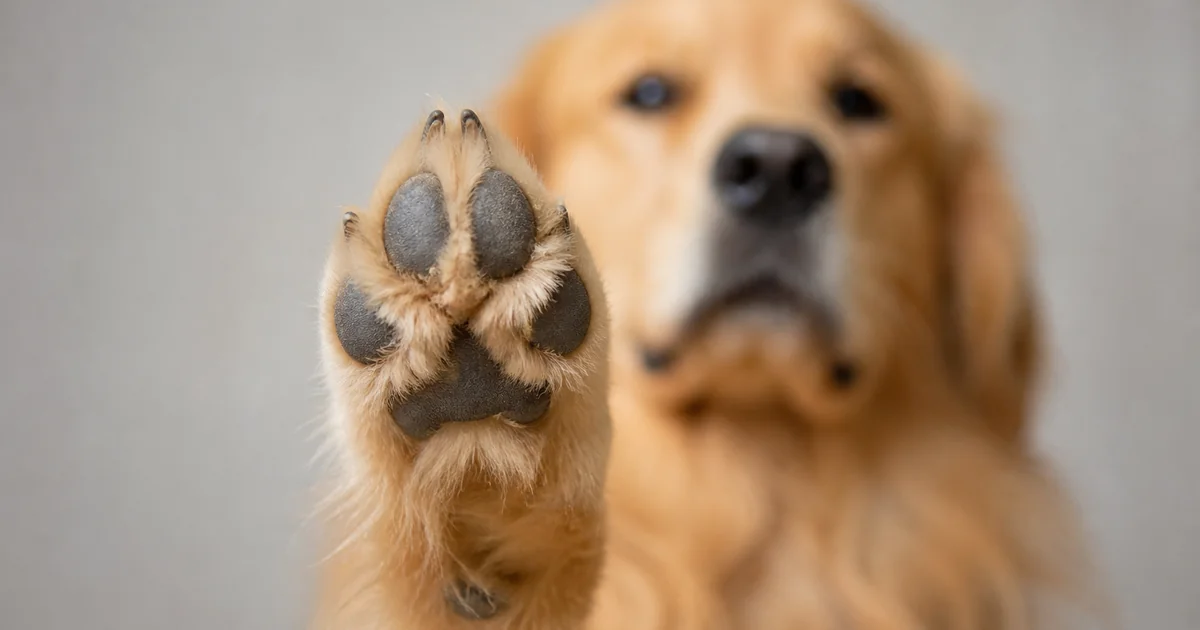
You are walking your dog when they suddenly stop and lift one front paw, holding it in midair. Or they approach you and gently put a paw on your knee while you sit on the couch. Maybe you notice your dog sitting with one paw slightly raised during training. Each moment means something. Your dog is talking to you, and the raised paw is their signal.
Dog owners often mistake paw lifting for a simple physical gesture or a cute quirk. Actually it is nuanced body language with several possible meanings depending on context. Understanding what your dog is trying to say can strengthen your bond and help you respond to their emotional state.
The Most Common Meanings Behind Paw Lifting
A raised paw is not one signal with a single meaning. Dogs use this gesture in different situations to say different things. Context matters. The same lifted paw can mean stress one moment and affection the next.
The most common meaning is uncertainty or mild stress. When a dog feels unsure, they may lift a front paw while standing or sitting. This often comes with other subtle signals like a turned head, whale eye, or lip licking. The paw lift here says "I am not completely comfortable right now."
Another common meaning is asking for attention. Dogs learn fast that touching humans with their paws gets a reaction. If your dog puts a paw on your leg while you stare at your phone, they are saying "Notice me." Owners often accidentally reinforce this by petting or talking to the dog when it happens.
Some dogs lift a paw as part of play solicitation. The gesture resembles the play bow but with one leg raised instead of both front legs down. This is an invitation to engage. Your dog is asking you to start a game or continue one that paused.
Paw Lifting as a Stress Signal
Canine behavior researchers classify paw lifting as a displacement behavior, something dogs do when they feel low-level stress or conflict. A displacement behavior is what a dog does when they are not sure how to respond. It is like a human fidgeting when nervous.
The stress-related paw lift usually shows up during mildly anxious moments. A dog might lift a paw when meeting someone new, hearing an unfamiliar sound, or encountering a strange dog. The lift is brief, often just a quick hesitation before the paw drops back down.
Other stress signals often show up alongside this type of paw lift. Watch for yawning when not tired, lip licking when no food is around, shaking off when not wet, or scratching when not itchy. When you see several displacement behaviors together, your dog is definitely feeling stressed.
This matters because it helps you advocate for your dog. If you notice your dog lifting a paw during an interaction with a stranger, you can step in before stress ramps up. Removing your dog from the situation or creating more distance can stop anxiety from turning into fear or reactivity.
When Paw Lifting Indicates Physical Discomfort
Sometimes a raised paw signals physical discomfort rather than emotional. Dogs cannot tell us when something hurts, so they communicate through behavior changes. A persistent paw lift, especially the same leg over and over, deserves attention.
Check the lifted paw for obvious problems. Look between the toes for burrs, thorns, or foxtails. Check the pads for cuts, scrapes, or foreign objects. Feel the leg gently for swelling, heat, or sensitivity. Sometimes the problem is higher up in the shoulder or hip, and the dog lifts the leg to shift weight away from pain.
Arthritis in older dogs can cause on-and-off limping or paw lifting, especially after resting. Joint stiffness makes putting full weight uncomfortable at first. As the dog moves and warms up, the lifting may fade. This pattern means a vet visit is a good idea.
Neurological issues can also cause abnormal paw positioning. If your dog seems unaware that their paw is raised, or if the leg trembles or drags, consult a veterinarian promptly. These signs indicate something more serious than behavioral communication.
Training Contexts Where Paw Lifting Appears
During training, paw lifting often signals confusion or processing. Your dog is working through what you want. The lifted paw is a pause button while they figure out the answer.
This happens a lot in shaping exercises where you wait for the dog to offer a behavior. The dog tries something, you do not mark it, and they pause with a paw lifted while thinking about what to try next. This is actually a good sign. It means your dog is engaged in learning instead of checking out or guessing randomly.
Some dogs lift a paw when they know a cue but are not sure they want to obey. You say "come" and your dog lifts a paw while looking at you. They heard you. They understood. They are deciding whether to prioritize your request or whatever else has their attention. This is not defiance. It is a moment of real decision-making.
Service dog trainers sometimes teach a specific paw lift as a task behavior. A diabetic alert dog might be trained to lift a paw when they detect a blood sugar change. A seizure response dog might use paw contact to guide their handler to a safe position. In these cases, the paw lift is a trained communication tool rather than natural body language.
How to Respond When Your Dog Lifts a Paw
Your response should depend on what the paw lift is communicating. For stress signals, the best response is to reduce pressure. Create distance from whatever is causing discomfort. Speak softly. Let your dog approach rather than forcing interaction. Reward voluntary engagement when they feel safe enough to continue.
For attention-seeking paw lifts, you have choices. If you want to reinforce the behavior, respond with affection or play. If you want to discourage it, ignore the paw contact and only reward calmer approaches. Be consistent. Mixed messages confuse dogs and prolong the training process.
When paw lifting indicates confusion during training, simplify. Break the behavior into smaller steps. Increase the rate of reinforcement. Make the right answer more obvious. Your dog wants to succeed. Help them find the path.
If you suspect physical discomfort, investigate. Check the paw and leg. Schedule a veterinary visit if the behavior persists or if you notice limping, reluctance to walk, or changes in activity level. Addressing pain early prevents minor issues from becoming chronic problems.
FAQ: Understanding Paw Lifting Behavior
Why does my dog lift their paw when I pet them?
This often indicates mild uncertainty or overstimulation. Your dog enjoys the interaction but needs a moment to process. Watch for other signals. If they lean into your hand and relax, continue. If they turn their head away or lick their lips, give them a break.
Is paw lifting always a sign of anxiety?
No. While paw lifting can indicate stress, it also appears in neutral and positive contexts. Dogs lift paws during play, when requesting attention, and while processing new information. Context and accompanying body language tell you which meaning applies.
Should I stop my dog from putting their paw on me?
That depends on your preference and the situation. A gentle paw on your knee is a common way dogs request interaction. If you do not mind, you can accept it. If you prefer not to be pawed, ignore the contact and reward calmer approaches instead.
Why does my dog lift their paw while sitting?
A dog sitting with one front paw slightly raised is often displaying mild stress or social insecurity. This posture appears when a dog feels uncertain about a person, animal, or situation approaching them. It is a subtle signal that often goes unnoticed.
Can paw lifting be a sign of pain?
Yes. Persistent lifting of the same paw, especially during walking or standing, suggests physical discomfort. Check for foreign objects, cuts, or swelling. If the behavior continues, consult a veterinarian to rule out injury, arthritis, or neurological issues.
Related Articles
- Dog Body Language Guide: Understanding What Your Dog Is Really Saying
- Dog Stress Signals and Calming Signals Explained
- Dog Play Bow Communication Guide
- Dog Tail Wagging: What It Really Means
- Dog Ear Positions and Their Meanings
- Dog Eye Contact and Whale Eye Communication
- Dog Licking Behavior: What It Communicates
- How Does an AI Dog Translator Work
- Best Dog Translator Apps for iPhone 2026
- Dog Barking Types and Communication Guide
- Dog Growling: Understanding the Communication
The Bottom Line on Paw Lifting
Your dog's raised paw is a versatile communication tool. It can signal stress, request attention, invite play, indicate confusion, or even point to physical discomfort. The key to understanding which meaning applies is context. Look at what is happening around your dog when the paw lifts. Check for other body language signals that might confirm or clarify the message.
Learning to read paw lifting takes your understanding of your dog beyond the obvious. You start noticing subtle emotional states that previously went unrecognized. You catch stress early before it escalates. You recognize when your dog is processing rather than ignoring you. You spot potential health issues sooner.
Pay attention the next time your dog lifts a paw. What was happening right before? What did they do after? The more you observe, the better you will become at understanding what your dog is trying to tell you. That understanding is the foundation of a stronger relationship.
Try it with your dog
Record a bark, scan a dog photo, or play a sound and see what happens next.