2026-07-29 · 7
What Your Dog's Ear Position Really Means: A Complete Body Language Guide
Your dog's ears are talking. Every position, angle, and movement carries meaning. Learning to read these signals transforms how you understand your pet, helping you respond appropriately to their emotional state and build a stronger bond.
Most dog owners notice obvious ear signals. Ears pinned flat against the head usually mean fear or submission. Ears perked straight up suggest alertness or interest. But the full vocabulary of ear communication is more nuanced. The angle of the ears, how they move, and what they do in combination with other body language all matter.
This guide breaks down every major ear position, explains what it means, and shows you how to interpret ear signals in context. By the end, you will read your dog's emotional state with the same fluency you read facial expressions on humans.
Why Ears Matter in Canine Communication
Dogs evolved as social animals who rely heavily on body language. Unlike humans, they cannot use words to express complex emotions. Their bodies become their primary communication tool, and ears are among the most expressive parts.
Ear position affects more than communication. The shape and mobility of a dog's ears influence their hearing ability. Erect ears capture sound waves more effectively than floppy ears. This biological fact shapes how different breeds use ear signals. A German Shepherd with upright ears can make subtle adjustments that a Basset Hound with droopy ears simply cannot perform.
Understanding ear language matters for practical reasons. A dog whose ears suddenly flatten may be warning you that they are uncomfortable with a situation. Recognizing this signal early lets you intervene before fear escalates to aggression. Conversely, ears that perk up during training indicate engagement and readiness to learn.
Erect and Forward: The Alert Position
When your dog's ears stand straight up and angle slightly forward, they are paying close attention to something. This position indicates curiosity, interest, or mild concern. The dog has detected a sound, smell, or sight that requires investigation.
You will see this position often during walks. A squirrel rustling leaves, another dog barking in the distance, or an unfamiliar person approaching all trigger the alert ear position. Your dog is gathering information, deciding whether the stimulus requires action.
The key to interpreting this position lies in what happens next. If the ears relax back to neutral after a moment, the dog decided the stimulus was not threatening. If the ears remain erect and the body tenses, the dog is maintaining vigilance. If the ears drop and the body softens, the dog lost interest.
During training, erect forward ears usually signal engagement. Your dog is focused on you, ready to receive instructions. This is the ideal state for teaching new commands or practicing existing ones. The ears tell you the dog's attention is available.
Erect and Swiveling: Tracking Mode
Dogs can move their ears independently, rotating them to capture sounds from different directions. When you see your dog's ears swiveling while remaining erect, they are in tracking mode. Multiple sounds compete for attention, and the dog is trying to locate and identify each source.
This position often appears at home when the dog hears familiar sounds from unusual locations. The mail carrier approaching, a neighbor starting their car, or family members arriving home all trigger ear swiveling. The dog recognizes the sound category but needs to confirm the specific source.
Hunting breeds show this behavior most dramatically. Pointers, setters, and retrievers have been bred for generations to use their ears in coordination with their noses. When a hunting dog freezes with swiveling ears, they have detected prey and are pinpointing its location.
For pet owners, this position requires patience. Your dog is processing information and may not respond immediately to commands. Give them a moment to complete their assessment before expecting full attention.
Flattened Back: Fear and Submission
Ears pressed flat against the head represent one of the most important signals to recognize. This position indicates fear, anxiety, or submission. The dog is trying to make themselves smaller, less threatening, or protect their ears from harm.
Context determines whether flattened ears signal fear or submission. A dog meeting a larger, more confident dog may flatten their ears as a peaceful gesture. They are saying "I am not a threat" in the universal language of canine body language. This is normal social behavior.
The same ear position during a veterinary examination indicates fear. The dog finds the situation threatening and is responding with defensive body language. Flattened ears combined with whale eye (showing the whites of the eyes), lip licking, or trembling confirm fear rather than submission.
Some dogs flatten their ears when excited, particularly during greetings. The emotional arousal overwhelms their usual ear position. Learning your individual dog's patterns helps you distinguish between fear and excitement.
Half-Pricked: The Uncertain Position
Ears that stand halfway up, neither fully erect nor completely relaxed, indicate uncertainty or conflicted emotions. The dog has detected something interesting but is not sure how to respond. They are waiting for more information before committing to an emotional state.
This position often appears during social introductions. Your dog meets a new person or dog and holds their ears halfway, assessing the situation. If the interaction goes well, the ears may rise to full alert or relax completely. If tension develops, the ears may flatten.
Puppies show half-pricked ears frequently. They are still learning to interpret the world and often hesitate before reacting. This is normal developmental behavior. As puppies gain experience and confidence, their ear signals become more decisive.
During training, half-pricked ears may indicate confusion. Your dog heard the command but is not certain what you want. Breaking the behavior into smaller steps and rewarding incremental progress helps build confidence and clarity.
One Up, One Down: Asymmetric Signals
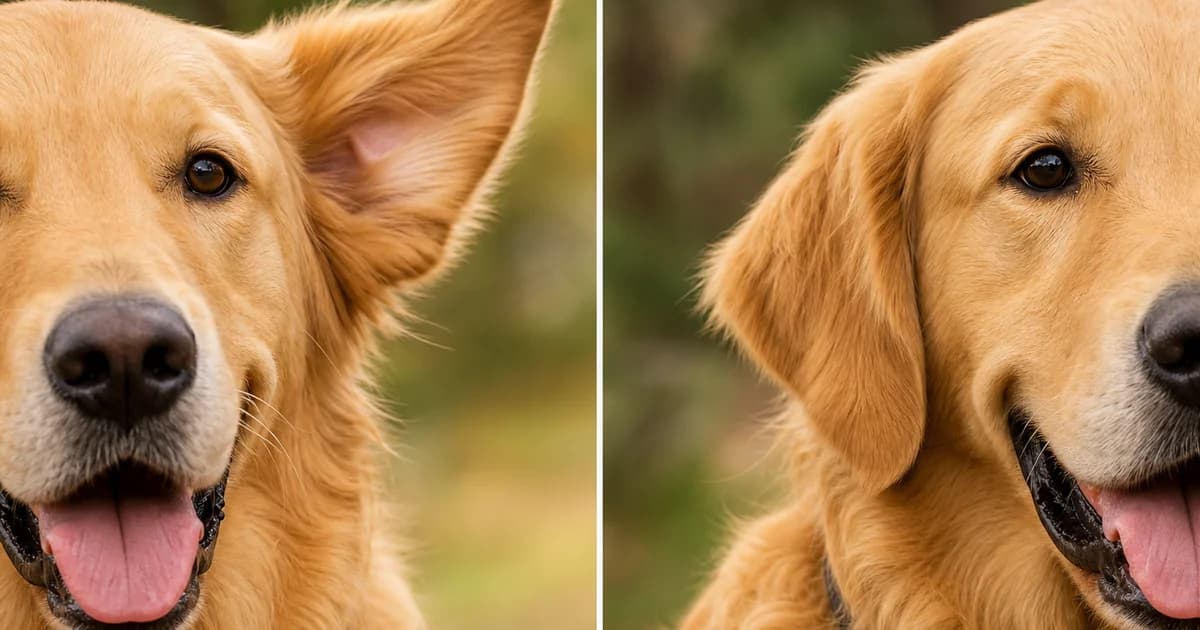
When one ear stands erect while the other relaxes or flops, your dog is processing conflicting information. Each ear may be tracking a different sound, or the dog may be dividing attention between two stimuli.
This position is common in dogs with naturally floppy ears who have learned to raise one ear independently. The ability shows intelligence and adaptability. The dog has figured out how to use whatever ear mobility they possess to gather information.
Asymmetric ears can also indicate physical issues. Ear infections, injuries, or neurological problems may prevent a dog from moving one ear normally. If your dog suddenly cannot raise an ear they previously could move, consult a veterinarian.
In social situations, one-up-one-down ears often appear when a dog is interested in something but also monitoring their owner. They want to investigate the interesting thing but are checking whether you approve. This is common in well-trained dogs who have learned to reference their handler before acting.
Relaxed and Neutral: The Baseline State
Ears in their natural resting position indicate a calm, content dog. For breeds with erect ears, this means standing upright but not angled forward. For floppy-eared breeds, this means hanging naturally without tension.
This is the position you want to see most often. It means your dog feels safe, comfortable, and free from stress. They are not ignoring their environment, but they are not alarmed by it either.
Learning your dog's neutral position is essential for recognizing deviations. Every dog is different. A Greyhound's neutral ears look different from a Beagle's. Spend time observing your relaxed dog at home to establish their baseline.
When training, returning to neutral ears after a command indicates the dog has processed the instruction and is waiting for the next cue. This is the rhythm of successful communication: command, response, neutral, next command.
Pulled Back Slightly: Anticipation
Ears that pull back slightly from neutral without flattening completely suggest anticipation. The dog expects something to happen and is preparing for it. This position appears before meals, before walks, and before favorite activities.
The difference between anticipation and fear lies in the degree of ear movement and the accompanying body language. Anticipation involves slight ear movement back, relaxed facial muscles, and often a wagging tail. Fear involves ears flat against the head, tense facial muscles, and a tucked tail.
Some dogs show this position when their owner picks up a training treat or leash. They have learned the associations and are ready for the activity to begin. This is positive anticipation, a sign of a dog who enjoys their routine.
During agility or sports training, slightly pulled-back ears often indicate the dog is "loaded" and ready to perform. They are focused, energized, and waiting for the release command. Experienced handlers recognize this position as the ideal state for peak performance.
Twitching and Flicking: Processing Information
Rapid ear movements, twitching, or flicking indicate your dog is processing significant information. Multiple stimuli compete for attention, or a single stimulus requires intense focus. The ears are working hard to gather and interpret data.
This position appears during complex social situations. A dog at the dog park may flick their ears constantly, tracking multiple playmates, monitoring their owner, and listening for environmental sounds. The cognitive load is high.
Some dogs twitch their ears when thinking through a problem. A dog trying to figure out how to reach a toy under furniture may flick their ears while studying the situation. The ear movement correlates with mental effort.
If ear twitching appears with no obvious stimulus, consider whether your dog hears something you cannot. Dogs detect frequencies outside human hearing range. High-pitched electronic sounds, distant sirens, or wildlife outside may trigger ear flicking that seems mysterious to us.
Breed Differences in Ear Communication
Not all dogs can make all ear positions. Breed anatomy creates natural limitations that affect communication.
Dogs with erect ears, like German Shepherds, Huskies, and Corgis, have the full range of ear signals available. They can rotate, flatten, and angle their ears with precision. Their ear vocabulary is extensive.
Dogs with semi-erect ears, like Collies and Shetland Sheepdogs, have good mobility but less range than fully erect ears. They can still communicate effectively but with slightly less nuance.
Dogs with drop ears, like Basset Hounds, Beagles, and Cocker Spaniels, have limited ear mobility. Their ear signals are subtler and must be read in combination with other body language. A Beagle cannot flatten their ears against their head the way a Shepherd can, but they can pull them back and tense the muscles at the base.
Dogs with cropped ears may have altered communication abilities depending on how much ear structure was removed. Some cropped ears retain mobility, while others are essentially fixed in position. This does not prevent communication but shifts it to other body parts.
Reading Ear Signals in Context
Ears never tell the whole story. Always interpret ear position alongside other body language signals.
Ears erect forward with relaxed mouth and wagging tail mean friendly interest. The same ear position with tense mouth and stiff body means potential aggression. Context transforms meaning.
Ears flattened with whale eye and tucked tail mean fear. The same ear position with exposed teeth and forward weight shift means defensive aggression. Both require different responses from you.
Learn to scan your dog's entire body: ears, eyes, mouth, tail, posture, and movement patterns. The combination reveals the emotional state. Individual signals provide only hints.
Environmental context matters too. Ears erect at the dog park are normal. Ears erect in your living room at midnight may indicate an intruder or strange noise requiring investigation. Know what is normal for each situation.
Training Applications
Understanding ear language improves your training effectiveness. The ears tell you when your dog is ready to learn and when they are too stressed to process information.
Train when ears are neutral or erect forward. This indicates engagement and emotional readiness. Avoid training when ears are flattened or half-pricked with tension. The dog is not in the right mental state.
Use ear signals to gauge difficulty. If ears shift from erect to half-pricked during a training exercise, your dog is becoming confused. Simplify the task or return to something they know well.
Reward ear positions that indicate confidence. When a shy dog holds their ears neutral in a previously frightening situation, mark and reward that bravery. You are reinforcing emotional resilience, not just specific behaviors.
FAQ
Why does my dog put their ears back when I pet them?
Slightly back ears during petting usually indicate enjoyment and submission. The dog is saying they accept your affection and do not feel threatened. If ears flatten completely or the dog shows other stress signals, they may be uncomfortable with how they are being touched.
Can dogs with floppy ears communicate as clearly as dogs with upright ears?
Dogs with floppy ears communicate just as clearly but use different signals. They rely more on ear base tension, head position, and other body language since their ears cannot move as freely. Learn your individual dog's specific signals.
Why do my dog's ears twitch when they sleep?
Twitching ears during sleep usually indicates dream activity. Dogs process sensory information and experiences during sleep, and ear movement may accompany dream content. This is normal and not a cause for concern.
Do puppies have different ear positions than adult dogs?
Puppies often show more variable ear positions as they develop muscle control and learn to interpret the world. Their ears may flop, rise, and change position frequently. Adult dogs typically show more consistent patterns.
What does it mean when my dog's ears are hot?
Warm ears can indicate normal blood flow, excitement, or mild fever. If ears are unusually hot combined with other symptoms like lethargy or loss of appetite, consult a veterinarian. Hot ears alone are rarely concerning.
Why does only one of my dog's ears stand up?\n Asymmetric ears can be normal variation, especially in breeds with mixed ear genetics. Some dogs have one ear that stands and one that flops. Sudden changes in ear position may indicate injury or neurological issues requiring veterinary attention.
Can I train my dog to put their ears in certain positions?
You cannot directly train ear positions since dogs do not have conscious control over ear movement. However, you can shape emotional states that produce desired ear positions. Building confidence in shy dogs helps them hold ears neutral more often.
Do dogs understand human ear positions?
Dogs are remarkably good at reading human body language but focus more on facial expressions, posture, and tone of voice than ears. Humans cannot move their ears expressively, so dogs have not evolved to attend to ear signals from us.
What should I do if my dog's ears are constantly pinned back?
Constantly pinned ears indicate chronic stress, fear, or anxiety. Evaluate your dog's environment for stressors. Consider consulting a veterinary behaviorist for severe cases. Medication and behavior modification can help anxious dogs become more comfortable.
How do I tell the difference between fear and submission in ear position?
Fear involves flattened ears combined with tense muscles, whale eye, lip licking, and attempts to escape or hide. Submission involves flattened ears with relaxed muscles, loose body language, and social approach. Context and accompanying signals distinguish the two states.
Your dog's ears are constantly broadcasting their emotional state. Learning this language takes time and observation, but the payoff is profound. You will catch stress before it escalates, recognize confidence worth reinforcing, and understand your dog's experience of the world in ways that transform your relationship.
The Dog Translator app helps you decode canine communication in real time. Record your dog's sounds, analyze their body language, and understand what they are trying to tell you. Combine ear reading with vocal analysis for the complete picture of your dog's inner life.
Download Dog Translator and start understanding your dog better today. Every ear twitch, every vocalization, every tail wag carries meaning. The app helps you read it all.
Try it with your dog
Record a bark, scan a dog photo, or play a sound and see what happens next.