2026-07-01 · 7
Puppy Crate Training and Potty Training: A Complete Step-by-Step Guide
Crate training and potty training form the foundation of a well-behaved adult dog. When used together correctly, these methods work with your puppy's natural instincts rather than against them, creating faster results and less frustration for both of you. Many new dog owners struggle with house training because they approach it inconsistently or use methods that confuse their puppy. This guide explains how to combine crate training with potty training for maximum effectiveness, helping your puppy learn where and when to eliminate while building positive associations with their crate.
Why Crate Training Works for Potty Training
Dogs are naturally den animals. In the wild, wolves and wild dogs seek out small, enclosed spaces for rest and safety. This instinct means that dogs rarely soil their sleeping area if they can avoid it. A properly sized crate taps into this natural behavior, encouraging your puppy to hold their bladder and bowels until they are released outside.
The key is proper sizing. A crate that is too large allows your puppy to eliminate in one corner and sleep in another, defeating the purpose. The crate should be just large enough for your puppy to stand up, turn around, and lie down comfortably. As your puppy grows, you can adjust the space using dividers or by purchasing larger crates.
Crate training also provides your puppy with a safe space of their own. When introduced positively, the crate becomes a den where they feel secure. This reduces anxiety and prevents destructive behaviors that often lead to house training setbacks.
Choosing the Right Crate
Several types of crates work well for potty training. Understanding the options helps you make the best choice for your situation.
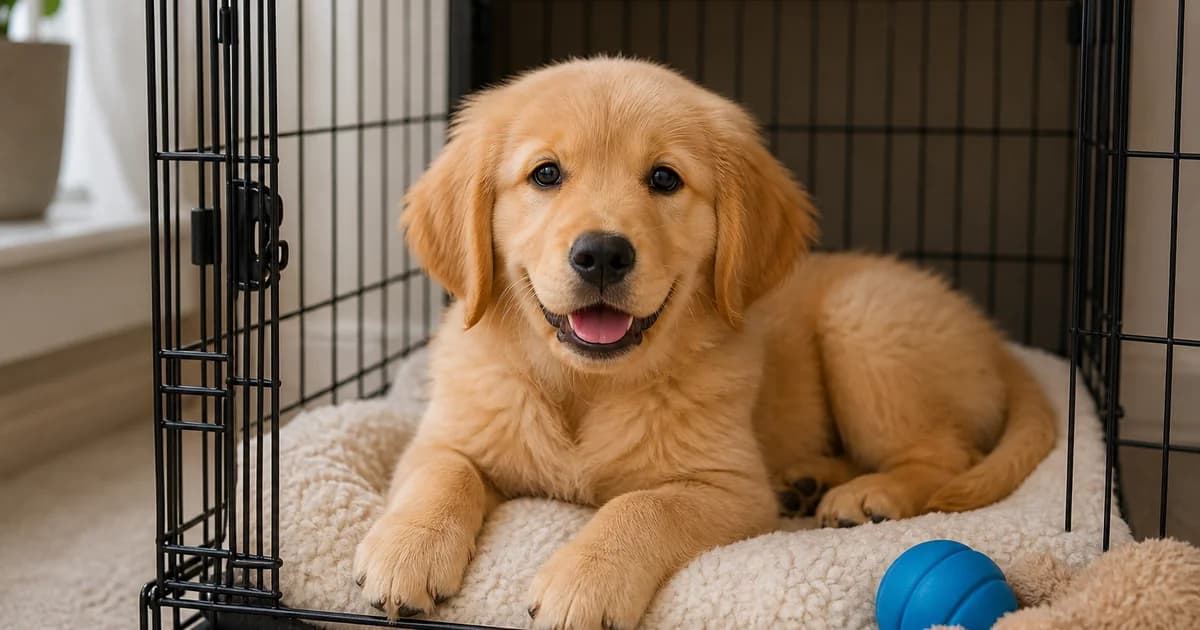
Wire crates offer excellent ventilation and visibility. Most come with removable trays for easy cleaning and adjustable dividers to resize the space as your puppy grows. The open design allows your puppy to see their surroundings, which some dogs prefer.
Plastic airline crates provide a more enclosed den-like environment. These work well for puppies who seem overwhelmed by too much visual stimulation. The solid sides also make these crates better for travel.
Soft-sided crates are lightweight and portable but not ideal for initial potty training. Puppies can chew through the fabric, and accidents are difficult to clean thoroughly. Save these for trained adult dogs.
Size guidelines vary by breed, but a general rule is that your puppy should have enough room to stand, turn, and lie down without touching the sides. If the crate is too large, your puppy may use one end as a bathroom. Most wire crates include dividers that let you adjust the space as your puppy grows.
Setting Up Your Potty Training Schedule
Consistency forms the backbone of successful potty training. Puppies thrive on routine, and a predictable schedule helps them learn faster.
Morning routine: Take your puppy outside immediately after waking up. Puppies typically need to eliminate within minutes of waking. Do not stop for play or cuddles. Go directly to the designated potty spot.
Meal times: Feed your puppy at the same times each day. Most puppies need to eliminate within 15 to 30 minutes after eating. Take them outside immediately after meals and wait until they have finished.
Play sessions: Excitement stimulates elimination. Take your puppy outside before and after play sessions. The physical activity of playing often triggers the need to go.
Crate time: Puppies can typically hold their bladder for one hour per month of age, up to about eight hours. A three-month-old puppy needs a break every three hours. Set a timer and stick to the schedule.
Evening routine: Take your puppy outside right before bedtime. Remove water access two hours before bed to reduce nighttime accidents, but ensure they have access to water during the day.
The Crate Training Process
Introducing the crate positively ensures your puppy views it as a safe space rather than punishment.
Step 1: Create positive associations. Start by placing treats and toys inside the crate with the door open. Let your puppy explore at their own pace. Do not force them inside. Praise them enthusiastically when they enter voluntarily.
Step 2: Feed meals in the crate. Place your puppy's food bowl inside the crate. This creates a strong positive association. Start with the door open, then gradually begin closing it during meals as your puppy becomes comfortable.
Step 3: Increase crate time gradually. Begin with short periods of 5 to 10 minutes while you are home. Slowly increase the duration as your puppy remains calm. Always reward quiet behavior with praise and treats.
Step 4: Use the crate for naps. Encourage your puppy to nap in their crate. The natural den instinct helps them settle. A tired puppy is more likely to accept crate time without fussing.
Step 5: Never use the crate for punishment. If your puppy associates the crate with negative experiences, they will resist entering. The crate should always represent safety and comfort.
Combining Crate and Potty Training
The real power comes from using these methods together. Here is how to integrate them effectively.
Crate to outside transitions: When releasing your puppy from the crate, immediately carry them or lead them to the designated potty spot. Do not stop for play or distractions. The goal is establishing that crate time leads directly to bathroom time.
Supervised freedom: After your puppy eliminates outside, they earn supervised freedom in the house. This freedom is a reward for good behavior. Keep the freedom period appropriate for your puppy's age and training level.
Back to the crate: If you cannot supervise your puppy, return them to the crate. This prevents accidents and reinforces the crate as their safe space. As your puppy becomes more reliable, gradually increase unsupervised freedom.
Accident response: If you catch your puppy in the act of eliminating indoors, interrupt with a sharp sound and immediately take them outside. If you find an accident after the fact, simply clean it thoroughly. Punishment after the fact confuses your puppy and damages your relationship.
Reading Your Puppy's Signals
Learning to recognize when your puppy needs to eliminate prevents most accidents.
Common warning signs include:
- Sniffing the floor intently
- Circling or pacing
- Whining or scratching at the door
- Sudden interruption of play
- Returning to a previous accident spot
When you observe these behaviors, immediately take your puppy outside. Even if they just went recently, young puppies have small bladders and limited control.
Nighttime Training
Nighttime presents unique challenges for potty training. Young puppies cannot hold their bladder through the entire night.
Location matters: Place the crate in your bedroom or nearby hallway. You need to hear when your puppy becomes restless. The proximity also helps your puppy feel secure.
Minimal interaction: When taking your puppy out at night, keep interactions brief and boring. No play, no talking, no excitement. You want your puppy to understand that nighttime is for sleeping, not socializing.
Gradual extension: As your puppy grows, they will be able to hold their bladder longer. Most puppies can sleep through the night by four to six months of age. Let your puppy guide the schedule based on their progress.
Common Mistakes to Avoid
New puppy owners often make these errors that slow down training progress.
Inconsistent schedules: Changing feeding times, walk schedules, or crate routines confuses your puppy. Stick to the same times daily, even on weekends.
Too much freedom too soon: Giving your puppy unsupervised access to the entire house before they are reliable guarantees accidents. Gradually expand their territory as they prove themselves.
Punishing accidents: Rubbing your puppy's nose in accidents, yelling, or using physical punishment creates fear and anxiety. These emotions actually make house training harder, not easier.
Using the crate as punishment: If your puppy associates the crate with negative experiences, they will resist entering. The crate should always be a positive space.
Inadequate cleaning: Regular household cleaners do not eliminate the odor markers that attract puppies back to accident spots. Use enzymatic cleaners designed specifically for pet accidents.
Giving up too soon: House training takes time. Most puppies need several months of consistent training before they are fully reliable. Patience and persistence pay off.
Troubleshooting Common Problems
Even with consistent training, you may encounter challenges.
Frequent accidents in the crate: If your puppy is eliminating in their crate, the space may be too large, or they may have a medical issue. Consult your veterinarian to rule out urinary tract infections or other health problems.
Whining and barking in the crate: Some protest is normal, especially initially. However, ensure your puppy is not whining because they need to eliminate. If the whining persists beyond a few minutes, take them outside briefly, then return them to the crate without play.
Regression after progress: Accidents after weeks of success often indicate changes in routine, stress, or medical issues. Review recent changes and consult your veterinarian if the regression continues.
Submissive urination: Some puppies, especially shy or anxious ones, urinate when greeting people or during excitement. This is not a house training issue but a behavioral one. Avoid overwhelming greetings and build your puppy's confidence through positive training.
Marking behavior: As puppies mature, some begin marking territory with urine. This is different from house training and requires different management strategies, including neutering for males.
When to Seek Professional Help
Most house training issues resolve with consistent application of these methods. However, some situations warrant professional assistance.
Consult a professional dog trainer or veterinary behaviorist if:
- Your puppy continues having frequent accidents after four months of consistent training
- Your puppy eliminates in their crate repeatedly despite proper sizing
- Your puppy shows signs of anxiety or fear related to elimination
- You suspect medical issues affecting bladder control
- You feel overwhelmed and are considering rehoming your puppy
Professional guidance can identify issues you might miss and provide customized solutions for your specific situation.
The Timeline for Success
Understanding realistic timelines helps set appropriate expectations.
Weeks 1 to 2: Establish routines and begin crate introduction. Expect frequent accidents. Focus on building positive associations.
Weeks 3 to 4: Your puppy should begin understanding the routine. Accidents decrease but still occur, especially during play or excitement.
Months 2 to 3: Most puppies show significant improvement. They begin signaling when they need to go and can hold their bladder longer.
Months 4 to 6: Many puppies achieve daytime reliability. Nighttime accidents become rare. Supervised freedom expands gradually.
Months 6 to 12: Most puppies are fully house trained by one year, though some breeds mature more slowly. Continue reinforcing good habits.
Long-Term Benefits of Proper Training
The effort invested in early crate and potty training pays dividends throughout your dog's life.
Travel readiness: Dogs comfortable in crates travel easily. Whether visiting the veterinarian or taking a road trip, your dog has a familiar safe space.
Reduced anxiety: Dogs with positive crate associations have lower stress during emergencies, boarding, or veterinary stays.
Better behavior: The structure and routine of early training establish you as a leader and build your dog's confidence. This foundation supports all future training.
Stronger bond: Positive training methods build trust between you and your dog. This trust forms the basis of your lifelong relationship.
Frequently Asked Questions
How long can my puppy stay in their crate?
Puppies can typically hold their bladder for one hour per month of age, up to about eight hours. A three-month-old puppy needs a break every three hours. Never leave a puppy in a crate for longer than they can physically hold their bladder.
Should I put food and water in the crate?
Food can be given in the crate to build positive associations. Water should be available during the day but can be removed two hours before bedtime to reduce nighttime accidents. Always ensure your puppy has access to water when they are not crated.
What if my puppy cries in the crate at night?
Some crying is normal, especially initially. Ensure your puppy does not need to eliminate, then ignore brief protests. If crying persists, your puppy may need more gradual crate training during the day. Never let a crying puppy out of the crate while they are actively vocalizing, as this rewards the behavior.
How do I clean up accidents properly?
Use enzymatic cleaners specifically designed for pet accidents. Regular household cleaners may mask the smell for humans but leave odor markers that attract puppies back to the same spot. Clean thoroughly and completely to prevent repeat accidents.
Can I use puppy pads instead of going outside?
Puppy pads can be useful for apartment dwellers or during extreme weather, but they often confuse the training process. Dogs develop surface preferences, and puppies trained on pads may struggle to transition to grass later. If possible, take your puppy outside consistently from the start.
What if I work full-time and cannot take my puppy out frequently?
Working full-time with a young puppy is challenging. Consider hiring a dog walker for midday breaks, using a puppy sitter, or enrolling in doggy daycare. Alternatively, adopt an older puppy or adult dog who can hold their bladder longer.
Related Articles
- Dog Separation Anxiety Training Complete Guide 2026
- Puppy Barking Training Guide
- Dog Mouthing and Gentle Biting Behavior Training Guide
- Dog Leash Pulling Training Guide
- Dog Counter Surfing Training Complete Guide 2026
- Rescue Dog 3-3-3 Rule Adjustment Guide
- Best Dog Translator App iPhone 2026
- Dog Body Language Guide
Try it with your dog
Record a bark, scan a dog photo, or play a sound and see what happens next.