2026-07-16 · 7
Puppy Biting and Nipping: Complete Training Guide for New Owners
Puppy biting hurts. Those tiny needle teeth can break skin and leave you wondering if you brought home a shark instead of a dog. The good news: puppy biting is completely normal, and with the right approach, you can teach your puppy to use their mouth gently or not at all.
This guide explains why puppies bite, when to worry, and exactly what to do to stop nipping before it becomes a dangerous habit. These techniques work for all breeds and ages up to about six months.
Why Puppies Bite Everything
Puppies explore the world with their mouths. They do not have hands. When a puppy wants to know what something is, they bite it. This is not aggression. It is investigation.
There are three main reasons puppies bite:
Teething pain. Between four and seven months, puppies lose their baby teeth and grow adult teeth. Their gums hurt. Biting and chewing provides relief, similar to how babies want teething toys.
Play behavior. Puppies play bite with their littermates. When one bites too hard, the other yelps and stops playing. This teaches bite inhibition, the ability to control jaw pressure. Puppies separated from their littermates too early often miss this lesson.
Overstimulation. When puppies get tired or excited, they lose self-control. A puppy who was gentle ten minutes ago might suddenly start biting hard because they are overtired or overexcited.
What Most People Get Wrong About Puppy Biting
The most common mistake is treating puppy biting like adult aggression. People yell, hold the puppy's mouth shut, or use physical corrections. This does not work and often makes the problem worse.
Puppies do not understand punishment the way adult dogs might. When you yell or physically correct a puppy, they either get scared (which damages trust) or interpret it as rough play (which encourages more biting).
Another mistake is inconsistency. One family member allows biting during play while another tries to stop it. The puppy gets confused and learns that biting sometimes works, which makes the behavior persist.
The counterintuitive truth: you do not want to stop all biting immediately. You want to teach bite inhibition first, then teach that human skin is off limits. A puppy who learns to control their jaw pressure is safer than a puppy who never learned and bites hard by accident later.
The Emotional Journey of Puppy Biting
Week one with a new puppy is overwhelming. The biting feels constant. Your hands are covered in scratches. You start wondering if you made a mistake. This is normal.
By week three, if you are consistent, you should see improvement. The biting will not stop completely, but it should decrease in frequency and intensity. The puppy starts understanding that human skin is different from toys.
Month two brings real progress. The accidental hard bites are rare. The puppy might still mouth you gently, but they are learning control. This is when you transition from teaching inhibition to teaching that teeth do not belong on humans at all.
Month three and beyond: if you have been consistent, puppy biting should be mostly resolved. Occasional lapses happen when the puppy is overtired or excited, but the constant nipping is gone.
Specific Training Techniques That Work
Here are the methods that actually stop puppy biting, in order of effectiveness:
The Yelp and Withdraw Method. When your puppy bites hard, make a high-pitched yelp sound (like a littermate would) and immediately stop all interaction. Cross your arms, turn your back, and remove your attention for ten to twenty seconds. This teaches the puppy that biting ends the fun.
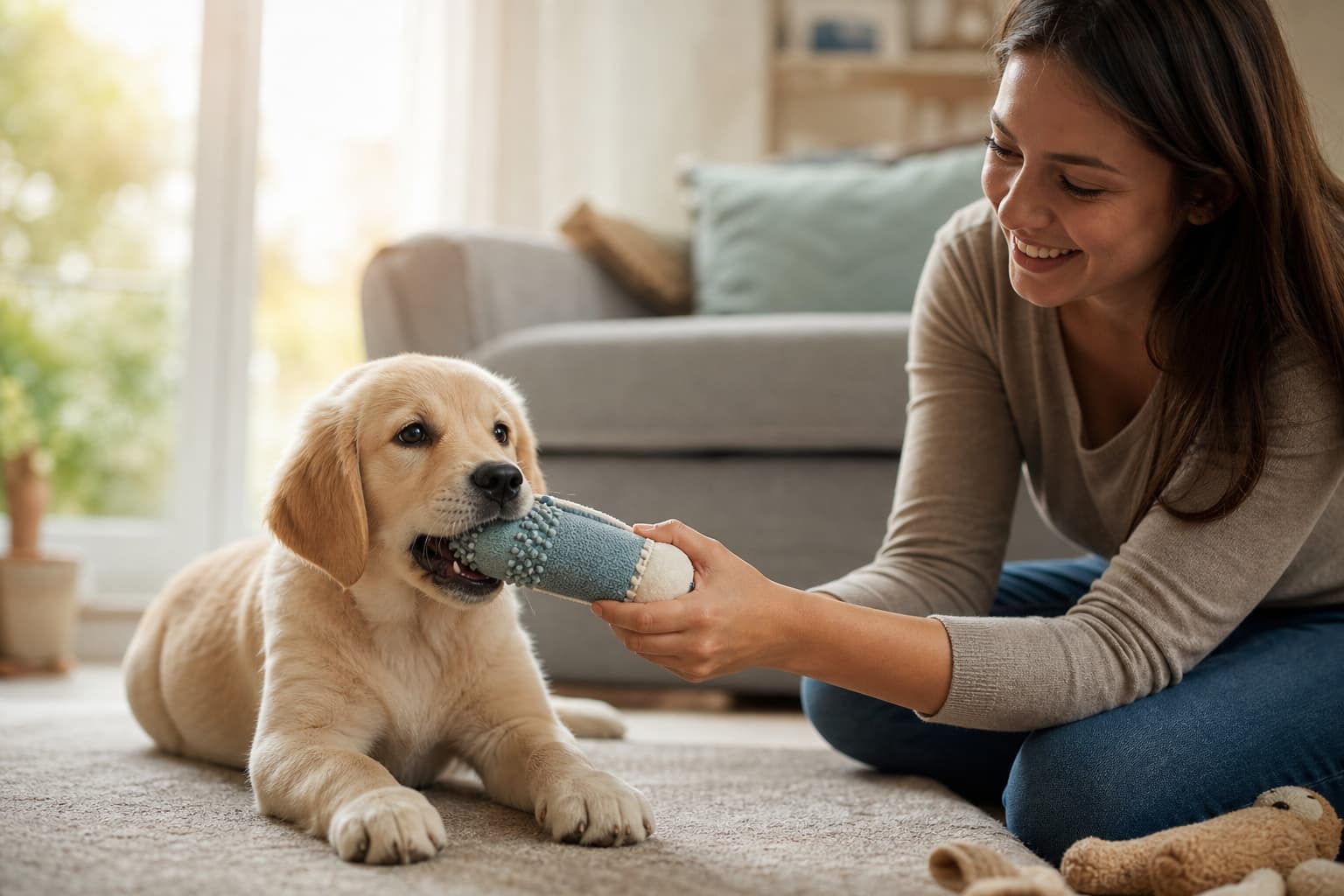
Redirection to appropriate toys. Have toys everywhere. When the puppy starts biting you, immediately offer a toy instead. If they take it, praise and continue play. If they ignore the toy and keep biting you, use the yelp and withdraw method.
Time-outs for persistent biting. If the puppy keeps coming back to bite you after multiple yelp-and-withdraw cycles, they need a time-out. Calmly lead them to a crate or puppy-proofed area for thirty seconds to two minutes. This is not punishment. It is a break to help them calm down.
Teaching gentle mouth pressure. For puppies who bite hard, you can teach bite inhibition by allowing gentle mouthing and yelping when pressure increases. Gradually shape toward softer and softer mouth pressure until the puppy understands human skin is sensitive.
Managing overtired puppies. Most severe biting happens when puppies are overtired. Learn your puppy's signals: excessive biting, zoomies, inability to settle. When you see these, it is time for a nap in the crate, not more play.
Handling Specific Biting Situations
Biting during play: Stop play immediately. Yelp, withdraw, and offer a toy. If the puppy continues biting instead of taking the toy, play ends. The puppy learns that biting humans stops the fun.
Biting during petting: Some puppies bite when being petted because they are overstimulated or do not want to be touched right then. Watch for warning signs: stiffening, lip licking, turning the head away. Respect these signals and stop petting before the bite happens.
Biting ankles and feet: This is often herding behavior, common in breeds like Border Collies, Australian Shepherds, and Corgis. Stop moving when the puppy bites your ankles. Movement triggers the chase instinct. Stand still, redirect to a toy, and only move again when the puppy is engaged with the toy.
Biting children: This requires extra supervision. Children move unpredictably and make high-pitched noises, which trigger prey drive and excitement. Never leave puppies and young children unsupervised. Teach children to stand still and be boring if the puppy bites, rather than running or shrieking.
Biting guests: Put the puppy on a leash or in a crate when guests arrive until the puppy calms down. Excited puppies bite more. Once the puppy is calm, allow supervised greeting. Give guests treats to offer so the puppy learns that strangers bring good things, not just excitement.
What Your Dog Is Trying to Say
Puppy biting is communication. Understanding what your puppy is saying helps you address the root cause:
"I want to play." This is the most common message. The solution is redirecting to appropriate toys and teaching that play with humans happens through toys, not teeth.
"I am overtired." Puppies need eighteen to twenty hours of sleep per day. An overtired puppy bites more. The solution is enforced naps in the crate.
"My mouth hurts." Teething puppies need appropriate chew items. Frozen carrots, wet washcloths twisted and frozen, and dedicated teething toys help.
"I am overstimulated." Sometimes petting, noise, or activity becomes too much. The puppy bites to create distance. The solution is recognizing early signs and giving the puppy space before they feel the need to bite.
Building Good Mouth Habits Long-Term
The goal is not just stopping puppy biting. It is raising a dog who understands how to use their mouth appropriately.
Hand-feeding meals. For the first few weeks, feed part or all of your puppy's meals by hand. This teaches the puppy that human hands bring food, not something to bite. It also gives you opportunities to practice gentle mouth behavior.
Teaching "take it" and "drop it." These commands give you control over what goes in your puppy's mouth. Start with low-value items, reward generously for compliance, and gradually work up to higher-value items.
Consistent rules for everyone. Every person in the household needs to follow the same rules. If one person allows rough play, the puppy will keep biting everyone. Have a family meeting and agree on the approach.
Patience with teething. The worst biting usually happens during teething. This phase passes. Stay consistent with training, provide plenty of appropriate chew items, and remember that this is temporary.
What Dog Translator Does That Nothing Else Does
Most puppy training advice is generic. It does not account for your specific puppy's breed, age, and situation. Dog Translator takes a different approach.
The app includes a puppy biting assessment that helps you identify why your specific puppy is biting. Is it teething? Play? Overstimulation? The app tailors recommendations based on your answers.
The daily training tracker lets you log biting incidents and see patterns over time. You might notice that biting spikes at 7 PM every day (overtired) or happens mostly with one family member (inconsistency). Data helps you solve the right problem.
The app also includes a library of training videos specific to puppy biting, showing exactly how to implement the techniques in this guide. Watching someone else do it correctly is often more helpful than reading instructions.
Unlike generic dog training apps, Dog Translator focuses on communication. It helps you understand what your puppy is trying to tell you through their biting behavior, so you can address the cause rather than just suppressing the symptom.
FAQ
Is puppy biting a sign of aggression?
Usually no. Normal puppy biting is exploratory and playful. True aggression in puppies is rare and looks different: stiff body, hard stare, growling with bared teeth, biting that breaks skin repeatedly despite corrections. If you see these signs, consult a professional trainer or veterinary behaviorist.
How long does the puppy biting phase last?
With consistent training, most puppies show significant improvement by four months and have mostly stopped biting by six months. The teething phase (four to seven months) can cause temporary regression. Without training, some dogs continue mouthing into adulthood.
Should I use bitter spray on my hands to stop biting?
Bitter spray is controversial. Some puppies hate it and stop biting immediately. Others do not mind the taste, or they learn to avoid your hands only when they smell like the spray. It is better to teach the puppy what to do (bite toys) rather than just punishing what not to do.
What if yelping makes my puppy bite more?
Some puppies get more excited by yelping. If this happens, try a lower volume yelp or just say "ouch" in a neutral tone. The key is removing attention, not the specific sound. If your puppy consistently gets more excited by vocal responses, skip the yelp and just withdraw silently.
Is it okay to let my puppy mouth my hand gently?
Many trainers recommend teaching bite inhibition by allowing gentle mouthing and only yelping for hard bites. This teaches the puppy to control their jaw pressure. Once the puppy has good control (around four to five months), you can phase out all mouthing on human skin.
My puppy bites my clothes and shoelaces. What do I do?
This is common, especially with herding breeds. Stop moving immediately. Movement triggers the chase. Stand still, redirect to a toy, and only resume moving when the puppy is engaged with the toy. For shoelaces, tuck them into your shoes or wear slip-ons during training phases.
When should I seek professional help for puppy biting?
Seek help if: the biting draws blood regularly, the puppy shows signs of true aggression (stiff body, hard stare, growling with intent), the biting is getting worse despite consistent training, or you have children and cannot manage the biting safely. A certified professional dog trainer or veterinary behaviorist can assess whether this is normal puppy behavior or something more serious.
Final Thoughts
Puppy biting is one of the most frustrating parts of raising a dog. Those needle teeth hurt, and the constant nipping can make you question whether you are cut out for dog ownership. You are. This phase passes.
The key is consistency. Every family member needs to follow the same rules. Every bite needs the same response. Every day needs the same structure. Puppies learn through repetition, and they learn faster when the rules are clear.
Remember that your puppy is not being bad. They are being a puppy. Biting is how they explore, play, and communicate. Your job is to teach them better ways to do all three. With patience and the right techniques, you will get there.
Need help tracking your puppy's progress? Download Dog Translator for personalized training plans, bite tracking, and communication insights tailored to your specific puppy.
Try it with your dog
Record a bark, scan a dog photo, or play a sound and see what happens next.